Loading video…
All breakouts
101Text-HeavyOther hookHealth
Hook
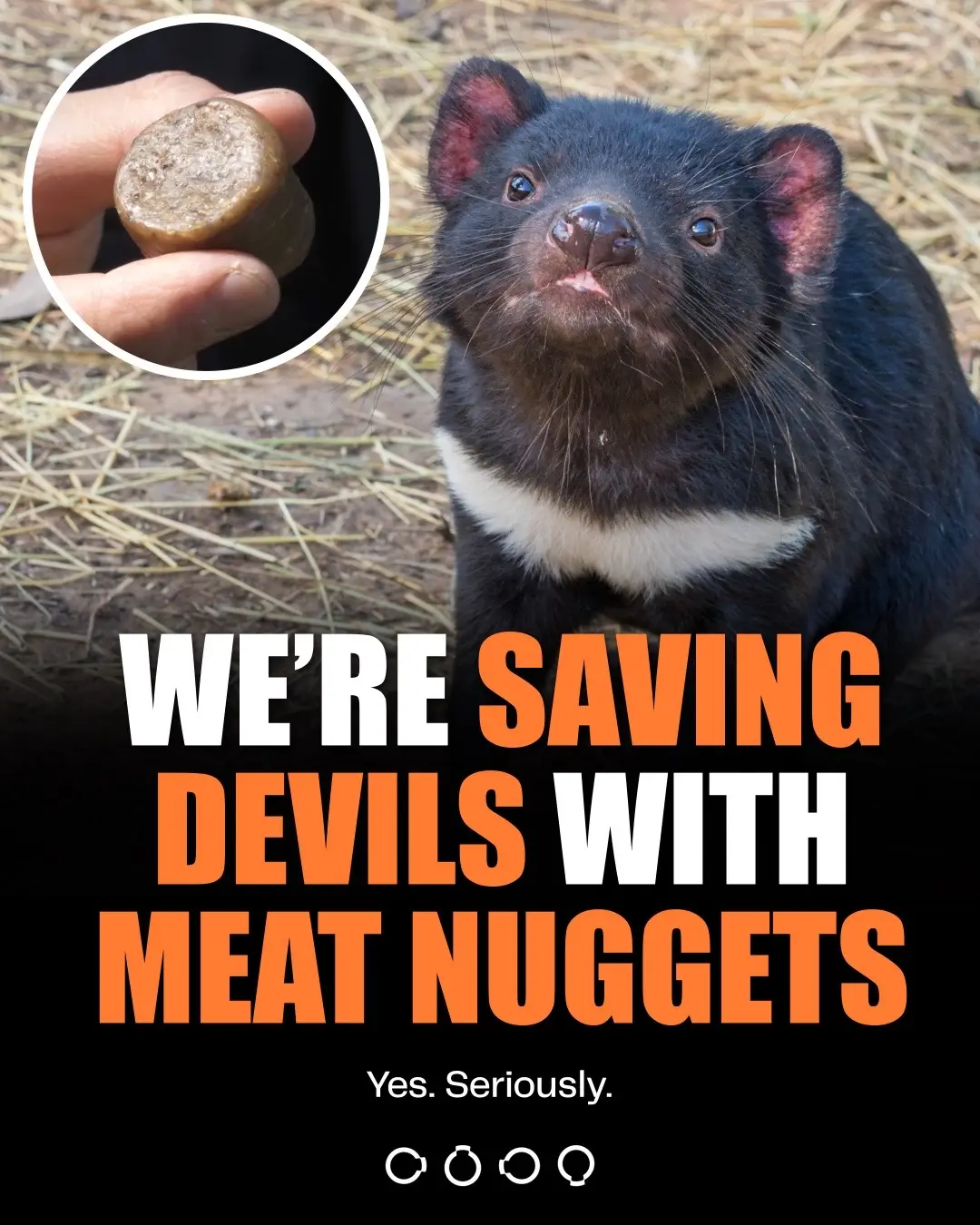
WE'RE SAVING DEVILS WITH MEAT NUGGETS
@colossal
252.7K followers · usually 31.8K views a post
Views
3.2M
Likes
8.8K
Comments
60
Shares
255
Why it worked
The content leverages a surprising and attention-grabbing premise ('saving devils with meat nuggets') combined with compelling visuals and a clear explanation of a critical conservation issue, making it highly shareable.
Summary
This slideshow explains how the Tasmanian devil population is being devastated by devil facial tumor disease (DFTD). It highlights the efforts of Colossal and the University of Tasmania to save the species through edible vaccine baits and genetic editing.
Structure
- 1Introduction to Tasmanian devils
- 2The threat of DFTD
- 3The solution: meat nugget vaccines
- 4Future genetic research
Original caption
😈 Yes, we’re trying to save Tasmanian devils with meat nuggets. A contagious cancer called devil facial tumor disease (DFTD) has devastated devil populations across parts of Tasmania. That’s why we’re partnering with Dr. Andrew Flies and the incredible team at @utas to develop edible vaccine baits, while also exploring genetic tools that could help future generations resist devastating diseases like this. Because tomorrow’s devils deserve a fighting chance.
More from @colossal
More breakout videos from this creator.