Loading video…
All breakouts
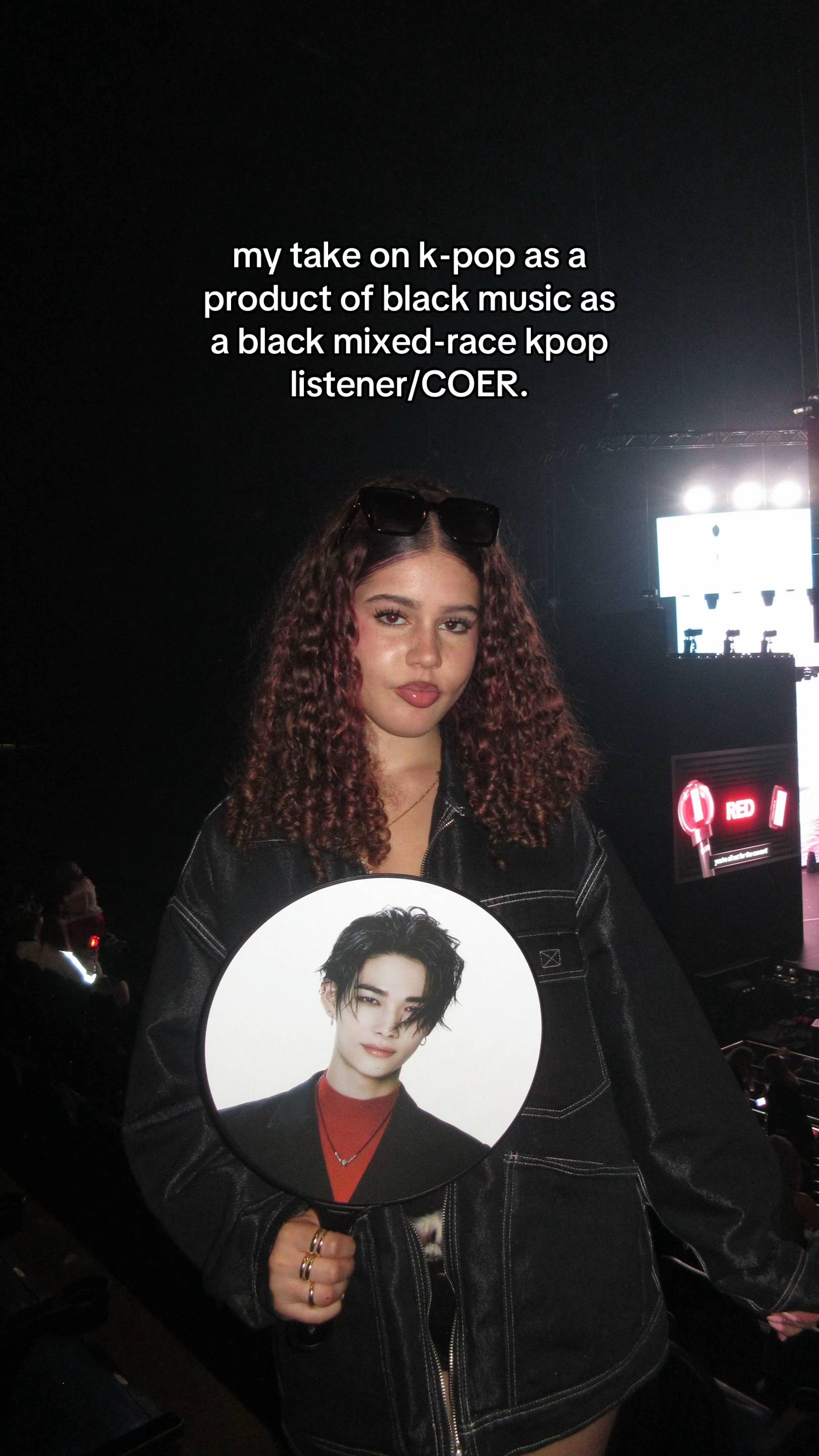
12.0Text-HeavyContrarian hookEntertainment
Hook
tbh i think the argument is very complex and has MULTIPLE layers, so my opinion is very subject to change especially after considering more perspectives
@_bellki
3.0K followers · usually 2.1K views a post
Views
32.6K
Likes
4.8K
Comments
197
Shares
160
SoundTikTok sound · TNT
Why it worked
The video likely resonated due to its critical examination of cultural appropriation and the music industry's historical biases, tapping into a conversation about authenticity, credit, and fair compensation within the global music scene.
Summary
The creator discusses how K-pop is heavily inspired by and replicates Black music, often in a "watered-down" version. They highlight specific K-pop groups and their musical and aesthetic influences from Black genres like new jack swing, hip-hop, and R&B, arguing that this is a structured business pipeline rather than accidental. The creator then addresses the problem of historical discrimination against Black culture, pointing out double standards in how Black and K-pop artists are perceived and compensated, and calls for structural change within the industry.
Structure
- 1Introduction to the complexity of K-pop's relationship with Black music
- 2Historical and foundational replication of Black music in K-pop
- 3Specific examples of K-pop groups influenced by Black genres and aesthetics
- 4The business pipeline and intentionality behind K-pop's use of Black music
- 5The problem: historical discrimination and double standards
- 6Call for industry change and fair compensation
On-screen text
tbh i think the argument is very complex and has MULTIPLE layers, so my opinion is very subject to change especially after considering more perspectives
to start, it cannot be questioned that kpop not only takes heavy inspiration, but HISTORICALLY AND FOUNDATIONALLY replicates black music and delivers a watered down, filtered version of it. the industry was built off by bang shi hyuk who literally said ‘black music is the base’, we all know that.
im not just talking CORTIS’ inspiration from hip hop/rage artists such as playboi carti, again, if you only accuse cortis of this behaviour, you are reducing the entirety of black music to one genre and completely ignoring its vastness and multi-genre contribution to ALL ‘sub-genres’ of kpop
NEWJEANS - heavily inspired by new jack swing, an upbeat rhythmic genre of music pioneered by teddy riley in the 80s
BTS - obviously hip-hop, new jack swing (e.g ‘danger’), r&b, southern trap (engineered by black artists from atlanta), uk garage (e.g jungkook ‘seven’ created by black british artists like craig david in the 90s), 70s black disco (‘dynamite’)
ILLIT - PluggnB and UK House/Garage lifted from black DIY internet music culture (‘magnetic’), jersey club + late r&b (‘cherish my love’)
ENHYPEN - ‘quiet storm’ r&b &created by black radio djs in the 70s (‘fever’), dark alternative r&b pioneered by modern artists like frank ocean & the weeknd (‘still monster’, ‘bite me’)
and then we move onto choreography/aesthetic
it doesnt even have to be said, every ‘kpop’ dance style is built on black street dance culture.
visually, we have the OBVIOUS one which is streetwear culture, lifted directly from 90s black hip-hop fashion.
music video aesthetic are directly inspired by black rap videos from the 90s, we see this clearly with groups like Ingshot ‘moonwalkin’, but also in BTS ‘mic drop’, new jeans ‘ditto’ and virtually almost every kpop music video
IMPORTANLTY, none of this is ‘accidental’. it is a very structured business pipeline.
SM’s founder ‘the father of kpop’ explicitly used ‘motown records’ as his corporate blueprint - motown took black artists and put them through vigorous training to create perfectly marketable groups, ring a bell?
THEN k-pop labels set up A&R offices in LA and Atlanta, buying songs from black producers who were sidelined by the US market
why black music? well because its perfect. it has edge, ‘coolness’ as well as music which is the foundation for most global pop music.
and they could refine it to make it perfectly marketable.
so, what is the problem?
well, global markets have historically discriminated against black culture.
in the 1980/90s korean media featured literal blackface and actively mocked black culture while the country was simultaneously consuming imported black american music. black identity became a theatrical comedy prop.
equally when the early k-pop groups ‘seo taji and boys’ debuted in 1992, executives literally took hip-hop (which derived from black liberation, systematic oppresion, and community survival), removed this human struggle, sanitized it, removed credit so it could appeal to conservative markets and profited off of it massively.
while groups like cortis and katseye give credit to black artists, which fixes the legal and financial aspects of the issue as artists are now payed and credited for this work, this doesn’t fix the social bubble standard.
there is still a massive double standard. when a k-pop artist wears streetwear they are praised for being cool and original, when a black artist does they are labelled ghetto, unprofessional.
the industry benefits from a systemic cultural bias, which is foundationally racist.
they can put black performers in global groups, but this doesn’t remove the bias: black members like manon are villainised and subject to microaggressions and mistreatment. you can’t fix a fundamentally racist industry by adding black people in, you have to restructure the executive offices, you have to bring about structural change
this also creates so much frustration due to the wealth gap. black producers get payed a few thousand for a song, k-pop companies take millions. profiting off their music, fashion, aesthetic, production style.
black artists are left fighting for crumbs
also this devalues black artists in the west, massively, you see it now. black r&b and hip-hop groups fail, they’re labelled unmarketable by major labels, yet these labels will HAPPILY pour millions into korean groups replicating the exact same styles.
black artists are told their music is only globally valuable when performed not by them.
even more so, k-pop removes the value and struggle behind the music. EVERY SINGLE genre was built off of protest and survival, coping with aggression, slavery, police brutality, systemic poverty. so when a multi million company takes this music and turns it into a cute trend for a billion dollar pop machine, it sidelines black history and ultimately capitalises off of it
as a mixed race k-pop fan it's hard to manage this intersection especially when the industry DOES bring about good content, good choreography and ultimately a diverse random space.
it is important that when we learn a con-learn dance, we must actively acknowledge the black artists, producers and dancers who made this possible, both now AND historically.
we also need to stop seeing this weird, RACIST bias against black music/artists, particularly in rap/hip-hop genres.
ultimately, liking k-pop, especially as a black person, doesn’t mean staying blind to double standards, but instead, it means that we must refuse to let black culture be fetishized, treated as a nameless, faceless k-pop which isnt TRULY kpop, and includes a producer's tag and a couple artists added in for brownie points.
enjoying the choreography, content and music of these genres DOESNT mean ignoring the foundations that built it.
we need more black people in executive roles in k-pop, we need cultural and literary training to educate staff and execs behind the scenes, we need fair payment of black producers and choreographers and we need permanent public and visual credit.
the industry needs change, the fandoms need change.
Original caption
#cortis #underground #coer #kpopfyp #mattproxy
More from @_bellki
More breakout videos from this creator.