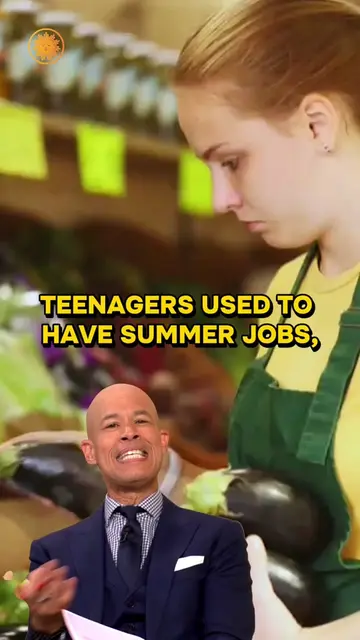
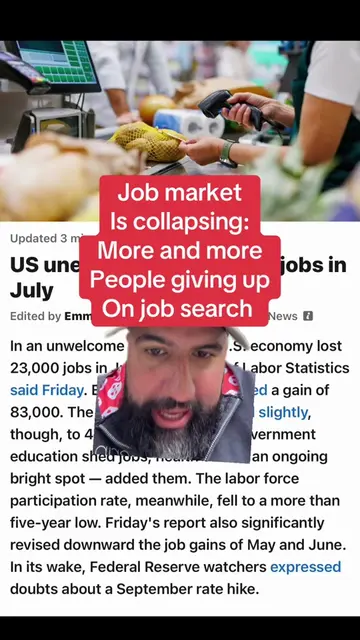
What happens when teens can no longer get the jobs that taught them how to work? I actually talked about this trend last year, but unfortunately, it has only gotten worse. In 2026, I want to talk a little bit about why this is so important for both teenagers and for a broader economy. Like, the rite of passage for young Americans. Teen employment is now around 35%. Monthly labor-force participation rate, ages 16-19. Parents who want their teens to work have made anxious appeals to their friends, family, and followers on social media, asking them to... Yes, getting a job as a teenager in the summer is a way to make money, but it's also a way to learn how to work and learn about the value of a dollar and learn about how effort leads to reward. Very important money lessons for young people to learn. Um, and it was part of growing up. It kind of represented a milestone in that way. And you learned soft skills that won't just about purely making money, like showing up on time, dealing with annoying customers, or manage a schedule, or learn how to do things, right? And now, a lot of that has gone away. And teen jobs are similar to entry-level jobs and how they've become harder and harder to access for them. And the same logic is showing up for teenagers. Like basic work experience is becoming harder to access and for the teens who do get jobs, they might be the ones with better networks, um, more flexible parents, flexible schedules, or safer neighborhoods, or the ability to work for lower pay. And this is all going to have broader repercussions on our broader economy because this is the generation that is going to grow up and become the entry-level workforce in a couple of years, and the middle class in a couple of decades. And this will have long-term repercussions for how people think about work, behave at work, think about their careers, um, think about money and worth, and it's going to affect us even if you are not a teen right now looking for a job. We have been talking a lot in the past couple months about how college grads can't get entry-level jobs or it's much harder for them. And the same logic is showing up for teenagers. Like basic work experience is becoming harder to access. And for the teens who do get jobs, they might be the ones with better networks, um, more flexible parents, flexible schedules, or safer neighborhoods, or the ability to work for lower pay. And this is all going to have broader repercussions on our broader economy because this is the generation that is going to grow up and become the entry-level workforce in a couple of years, and the middle class in a couple of decades. And this will have long-term repercussions for how people think about work, behave at work, think about their careers, um, think about money and worth, and it's going to affect us even if you are not a teen right now looking for a job. We have been talking a lot in the past couple months about how college grads can't get entry-level jobs or it's much harder for them. And the same logic is showing up for teenagers. Like basic work experience is becoming harder to access. And for the teens who do get jobs, they might be the ones with better networks, um, more flexible parents, flexible schedules, or safer neighborhoods, or the ability to work for lower pay. And this is all going to have broader repercussions on our broader economy because this is the generation that is going to grow up and become the entry-level workforce in a couple of years, and the middle class in a couple of decades. And this will have long-term repercussions for how people think about work, behave at work, think about their careers, um, think about money and worth, and it's going to affect us even if you are not a teen right now looking for a job.