Loading video…
All breakouts
10.9Text-HeavyCuriosity Gap hookFinance
Hook
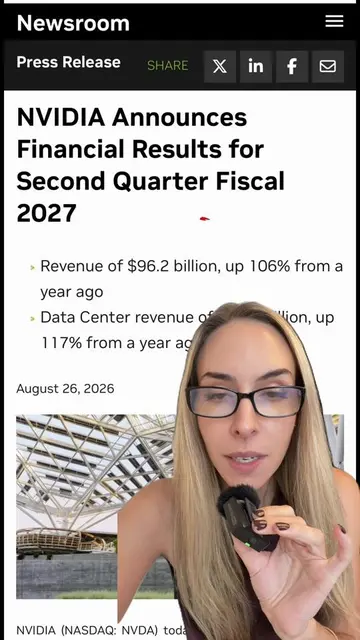
The TRUTH about the Finance of AI
@thewallstreetskinny
69.7K followers · usually 8.6K views a post
Views
86.1K
Likes
6.0K
Comments
283
Shares
585
Why it worked
The video breaks down complex financial topics related to AI tax breaks in an easily digestible, visual format. It uses clear examples and relatable analogies to explain how companies benefit, making the information accessible and engaging for a broad audience.
Summary
This video explains the financial incentives and tax breaks available to AI companies, particularly for building data centers and purchasing chips. It details state-level tax exemptions and federal depreciation benefits, highlighting how these can significantly reduce a company's tax burden and accelerate their expansion plans.
Structure
- 1Introduction to AI tax breaks and massive spending
- 2State-level incentives to attract data centers
- 3Example of Meta's tax breaks in Louisiana
- 4Federal depreciation benefits and bonus depreciation
- 5Impact on company earnings and stock price
- 6Irony of disincentivizing renewable energy
Product placement
The video discusses tax breaks related to AI, specifically mentioning companies like Amazon, Microsoft, Google, Meta, and Oracle, and their spending on chips and data centers. It also touches on state-level incentives and federal depreciation policies.
On-screen text
The TRUTH about the Finance of AI
Wait for it...
Ex-Morgan Stanley Banker Explains
AI Tax Breaks
Hyperscaler Capex 2026
Amazon $200B
Microsoft $190B
Google $175-185B
Meta $125-145B
Oracle $80B
$800 Billion
AI Factory
Energy
Electricity
Compute
Chips
Data Center
Jobs! Taxes!
States
Federal
Depreciation
$100 B Chips
$100
5
$20
1
2
3
4
5
20
20
20
20
20
Straight Line
Sales
- Depreciation
Tax rate
Taxes
Net Income
$100
(20)
80
x 21%
(16)
$64
Stock Price
100% Bonus Depreciation
Sales
- Depreciation (100)
Tax
Interest FREE
LOAN FROM
GOVERNMENT
TRUMP OBBA
Example
$100 B
x 9.56%
~$6B
per purchase!
*assume 5yr life
Property Tax
$100 B
x 1.35%
$1.35 B
x 80%
$1 Billion/yr
Timeline
0
5
10
15
20
$6B
$6B
$6B
$6B
$6B
Apartment
300 jobs -> 60%
500 jobs -> 80%
Abatement
Property Tax
AI Tax Breaks
AI Factory
Energy
Electricity
Compute
Chips
Data Center
Jobs! Taxes!
Federal
Depreciation
$100 B Chips
$100
5
$20
1
2
3
4
5
20
20
20
20
20
100% Bonus Depreciation
Sales
- Depreciation (100)
Tax
Straight Line
Sales
- Depreciation
Tax rate
Taxes
Net Income
$100
(20)
80
x 21%
(16)
$64
Stock Price
Interest FREE
LOAN FROM
GOVERNMENT
TRUMP OBBA
Original caption
The truth about the finance of AI 👀
More from @thewallstreetskinny
More breakout videos from this creator.