Loading video…
All breakouts
13.7Talking HeadContrarian hookFinance
Hook
THE TRUTH ABOUT AI DATA CENTERS EVERYONE'S FREAKED OUT
@thewallstreetskinny
69.7K followers · usually 8.6K views a post
Views
107.9K
Likes
6.6K
Comments
292
Shares
1.8K
Promoted product
Nvidia
Why it worked
The video breaks down a complex and expensive topic (AI data centers) into easily digestible visual components, making the information accessible and engaging. The use of a whiteboard-style explanation with clear labels and cost breakdowns for each element helps viewers grasp the scale of investment and the interconnectedness of the components, driving curiosity and shareability.
Summary
This video breaks down the immense cost and complexity of building a large AI data center, focusing on the factors contributing to its multi-billion dollar price tag. It details the requirements for land, power generation, cooling systems, networking infrastructure, and the chips themselves, highlighting the significant investment needed for each component.
Structure
- 1Introduction to the massive cost and complexity of AI data centers.
- 2Breakdown of costs: Land acquisition and infrastructure.
- 3Power generation and the need for dedicated, high-capacity sources.
- 4Cooling systems: the wasteful old method vs. the efficient new method.
- 5Networking infrastructure: connecting millions of chips with high-speed cables.
- 6The cost of the chips themselves and the scale of deployment.
Original caption
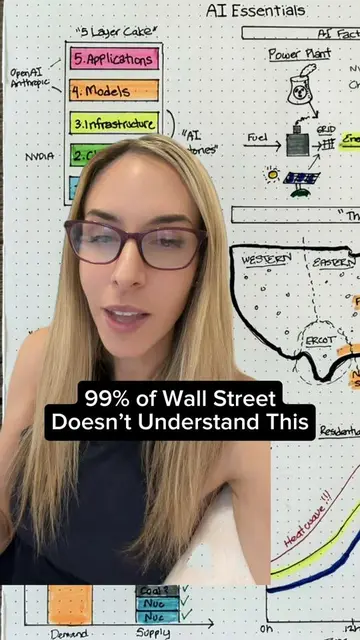
We sat down with someone who actually builds data centers, extrapolated costs from financial filings from previous projects, and tried to explain how a half a trillion dollar 10 gigawatt AI data center actually gets built, as simply as we can, in under three minutes, on one sheet of paper. Tons of caveats given this deal hasn't even been finalized --- especially on the water front: just because many NEW data centers are being built with closed loop system doesn't change the fact that the majority of OLD data centers are still wasteful. And we barely scratched the surface on the energy issues despite spending half the video talking about them. If you want more on this topic, or other explainers on big issues in finance, business, and tech, check out our Substack!
More from @thewallstreetskinny
More breakout videos from this creator.