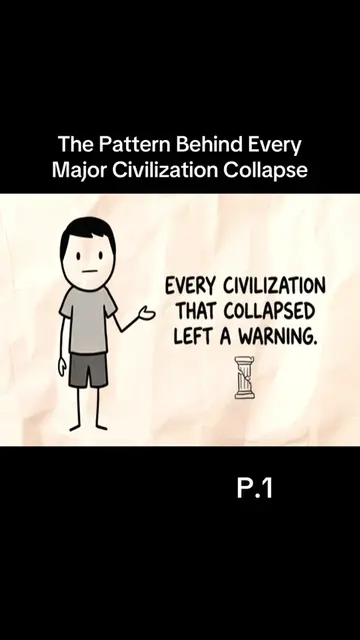
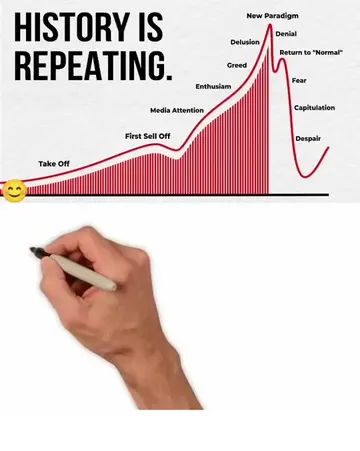
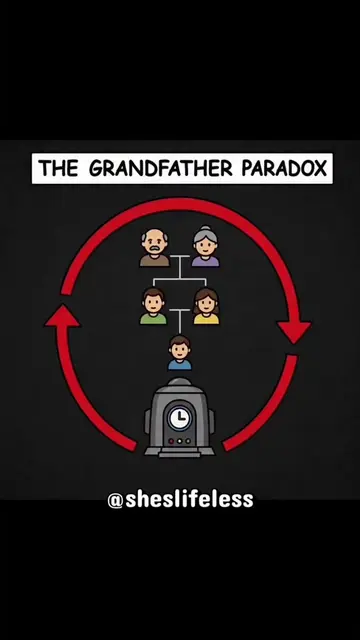
The 80 year generational memory cycle. Every 80 years or so, societies walk straight into the same disasters their great grandparents barely survived. Not similar disasters, the same ones. 80 years is roughly how long it takes for everyone who actually lived through a catastrophe to die. Once they're gone, so are their warnings. Their grandkids inherit the history books, but not the gut feeling, not the fear. The people who lived through the 1929 stock market crash were so scarred, they kept cash in mattresses. Then they died. 79 years later, in 2008, their grandchildren triggered the biggest financial collapse since 1929 with the same reckless optimism. History moves in 80 year cycles. The first generation survives a crisis and builds. Their kids enjoy the stability. Their grandchildren push boundaries and their great grandchildren, with no living memory of the last crisis, burn it all down. The American Revolution was 1776. 85 years later, 1861, the Civil War began. 84 years from the Civil War, 1945, World War 2 ended. We are now almost exactly 80 years past the end of World War 2. The last people who remember rationing are nearly all gone. The brain learns from experience, not stories. Tell someone a stove is hot, they'll be careful. Let them touch it, and they'll never forget. The problem is, you can't let each generation touch a civilization-ending disaster. So we write it down, build museums, and watch the next generation make the same mistakes anyway. Because knowing about pain and remembering pain are two completely different things. Fighting the last war. Armies always prepare to fight the last war, not the next one. After World War 1, France built the Maginot Line, a massive wall of bunkers to prevent another trench war. It was the greatest defensive wall ever built, and the Germans just drove around it. They used blitzkrieg, fast tanks and planes, and drove through Belgium. France fell in 6 weeks while the Maginot Line sat useless. Before World War 1, European armies were obsessed with cavalry charges. Then machine guns appeared. The British cavalry at the start of the war still trained with swords against machine guns. After World War 2, military planners thought future air battles would be supersonic, so they removed guns from fighter jets, relying only on missiles. Then in Vietnam, pilots found themselves in close-range dogfights where missiles were useless and they had no guns. You truly understand something when you've fought it. Your enemy reads the same history. They change, and you're left perfectly prepared for a war no one is fighting anymore. Bureaucracy slowly strangles empires. Empires start small and fast, then they win. They create departments to manage the winning, and the machine starts eating itself. The late Roman Empire had more bureaucrats than soldiers. They spent more time pushing papyrus than carrying swords. The Ottoman Empire had an official court position called the Chief Turban Folder. It was a real paid job. A British historian named C. Northcote Parkinson noticed the British Navy's warships dropped by 67% while desk officials increased by 78%. He created Parkinson's Law: work expands so as to fill the time available for its completion. More managers just find more to manage. The Soviet Union took this to its logical conclusion. By the 1980s, officials in Moscow who'd never seen a farm told farmers what to plant. The empire didn't lose because it ran out of soldiers or money first. It lost because it ran out of the ability to make a decision. The bread price revolution. Most revolutions weren't started by philosophers or freedom fighters. They were started by people who couldn't afford bread. In 1789, France, bad harvests caused bread prices to skyrocket. Peasants spent up to 90% of their income on bread. While the king redecorated his palace, the people's anger snapped. A 300-year dynasty fell over bread. In 2011, Russia saw protests sparked by a street vendor selling fruit. But it was fueled by global wheat prices doubling, and political instability. People always notice when they can't feed their families. The pattern is mechanical. A supply shock pushes struggling people over the edge, and the leaders become the target for all that anger. Economists track the food price index. There's a direct correlation between spikes in that index and political instability. So the next time protests break out, check the bread prices first. Forgotten knowledge. Humanity has a habit of inventing something incredible, then completely forgetting it. Roman concrete gets stronger with time. Their harbor walls have survived 2,000 years underwater, while modern concrete crumbles in 50 years. We only recently rediscovered their secret. Mixing volcanic ash with seawater. The recipe was lost when the empire fell. Byzantine Greek Fire was a weapon that shot liquid fire that burned on water. The secret formula died with its keepers. We don't know what it was. Damascus steel swords were so sharp they could slice falling silk. Blacksmiths were accidentally creating carbon nanotubes, nanotechnology. Then the ore they needed became unavailable, and the technique was lost. This knowledge lived in people, not books. A master taught an apprentice. The chain only had to break once. One war, one plague, one collapsed empire. The Romans ended up living in ruins they no longer knew how to build, wondering how anyone ever did. The Byzantine Empire had a weapon that shot liquid fire that burned on water. The formula died with its keepers. We don't know what it was. The pattern is mechanical. A supply shock pushes struggling people over the edge, and the leaders become the target for all that anger. Economists track the food price index. There's a direct correlation between spikes in that index and political instability. So the next time protests break out, check the bread prices first. Forgotten knowledge. Humanity has a habit of inventing something incredible, then completely forgetting it. Roman concrete gets stronger with time. Their harbor walls have survived 2,000 years underwater, while modern concrete crumbles in 50 years. We only recently rediscovered their secret. Mixing volcanic ash with seawater. The recipe was lost when the empire fell. Byzantine Greek Fire was a weapon that shot liquid fire that burned on water. The formula died with its keepers. We don't know what it was. Damascus steel swords were so sharp they could slice falling silk. Blacksmiths were accidentally creating carbon nanotubes, nanotechnology. Then the ore they needed became unavailable, and the technique was lost. This knowledge lived in people, not books. A master taught an apprentice. The chain only had to break once. One war, one plague, one collapsed empire. The Romans ended up living in ruins they no longer knew how to build, wondering how anyone ever did.