On-screen text
The 5-Step Method Explained
IF YOU SAW
VIDEO,
PAID OFF $160,000
WORTH OF CREDIT
THAT WAS SPREAD
OVER 14 CARDS
USING THIS METHOD.
SO HERE'S THE
TOP TO BOTTOM.
FIVE STEPS IN
ORDER.
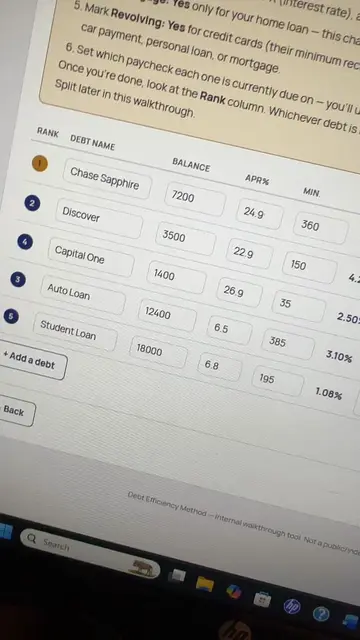
STEP 1. YOU'RE
DEBT BY ONE
NUMBER.
NOT BALANCE, NOT
INTEREST RATE.
MINIMUM PAYMENT DIVIDED
BY THE BALANCE.
A CREDIT CARD
WITH A 70
200 DOLLAR BALANCE
AND A 360
DOLLAR MINIMUM PAYMENT.
THAT'S 5% DEBT
EFFICIENCY PERCENTAGE.
COMPARE THAT TO A CARD WITH
18 THOUSAND DOLLAR
AND 195 DOLLAR
MINIMUM PAYMENT.
THAT'S ABOUT ONE
PERCENT. THE FIRST
CARD IS ROBBING
YOU OF YOUR
FIVE TIMES HARDER
FIVE TIMES HARDER
EVEN THOUGH IT
HAS A SMALLER
THAT PERCENTAGE BECOMES
YOUR ATTACK ORDER.
WHATEVER RINGS FIRST
GETS ADDITIONAL PAYMENTS.
EVERYONE ELSE GETS
MINIMUM PAYMENTS.
NO MORE.
STEP 2. SMOOTH
BILLS
ACTUALLY HAVE A
SPENDING PROBLEM,
TIMING PROBLEM.
THE MAJORITY OF
YOUR BILLS LAND
ON ONE PAYCHECK.
THE OTHER PAYCHECK
GETS LESS.
THAT'S WHAT MAKES
YOU FEEL BROKE
EVERY OTHER WEEK,
EVEN WHEN THE
MATH WORKS OUT
MONTHLY, YOU CALL
YOUR SERVICES,
ASK THEM TO
MOVE YOUR DUE
OTHER HALF OF
AND SPREAD EVERYTHING
EVENLY.
MOST COMPANIES DO
JUST ONE CALL.
THERE'S NO PENALTY.
STEP 3. BUDGET
IN FOUR BUCKETS
IN ORDER.
FIX BILLS FIRST.
RENT, MORTGAGE,
CREDIT CARD OR
DEBT. MINIMUM PAYMENTS
INSURANCE,
CAR PAYMENTS AND
SO ON. THEN
VARIABLE NECESSITIES LIKE
GROCERIES,
GAS, UTILITIES,
ALL THE THINGS
PAY FOR,
BUT THEY FLUCTUATE
EACH TIME.
THEN TARGETED SAVINGS
ARE SINKING FUNDS
LIKE CHRISTMAS VACATIONS
OR A CAR
REPAIR FUND SPREAD
EVENLY ACROSS THE
OR PAYCHECKS THAT
YOU'RE SAVING FOR
WHATEVER SURVIVES ALL
THREE,
THAT'S YOUR MARGIN.
THAT RUNS EVERYTHING
ELSE IN THE
YOU PROTECT FROM
EXCESS SPENDING AS
MUTCH AS YOU
POSSIBLY CAN.
STEP 4. YOU'RE
GONNA SPLIT THAT
MARGIN BY PHASE.
AND THAT PHASE
SAVINGS.
UNDER 25 DOLLARS
SAVED, 60% OF
YOUR MARGIN GOES
TOWARDS SAVINGS,
40 TO YOUR
TOP RANKED DEBT
AS AN ADDITIONAL
PAYMENT.
BUILDING A REAL
BUFFER COMES FIRST.
THAT TWENTY FIVE
HUNDRED DOLLARS,
IT FLIPS 80%
TO DEBT, 20%
TO SAVINGS.
UNTIL YOU'VE BUILT
OF EXPENSES.
THAT'S JUST GONNA
TOTAL OF FIXED
AND VARIABLE VARIABLE
BILLS
TIMES SIX.
ONCE THAT'S DONE,
IT'S 100% TOWARDS
DEBT EVERY MONTH
UNTIL IT'S ALL
DOWN FIVE STEPS.
STEP FIVE. YOU
NEED TO TRACK
EVERY PAYDAY, EVERY
THIS IS WHAT
MAKES THE WHOLE
THING COMPOUND.
WHEN YOUR TOP
DEBT HIT ZERO,
THAT PAYMENT DOESN'T
JUST VANISH,
IT FLOWS BACK
TO YOUR MARGIN.
THE SAME WAY.
AND THE DEBT
PORTION GOES STRAIGHT
AT WHICHEVER CARD
IS RANKED NEXT.
YOUR MINIMUM BURDEN.
ALL THOSE MINIMUM
PAYMENTS ADDED TOGETHER
KEEP SHRINKING FASTER
THE WHOLE WAY
DOWN FIVE STEPS.
FIVE STEPS.
NO LIFESTYLE CUTS,
NO SIDE HUSTLES,
NO WAITING YEARS
FEEL LIKE IT'S
THE TOOL IN
MY BIO RUNS
THESE AUTOMATICALLY FOR
YOU.
IN YOUR NUMBERS,
IT RANKS IT,
IT CALCULATES IT,
IT TRACKS IT.
FREE.
NO CATCH LINKS
IN THE BIO,
SAME AS ALWAYS.