Loading video…
Sound

original sound - floriangadsby
Florian Gadsby · Original audio
0:00–:––
Playing this video’s own audio, so you’ll hear the creator over the sound.
Hook
Posted Jul 28, 2026Video · 2:48by @floriangadsby
We didn’t find a product being promoted in this video. Its hook, format and structure below still show why it took off.
Browse products winning on TikTokThe video likely resonated due to its authentic portrayal of a less glamorous but essential aspect of pottery, offering practical insights into material management and the craft's challenges. The creator's personal anecdotes and clear explanations of the process likely fostered a connection with viewers interested in ceramics.
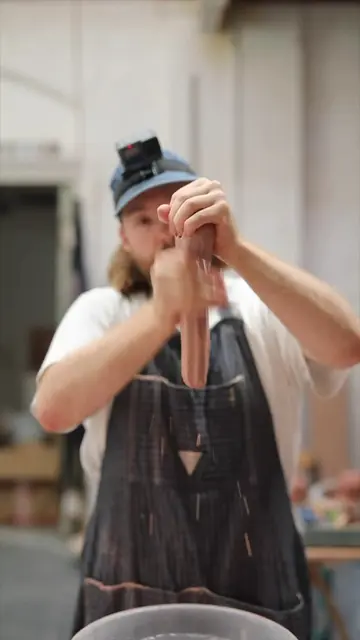
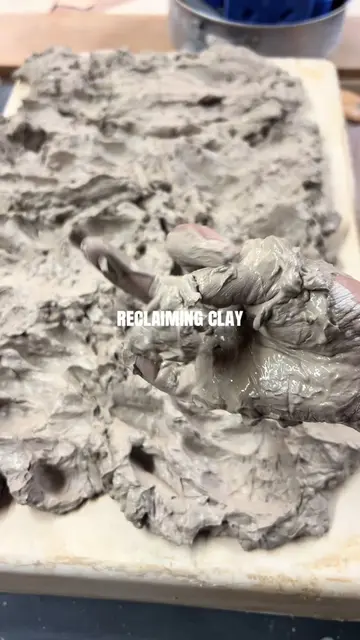
This video explains the process of reclaiming clay in pottery, highlighting its importance and the labor involved. It details how clay can be recycled indefinitely until fired, and discusses the challenges and satisfactions of wedging, including how to manage "tired" clay.
Reclaim. I love it and hate it, it’s one of those endless, never-ceasing tasks in the workshop, a process that’s always at the back of my mind but one that has to be kept on top of. I hate it, as it’s messy and physically tiring, (as no, I don’t have a pug mill, yet…), but it’s hard not to love a process that recycles all your scrap material, turning back into soft, malleable clay that can be thrown with into new pots. Whilst the actual wedging is something I don’t look forward to, in the moment, in that rhythmic procedure of folding and twisting the clay, there’s a sense of repetition and care and hard-work that is, to some degree, quite satisfying. It’s only a task I do every two-weeks during a making cycle and a 30-minute arm workout isn’t the worst thing for me. I lift myself up a few inches, this way I can rely on using my bodyweight when pressing on the clay, instead of using purely muscle alone, this makes wedging for longer, easier. As for the particular method I use, it tends to be a mixture of cut and spiral wedging. If the slab of reclaim has a harder outer shell, I’ll slice that face off, turn it around, and slam it back to that it’s pressing against an internal portion of softer material. Then, I’ll often cut-wedge the block a couple of times in order to get some layers built up, and once the softer clay disperses somewhat, I can then begin to spiral wedge it until fully combined. As a process it does two things, it removes pockets of air, bubbles, that form as the slop is mixed in the bucket, it also fully blends the stoneware types, the different types and the varying textures, into one homogeneous mass. There’s normally more than one stoneware, as recently I’ve been systemically using varying bodies in way of incorporating slightly new tones into my work. Instead of dealing with all of the reclaim for these separately, (a tedious task), the eventual reclaim is mixed together, leading to a one-off stoneware for whatever the clay will be thrown into. But yes, it’s time for a pug mill, I reckon. I need to simplify the steps I dread.
This is the least glamorous part of being a potter,
Introduction to reclaiming clay as a less glamorous but important part of pottery.
Explanation of clay's recyclable property before firing.
Description of the wedging process, its challenges, and the physical effort involved.
Discussion on how clay can become "tired" and lose its plasticity.
Demonstration of how the creator manages reclaimed clay in their studio.
Comparison to past experiences of wedging large batches as an apprentice.
Playing this video’s own audio, so you’ll hear the creator over the sound.
Outliers and viral hits: their videos on Overshot, all time.