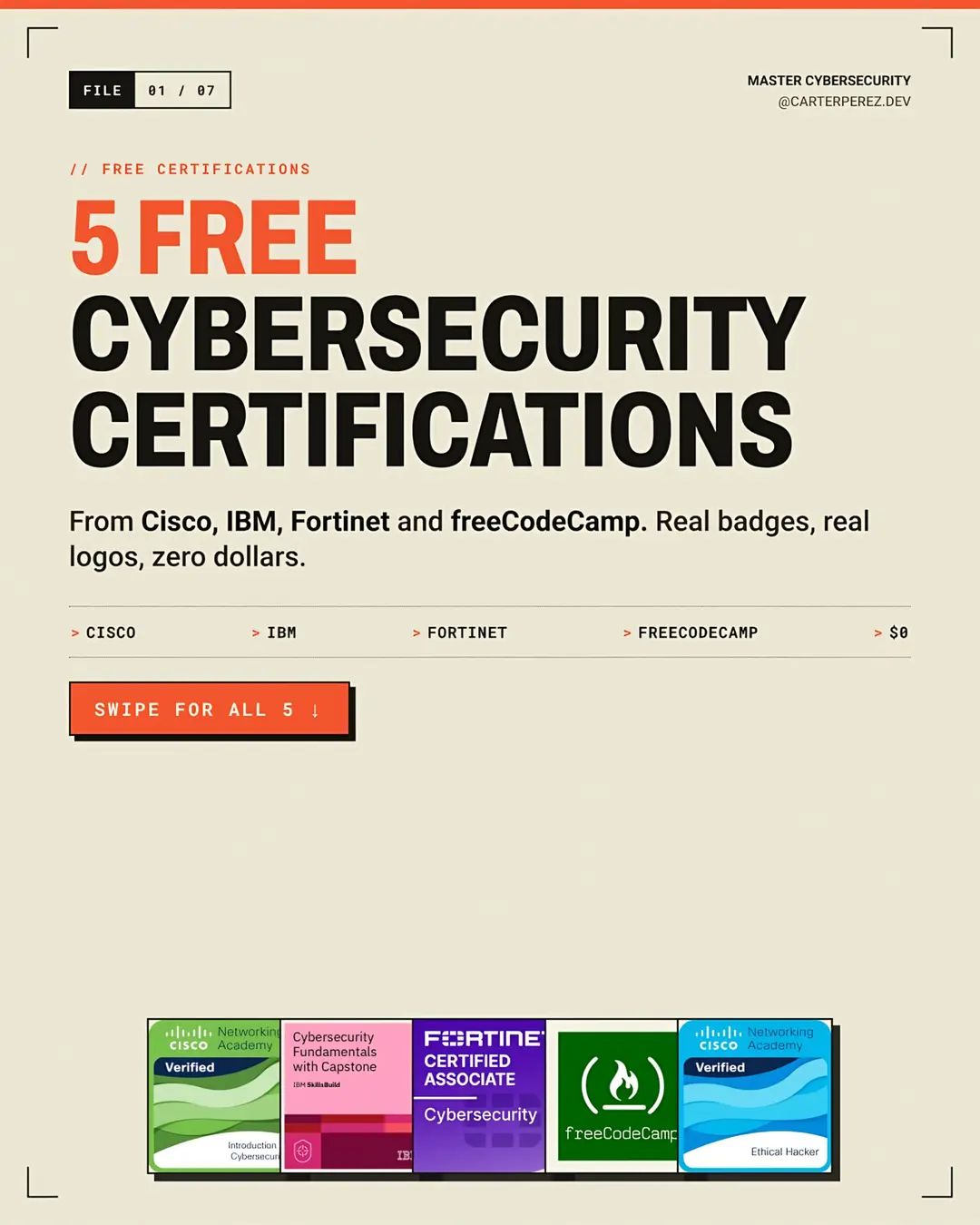
Number 5, the financial aid cheat code. Most people see a Coursera certificate, see the price tag and close the tab. They miss the tiny link that says financial aid available. This is a program Coursera has that almost nobody uses. You find a certificate you want. Google's Data Analytics, IBM's Cybersecurity, Meta's Front-End Developer. You click that link, you fill out a short application. It's two questions: Why do you need financial aid? And how will this certificate help your career? You don't need to prove your income. Just write a few honest sentences. Something like, I'm a warehouse worker trying to switch careers and I can't afford the fee right now. You'll almost certainly get approved. The certificate you get is identical to the paid one. Google doesn't put a little asterisk on it saying, this person was broke. It's the exact same credential. Approval takes about 15 days. You apply today and two weeks from now, you're studying for free. People have used this to get into data science, IT support, and UX design, all from certifications that cost them $0. It's the master key to the best certifications online. Number 4, the digital trap designer. Ever open an app and two hours disappear? Someone designed that. They drew every button, every scroll, every animation, and they got paid well to do it. That person used Figma. Figma is the tool UI and UX designers use to create blueprints for apps and websites before any code is written. Figma for education gives you the full professional version for free. The same tool designers at Apple and Microsoft use daily. This isn't about making things pretty, that's decoration. Design is psychology. It's knowing people read websites in an F pattern or that moving a button one tap further away can cost 20% of sales. The job market for UI/UX designers is huge. Entry-level roles can range from $65,000 to $85,000 a year. You don't need to code. You need to understand people. Your portfolio is everything. Show up to an interview with a case study. Number 3, the digital locksmith. Hackers stole $8 billion dollars from businesses last year. Not with guns, but with a laptop and coffee shop Wi-Fi. Cisco has a free course that teaches you how to stop them. It's called Introduction to Cybersecurity. It takes about 15 hours to finish on all platforms. Cisco is one of the biggest names in networking. When a hiring manager sees Cisco on your resume, they just nod. It's a real credential for one of the most in-demand jobs on the market. Number 2, the cloud shepherd certification. The company that delivers your impulse buys also hosts a massive chunk of the internet. Netflix runs on Amazon servers. Airbnb runs on Amazon servers. The CIA runs on Amazon servers. That last one's not a joke. This is Amazon Web Services, or AWS, which controls 31% of the cloud market. Nearly a third of the internet runs inside Amazon's buildings. Amazon offers a free certification called the AWS Cloud Practitioner. It's the entry-level badge that says, I understand how this cloud thing works. You can study for it in about 40 hours. Amazon's free course, AWS Skill Builder, is available. Once you pass, your certification appears on LinkedIn, and AWS recruiters actually search for it. You become visible to a machine that is actively looking for you. Number 1, the Scrum Master certification. This certification is free, takes about 6 hours to study for, and will make you sound like you know what is happening in meetings, even when nobody dies. Scrum is a framework for getting work done in short bursts called sprints. A Scrum Master facilitates meetings and removes obstacles for the team. Companies pay $80,000 to $120,000 for someone whose main skill is making sure the process runs smoothly. The free certification is from Scrum Study, called Scrum Fundamentals Certified. It costs nothing. Study their free materials, pass a 40-question exam, and get the certificate. Knowing the vocabulary is key. A sprint backlog is the to-do list. A daily stand-up is a 15-minute sync meeting. Speaking this language fluently in an interview signals you belong. The free SFC gets your foot in the door for roles like project coordinator. Once hired, you can pursue the more advanced PSM I from Scrum.org, which costs about $200, and make your company pay for it. That is the move.