Loading video…
All breakouts
11.1Talking HeadOther hookOther
Hook
B Opinion
@bloombergopinion
328.4K followers · usually 3.9K views a post
Views
42.2K
Likes
1.6K
Comments
146
Shares
70
Why it worked
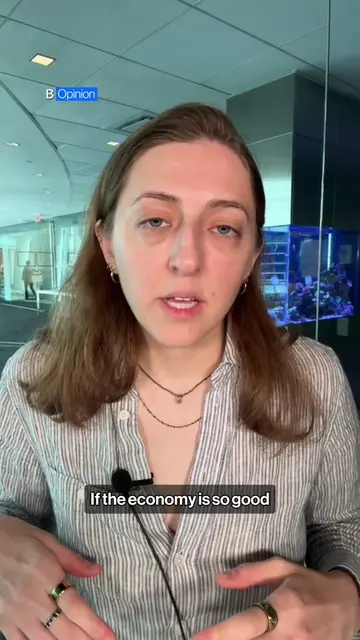
The video explains a complex economic topic (currency intervention) using a relatable analogy (butterfly effect) and clear, concise language, making it accessible to a broad audience.
Summary
The video explains why the US is intervening to strengthen the Japanese yen, which has been weakening for decades. This intervention is notable because it involves the US Treasury, unlike previous attempts by Japan alone, and aims to prevent global financial instability caused by a rapidly depreciating yen.
Structure
- 1Introduction to the butterfly effect in economics
- 2Explanation of the yen's weakening and its impact
- 3Previous interventions and their lack of success
- 4US involvement and potential political motivations
- 5Risks to global financial stability
- 6Analysis of Japanese monetary and fiscal policy
Product placement
Bloomberg Opinion: This is a news organization that produces content. It merely appears as a logo and a page name. Removing it would not change what happens in the video. Bloomberg: This is a financial data and media company. It is cited as the source for a graph. Removing it would not change what happens in the video. US Treasury: This is a government department. It is mentioned as being involved in intervening to prop up the yen. Removing it would not change what happens in the video. Sanae Takaichi: This is a political figure. She is mentioned as a potential recipient of a political favor. Removing her name would not change what happens in the video. Donald Trump: This is a political figure. He is mentioned as a comparison for Sanae Takaichi. Removing his name would not change what happens in the video. Yen: This is the currency of Japan. It is the subject of the video's discussion. Removing it would fundamentally change the video's topic. USD/Yen: This is a currency pair. It is displayed on a graph. Removing it would not change what happens in the video.
Original caption
Both #Japan and the US are intervening to strengthen the #yen. John Authers explains why it’s happening and why it matters.
More from @bloombergopinion
More breakout videos from this creator.