Loading video…
All breakouts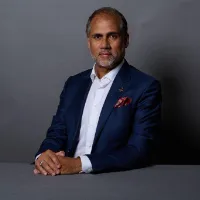
120Talking HeadOther hookFinance
Hook
Alpsh B Patel OBE Fund Manager Author, ex Bloomberg TV Former Visiting Fellow in Business, Corpus Christi College, Oxford University
@greatinvestments
489.2K followers · usually 894 views a post
Views
124.9K
Likes
104
Comments
1
Shares
5
Why it worked
The video likely resonated with viewers by offering a relatable perspective on investment anxiety and decision-making during market volatility. The speaker's personal admission of fear and regret, combined with references to respected investors like Warren Buffett, creates a sense of authenticity and shared experience.
Summary
The speaker discusses their investment strategy, particularly regarding Alphabet (Google). They explain that they tend to hold investments long-term and avoid frequent checking, drawing parallels to Warren Buffett's philosophy. However, they admit to selling Alphabet stock in 2022 due to market downturns, a decision they later regretted.
Structure
- 1Introduction of speaker and topic
- 2Discussion of investment philosophy (long-term, avoid frequent checking)
- 3Comparison to Warren Buffett's approach
- 4Personal anecdote about selling Alphabet stock in 2022
- 5Regret over selling and the fear of market downturns
- 6Conclusion on investment strategy (investing, not trading)
Product placement
Alphabet (Google): acts - it is a company whose stock performance is discussed and analyzed. Removing it would change the video's topic. Bloomberg TV: appears - it is mentioned as a past affiliation of the speaker. Removing it would not change the video's topic. Oxford University: appears - it is mentioned as a past affiliation of the speaker. Removing it would not change the video's topic. Corpus Christi College: appears - it is mentioned as a past affiliation of the speaker. Removing it would not change the video's topic. Goldman Sachs: appears - it is a logo on a building in a graphic at the end of the video. Removing it would not change the video's topic. Warren Buffett: acts - his investment philosophy is quoted and discussed as a comparison. Removing him would change the video's topic. Meta: acts - it is a company whose stock performance is discussed. Removing it would change the video's topic. Microsoft: acts - it is a company whose stock performance is discussed. Removing it would change the video's topic. Amazon: acts - it is a company whose stock performance is discussed. Removing it would change the video's topic. Apple: acts - it is a company whose stock performance is discussed. Removing it would change the video's topic.
Original caption
STOP CHECKING YOUR PORTFOLIO EVERY FIVE MINUTES Your portfolio is not a patient in intensive care. It does not require continuous monitoring, and staring at it will not improve its condition. In fact, checking too frequently can make you a worse investor. Every time you open your investment app, you create another opportunity to become frightened, excited or unnecessarily clever. You see one company falling, another soaring and a headline announcing that markets are either about to collapse or enter a glorious new era. Usually before lunchtime. The result is activity. And activity can feel like intelligence even when it is quietly destroying returns. Brad Barber and Terrance Odean examined more than 66,000 US brokerage accounts in their landmark study, “Trading Is Hazardous to Your Wealth.” The households that traded most frequently earned markedly lower net returns. The most active 20% of households achieved an annualised net return of about 10%, substantially below the market during the study period. The problem was not merely transaction costs. Investors repeatedly made poor decisions, selling investments that subsequently performed better than those they bought. Research: https://faculty.haas.berkeley.edu/odean/Papers%20current%20versions/Individual_Investor_Performance_Final.pdf This is connected to what academics call “myopic loss aversion”. Shlomo Benartzi and Nobel laureate Richard Thaler argued that investors combine two unfortunate habits: 1. They dislike losses much more than they enjoy equivalent gains. 2. They evaluate their investments too frequently. That combination makes ordinary short-term volatility feel intolerable. The more frequently you look, the more often you see losses, even when your long-term investment is progressing perfectly normally. Their research suggested that an evaluation period of roughly one year could help explain investors’ historical reluctance to hold enough equities. Research: https://www.nber.org/papers/w4369 This builds on prospect theory, developed by Daniel Kahneman and Amos Tversky. Their work showed that people do not experience gains and losses symmetrically. A loss generally hurts considerably more than an equivalent gain pleases us. That may have made sense when avoiding a tiger mattered more than finding an additional mango. It is less helpful when managing a pension for the next 20 years. Research: https://doi.org/10.2307/1914185 Experimental evidence supports the same conclusion. Uri Gneezy and Jan Potters found that people receiving less frequent feedback were generally willing to allocate more to a risky asset. Frequent evaluation encouraged greater caution because participants experienced the pain of short-term losses more often. Research: https://doi.org/10.1162/003355397555217 Then there is the “disposition effect”: the tendency to sell winning investments too soon while keeping losing investments for too long. Odean’s study of 10,000 brokerage accounts found that investors showed a strong preference for realising gains rather than losses, even though the investments they sold subsequently outperformed those they retained. Research: https://faculty.haas.berkeley.edu/odean/papers/returns/returns.html Constantly checking also exposes you to attention bias. Barber and Odean found that individual investors disproportionately bought attention-grabbing shares: companies in the news, experiencing unusually high trading volumes or making extreme price moves. In other words, investors frequently buy what is shouting loudest rather than what offers the best combination of quality, valuation, growth, cash returns and risk. Research: https://academic.oup.com/rfs/article/21/2/785/1607197 Even modern app login data tell an interesting story. Research on “attention utility” shows that investors are more likely to check portfolios containing recent winners. Apparently, we do not merely monitor investments to obtain information.
More from @greatinvestments
More breakout videos from this creator.