Loading video…
All breakouts Locked — upgrade to Pro to open.Open on TikTokPro
No preview available · watch on TikTok below
14.1Health
Post
Post by @drjoedamiani
@drjoedamiani
609.5K followers · usually 18.4K views a post
Views
255.7K
Likes
8.6K
Comments
41
Shares
686
We’re still analyzing this post.
Original caption
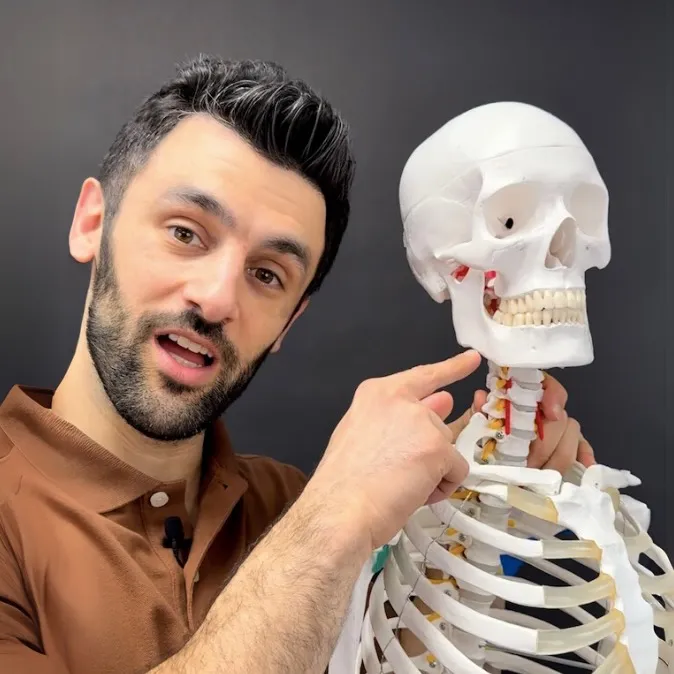
🔥 Throat tension or jaw pain? This little floating bone may be part of the problem! The hyoid bone sits between your jaw and neck and is unique because it doesn’t directly articulate with another bone—it’s suspended and controlled by muscles and connective tissues. 💡 Here’s what’s happening: Two important groups of muscles influence its position: ⚡ Suprahyoids sit above the hyoid and help elevate it. ⚡ Infrahyoids sit below the hyoid and help depress and stabilize it. ⚡ Changes in head and neck posture can alter the position and mechanics of the hyoid, tongue, jaw, and surrounding tissues, potentially contributing to tension or discomfort in the region. So instead of only stretching the muscles underneath, this routine focuses on strengthening the muscles ABOVE the hyoid. 🛠️ 3 exercises to strengthen the suprahyoids: ✅ STEP 1: Rapid mouth opening Quickly open and close your mouth through a comfortable range to challenge the muscles repeatedly and build endurance. ✅ STEP 2: Resisted hold Place your fingers underneath your chin and apply upward pressure while using your jaw-opening muscles to resist the movement. Hold without allowing the mouth to close. ✅ STEP 3: Head lift Lie on your back, slightly lift your head from the mat, and hold. Gradually work toward 60 seconds as your endurance improves. Complete 3 controlled repetitions. 🔥 Why this matters: The goal isn’t just to move the hyoid “back into place.” It’s to improve the strength and control of the muscles surrounding it, which may help improve how the jaw, tongue, throat, and neck work together. Persistent difficulty swallowing, breathing changes, or a new/unexplained lump in the throat should always be medically evaluated. #JawPain #ThroatTension #Hyoid #TMJ #PhysicalTherapy
More from @drjoedamiani
More breakout videos from this creator.


