Loading video…
All breakouts
387Talking HeadDirect Question hookHealth
Hook
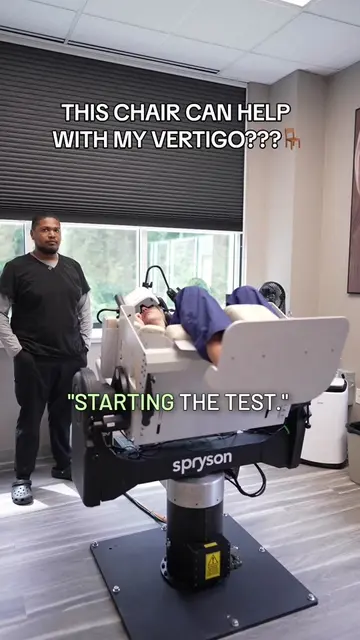
WHAT THIS CHAIR REVEALS ABOUT VERTIGO
@hopebraincenter_
97.2K followers · usually 635 views a post
Views
242.4K
Likes
2.7K
Comments
37
Shares
231
Why it worked
The video effectively explains a complex medical concept using a visual demonstration and clear, concise language. The use of specialized equipment and technology adds an element of intrigue, making the educational content more engaging.
Summary
A medical professional explains how a specialized chair and eye-tracking technology are used to diagnose vertigo. The chair's movements simulate the sensation of motion, and the technology monitors eye movements to determine if the patient's vestibular system is functioning correctly.
Structure
- 1Introduction to the chair and its purpose
- 2Explanation of how the chair simulates motion and triggers eye movements
- 3Demonstration of eye-tracking technology monitoring the patient
- 4Analysis of the data to determine if the patient's vestibular system is calm
- 5Conclusion on the effectiveness of the diagnostic method
Call to action
Book Free Discovery Call: https://hopebraincenter.com/book/
On-screen text
WHAT THIS CHAIR REVEALS
ABOUT VERTIGO
BRAIN
YOU'RE EVENTUALLY
NOT YOU'RE MOVING.
TO THAT POINT...
WE CAN SEE EXACTLY
THROUGH HER EYE
SCREEN OVER THERE.
AND ONCE HER
EYES CALM DOWN...
SHE'S NOT FEELING
THAT MOTION ANYMORE.
AND THEN SINCE
CONSTANT SPEED-
WE KNOW THAT THE
HAS CALMED DOWN,
AND THAT SHE'S
FEEL ANYTHING.
TO THAT POINT-
SHE'S JUST SITTING
AROUND LIKE NORMAL.
AND MAKE SURE
WHEN YOU FEEL LIKE
I STOPPED.
HE DID IT RIGHT ON
COULD SEE HER EYES.
Original caption
Book Free Discovery Call: https://hopebraincenter.com/book/ How does your brain know when you've stopped moving? After rotational movement stops, fluid within the inner ear's semicircular canals continues moving briefly. That vestibular signal can trigger involuntary eye movements known as nystagmus and may contribute to the sensation that you're still moving. Dr. Joseph Schneider demonstrates how advanced eye-tracking technology can monitor these eye movements in real time. During testing, the patient also verbally reports the moment they feel completely stationary. Clinicians can then compare that subjective perception of motion with objective measurements of the patient's eye movements. That relationship can provide useful information about how the eyes, inner ear, and brain are working together to process movement and balance. For patients struggling with dizziness, motion sensitivity, or balance problems, detailed vestibular testing can help clinicians better characterize what's happening and guide individualized rehabilitation. 👁️ Sometimes your eyes reveal what your vestibular system is experiencing before you can explain it. 📅 Schedule your Free Discovery Call today: https://hopebraincenter.com/book/ #VestibularSystem #EyeTracking #Nystagmus #Dizziness #BalanceDisorders #NeuroAI #HopeBrainCenter To learn more about data-driven POTS evaluation, NeuroAI, nervous system rehabilitation, and Dr. Schneider's clinical framework, listen to the full episode of My POTS Podcast and explore the Hope Brain Center resources on https://hopebraincenter.com/book/ ❤️ Book a FREE Consult: https://hopebraincenter.com/book/ 🎙️ My POTS Podcast: https://mypotspodcast.com/ 🧠 Website: Hope Brain and Body Recovery Center: https://hopebraincenter.com/ 🎓 LinkedIn: Joseph Schneider: https://www.linkedin.com/in/joseph-schneider-55b83123 ❤️ YouTube: https://www.youtube.com/@hopebrainbodyrecoverycenter ⏺️ Instagram: https://www.instagram.com/hopebraincenter_/ 📌 Facebook: https://www.facebook.com/hopebraincenter
More from @hopebraincenter_
More breakout videos from this creator.