On-screen text
Dachshund
These dogs are not low-energy, quiet little lap-dogs. They are tenacious, intelligent and full of personality.
I see a lot of people struggle with their dachshunds because they simply aren't giving them the right type of enrichment and exercise.
Dachshunds were bred to be determined, persistent little workers. They want to dig, burrow, shred and investigate. If those needs aren't met, you'll often end up with a very frustrated sausage looking for their own entertainment, which may involve digging in your sofa, shredding your cushions or barking out the window.
Too many people get a dachshund and think a walk around the block or to the park is going to cut it, and they see problem behaviours develop as a result (incessant barking, anyone?).
Also, protect those backs, lads. Nothing can completely prevent IVDD. If a dog is genetically predisposed, that risk already exists. What we can do is manage the environment in a way that reduces unnecessary strain on the spine.
~25% of dachshunds will develop IVDD in their lifetime, so I'd encourage anyone who wants a dachshund to rescue, rather than fuelling the demand for dachshund puppies.
Doodles
Love them. They're no more likely to have behavioural or physical issues than any other breed, so ignore the haters. We're not about breed snobbery here. Just make sure you stay on top of their grooming needs and learn what line brushing actually is before bringing one home.
Remember that poodles are highly-intelligent dogs, so think carefully before bringing one of these guys home. They aren't couch potatoes and need plenty of mental stimulation and enrichment to stay happy and fulfilled.
One thing I have noticed with cavapoos in particular is that I see a lot of gut health issues. A huge proportion of the cavapoos I've worked with have struggled with loose stools, fussiness around food, recurring tummy upsets and, in some cases, parasites. That doesn't mean every cavapoo will have these issues, but it's common enough that it's firmly on my radar.
If your dog is regularly refusing food, has loose stools, or seems to have ongoing digestive issues, speak to a qualified canine nutrition professional sooner rather than later. Gut health tends to become harder to restore the longer problems are left unresolved, and early intervention is often much simpler than trying to undo months or years of digestive dysfunction.
Doodles pt2
When I refuse to condemn or bash a certain type of dog it never fails to make certain people very upset. So this slide is for the people who are feeling big things about the previous slide.
Most of the criticisms aimed at doodles are actually problems within dog breeding as a whole and until those very real issues across breeding as a whole are combatted, and to bash doodles is pointless - and often hypocritical.
Poor breeding? Every popular breed has backyard breeders.
Health issues? We see behavioural and physical issues across all pure breeds, with no exception.
Unsuitable temperaments for some homes? The same could be said for working-line spaniels, shepherds, malinois and plenty of other breeds that are routinely recommended without the same level of outrage.
Coat maintenance? Doodles aren't the only dogs that matt. Poodles, laggottos and other coated breeds require significant grooming too.
The idea that doodles are somehow a uniquely disastrous category of dog isn't supported by the evidence. What I see far more often is people deciding they dislike doodles and then working backwards to justify that opinion.
Personally, I wouldn't choose one myself but I'm not interested in the coat maintenance, but that's a personal preference rather than a moral judgement.
Doodles exist. They make up around a third of my client base. They deserve the same respect, welfare and compassion as any other dog.
Golden retriever
They're popular for a reason. Golden Retrievers tend to build strong relationships with people and genuinely enjoy working with us, which makes them highly biddable and relatively straightforward to train.
However, they also become very big, powerful dogs very quickly. Many of the clients who contact me about struggling with their adolescent dogs have goldens. They spend such a short amount of time in their fluffy potato phase that people often forget what they're going to become. Goldens are not small dogs.
It's vital that you put the work into engagement from day one, and for the love of god, don't allow every person and dog they see to stop and say hello. That approach creates a 35kg, eight-month-old livewire who drags you down the pavement because they expect access to everyone they meet.
Hip dysplasia is something I'm seeing regularly across many breeds, particularly goldens, and often in dogs under a year old. Keep an eye out for signs such as bunny hopping, swaying hips, sloppy sits, unusual difficulty settling, over-arousal or changes in movement.
Avoid slippery flooring, discourage repetitive jumping on and off furniture, limit repetitive high-impact exercise such as endless fetch sessions, and invest in strength and conditioning work from a young age. I'll tag some useful resources in the caption.
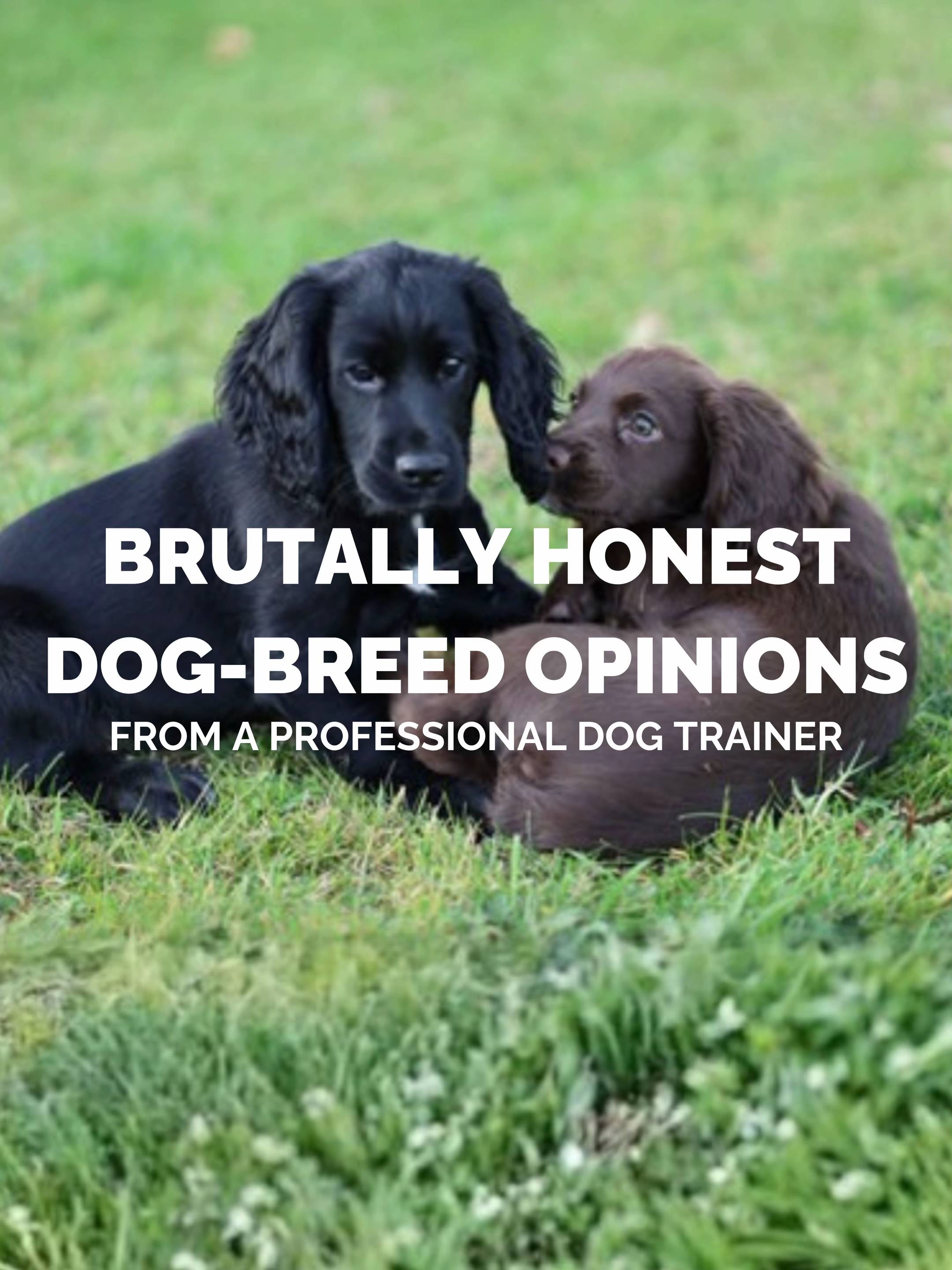
Cocker Spaniel
These are hugely popular dogs right now, especially with families, and they can make fantastic family companions. What often catches people out is just how much they need an outlet for their spaniel instincts, particularly if they come from working lines.
If you don't give your spaniel a job to do, you'll often find yourself dealing with lead pulling, high arousal levels and difficulty settling at home. Force-free gundog classes are brilliant, as is nose work.
These dogs were bred to find and flush birds, which means they have a powerful instinct to scent, search and circle through the environment. Without an appropriate outlet, that instinct doesn't disappear. It simply finds another way to express itself, usually with extreme-lead pulling.
Invest in loose-lead training and give them meaningful opportunities to use their brains and noses and they'll give you everything. If your ideal dog is happy with a quick stroll around the block and very little else, a spaniel probably isn't the breed for you.
I also see a fair amount of resource guarding in gundog breeds. These dogs are bred to pick things up and carry them, which can make possessions feel especially valuable. Always trade for items rather than forcibly removing them, and allow dogs to eat and enjoy chews without interference. The same advice applies to goldens, labs, cockers and doodles.
Border collie
Incredible dogs. Extremely intelligent, highly trainable.
They also possess a very strong drive to control movement - herding.
If that need isn't given an appropriate outlet, they will create one themselves. That can show up as herding family members, children, other pets and, in some cases, moving vehicles.
Obedience training won't address this. Teaching more sits and heels doesn't fulfil the behavioural needs that sit underneath the problem. These dogs need suitable outlets that allow them to engage with their natural instincts safely.
That doesn't mean every border collie needs to work livestock, but it does mean they need activities that channel those instincts appropriately. Collie Balls can be a great option, and I'll tag some excellent resources on instinct fulfilment and herding-based enrichment.
Labradors
Please, I beg of you, teach them to take food gently from your hand when they're young, because these guys love biting your whole hand when they take a treat and it really fucking hurts when they get bigger.
I generally find labs easier than goldens, and don't find them as much of a struggle during adolescence.
That being said, they're still super smart dogs. Make sure you give them plenty of breed-specific enrichment, opportunities to use their nose and continue their socialisation throughout their lives.
Definitely worth investing in semi-regular physio appointments to detect any problems early and keep their bodies fit and strong, as labs are also very prone to issues like hip-dysplasia.
Sighthounds
Noodle-dogs who are fast AF.
They will run rings around you, literally.
Give them opportunities to run, but make sure this is in safe locations. They often come with a strong prey-drive, which means they can take off after a scent or animal and be a mile away in the blink of an eye. Secure fields so they can blow off some seem are your friend!
Invest in lots of play with them at a young age, using flirt-poles and toys with a small and fluffy component. Teach them that they get to chase and bite small fluffy things when they engage with you, so they don't become fixated on rabbits, squirrels etc on walks and become frustrated.
I recommend Tug-e-nuff toys for all dogs, but sighthounds in particular (head to the link in my bio for 10% off all their toys!).
A great dog to consider if you enjoy running yourself, but remember not to start running with them until they are fully grown, to build their stamina gradually and invest in strength training, warm ups and cool downs.
If you have an iggy in particular, make sure you're very careful with their delicate bones. Supervise all play very carefully and I wouldn't encourage play with larger or boisterous dogs.
How to get it right for your dog
If you're looking for dog training advice that keeps your dog's wellbeing and your relationship at the centre of everything, that's exactly what I share here.
If you've got a puppy or a teenage dog and want some guidance, head to the link in my bio to get one week free in my online community. Come and chat with me about your dog in my live online sessions!
If you'd like to learn more about what your dog is trying to tell you and to understand their body language, signals and behaviour, then comment SPEAK on this post and I'll DM you the link to my free webinar on Communicating With Your Dog.
... and make sure you follow along for more tips, and drop a like/comment if you enjoyed this post.