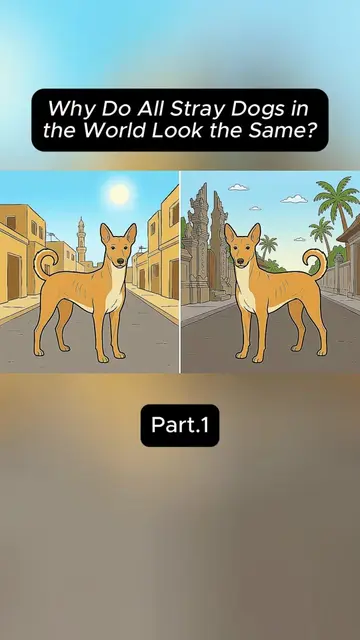
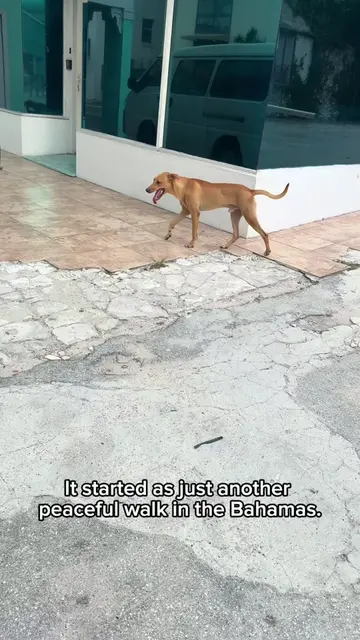
Go to Cairo, go to Bali, go to a beach town in Puerto Rico. And sooner or later, you will meet the same dog. Not one like it. That one. Sand colored ears standing straight up, a long, thin muzzle, and a tail that curls over its back like a hook. Nobody breeds this dog, and nobody registers it. Yet, it has the same face on four continents. For a long time, people had a simple answer: this must be the original dog. The ancestor every breed came from. But that answer is wrong. And the real one is stranger. It runs through a nuclear site in South Carolina. The dogs of Chernobyl. A DNA study that split the world's strays into two families thousands of years apart. It also explains why in America, you almost never see this dog loose. A park ranger setting traps there for wild animals. He kept catching dogs. The same dog, over and over. They dug small pits in the ground with their noses, they hunted in packs, and running through tall grass, they flashed the white underside of their tails at each other like a signal. His first thought was the obvious one: strays. Somebody's pets gone wild. It took him years to see what he was really looking at. A dog that looked like the Dingo of Australia, living in the American South. If you grew up where dogs live loose, you already know this animal. It weighs between 15 to 25 kilos, with a short, rough coat, ribs that show even when it is well-fed, and that tail. Every place has a name for it. In the Caribbean, it is the Potcake, after the burnt rice at the bottom of the pot. In India, it is the Desi Dog, the dog of the land. In English, it got a crueler name: Pariah Dog. And it is not rare. Of the billion dogs on Earth, 3 in 4 live like this, with no owner at all. The pet with a collar and a vet is the exception. So, is this the original dog? The one every other dog came from? Before we answer, let's ask one thing. If you leave any dog alone, and it goes back to this. Put a Great Dane, a Pug, and a Beagle on an island, come back after enough generations, and their descendants will have melted into this one sand dog. Two centuries ago, a British official on Sumatra wrote that dogs brought from Europe lost their qualities within a few years and turned into the local Pariah Dog. By accident, that experiment has now been run. In 1986, Chernobyl was evacuated, and the pets stayed behind. Almost 40 years on, scientists decoded the DNA of about 300 dogs living around the plant. They are mixed and they breed freely, but they have not melted into anything. Their closest match is still the German Shepherd. A few years ago, a British official on Sumatra wrote that dogs brought from Europe lost their qualities within a few years and turned into the local Pariah Dog. By accident, that experiment has now been run. In 1986, Chernobyl was evacuated, and the pets stayed behind. Almost 40 years on, scientists decoded the DNA of about 300 dogs living around the plant. They are mixed and they breed freely, but they have not melted into anything. Their closest match is still the German Shepherd. The most popular idea says yes. Leave any dog alone, and it goes back to this. Put a Great Dane, a Pug, and a Beagle on an island, come back after enough generations, and their descendants will have melted into this one sand dog.