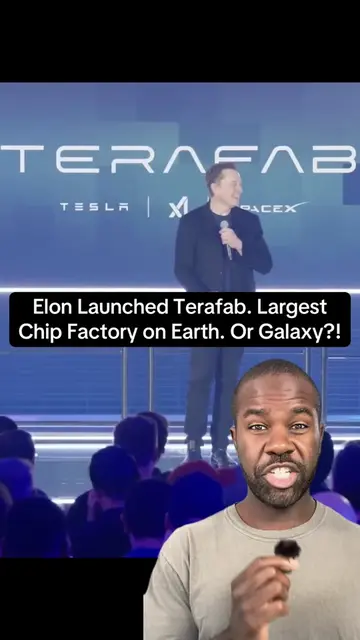
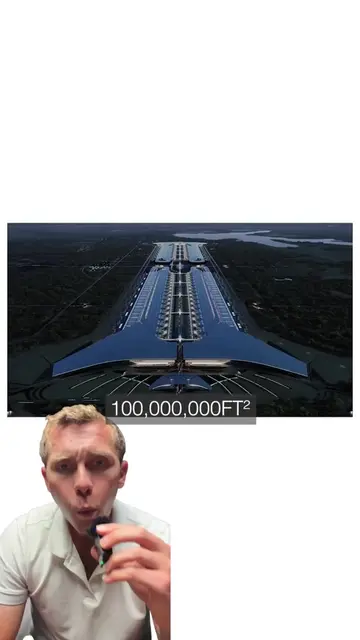
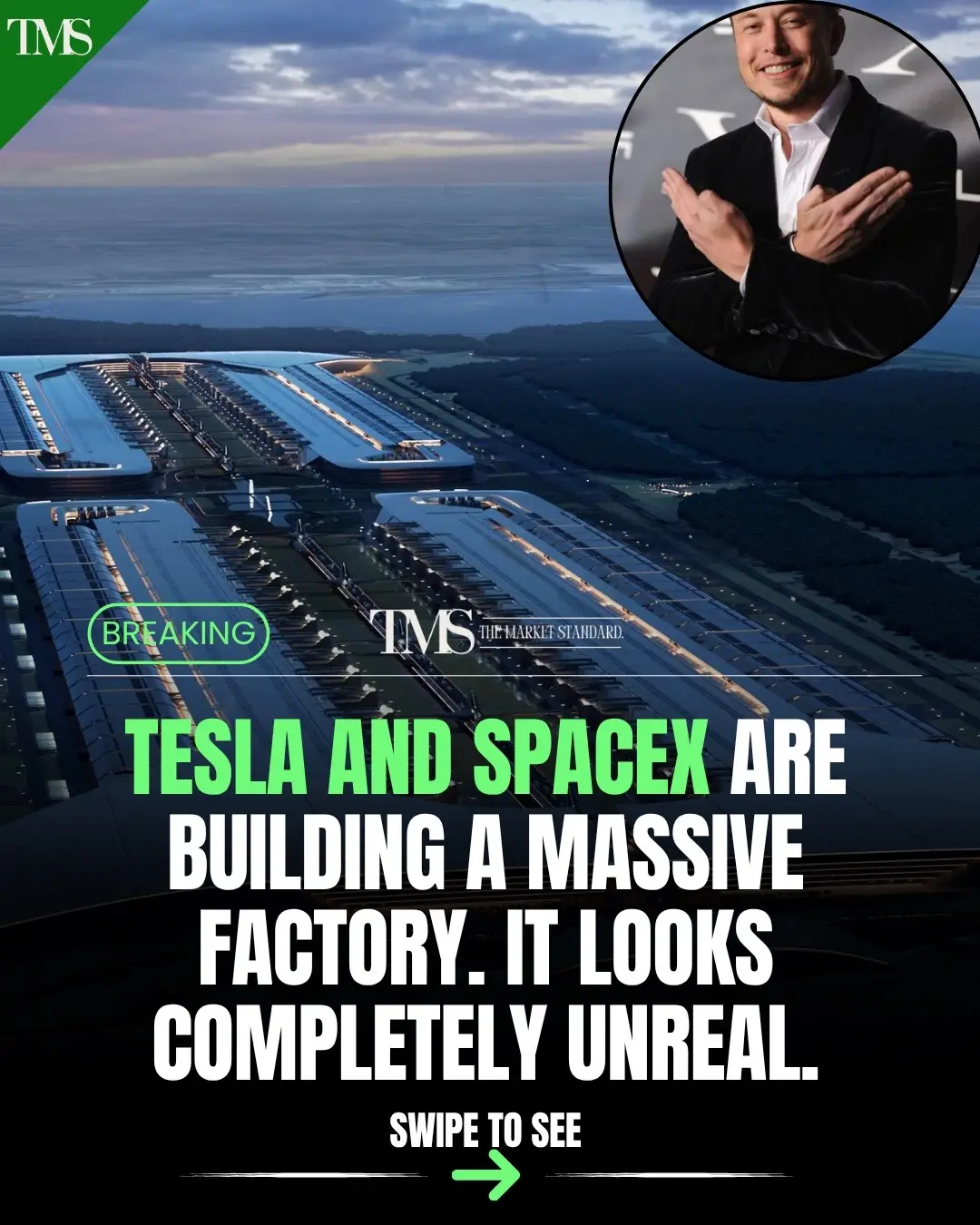
Elon Musk's companies have lined up $16.8 billion dollars for the first phase of a chip factory called Terafab. And he says modern chip factories are getting their clean rooms wrong. TechCrunch reported the figure on August 6th when Tesla and SpaceX announced it together. So treated as the company's own number. TSMC spends about that much every three months. But Terafab isn't trying to outspend TSMC. It's trying to build a chip factory a different way. And if that works, the advantage TSMC spent decades building starts to shrink. The first phase is going up beside the Gibbons Creek Reservoir in Grimes County, Texas, on land around a shutdown coal power plant northwest of Houston. Engineering News Record reported that recent drone footage already shows earthmovers working the site. Musk has described the finished factory as the largest and most valuable building on earth by far. For now, that's a promise from the man selling it. And the full plan is a lot bigger than the headline number. Filings with the state of Texas lay out a buildout running through 2036, adding up to about $119 billion dollars. That's close to two full years of TSMC's spending at this year's pace, poured into one site in rural Texas. Phase one is meant to start commercial production in 2028, and every phase after that only happens if Tesla and SpaceX decide to keep going. The idea itself started almost as an aside. At Tesla's shareholder meeting last November, Musk told investors the company might have to build a Terafab, which he described as like Giga, but way bigger. By March, he was launching it on a livestream from the old Seaholm Power Plant in downtown Austin as a joint project between Tesla and SpaceX. SpaceX had absorbed Musk's artificial intelligence company, XAI, in February. So the rocket company now carries the AI ambitions too. The plan puts logic chips, memory, packaging, and testing all under one roof in Texas. Two kinds of chips come first. One is an inference chip for Tesla's cars and its Optimus humanoid robots. The other is a hardened chip built to survive in space for the data centers SpaceX wants to put in orbit. So why would a car company and a rocket company try to make their own chips in an industry where even Intel has struggled to keep up? Musk gave the answer himself on Tesla's earnings call in January. He said the company would have to build Terafab to remove the probable constraint in three or four years. At the March launch, he put it even more simply. We either build the Terafab or we don't have the chips. And we need the chips, so we build the Terafab. Right now, Tesla's chips come from someone else's factories. Musk has said TSMC will make the AI5 chip, first in Taiwan and then in Arizona. Samsung signed a contract to build the AI6 at its new fab in Taylor, Texas. On Tesla's call in July, Musk said the AI5 is hopefully in volume production around the middle of next year. That chip is meant to run the cars and the robots. So every month it slips is a month Tesla's biggest bets wait on someone else's schedule. Until then, Tesla is waiting in the same line as Apple, Nvidia, and AMD, buying capacity from the same handful of factories. And one of those factories owns the line. TrendForce found that TSMC took a record 72.5% of all contract chip-making revenue in the second quarter of this year. That's nearly three of every four dollars that chip designers around the world paid someone else to build their chips. Samsung, in second place, took in less than a 12th of what TSMC did. TSMC's real edge isn't the machines, because anyone with enough money can order the same tools from ASML, Applied Materials, and Tokyo Electron. Its edge is yield, the share of chips on each wafer that actually work when they come off the line. Decades of running those machines, fixing their problems, and serving customers in every corner of the industry have turned that into the hardest thing in the industry to copy. Musk can't buy his way to the front of TSMC's queue, and he can't download TSMC's experience. Which is why his boldest idea for Terafab is about the air inside the building. In a podcast interview with Peter Diamandis released in January, Musk went after one of the most expensive habits in chip making. I think they're getting clean rooms wrong by the way in these modern fabs, he said. Then he made a bet. I am going to make a bet here that Tesla will have a 2-nanometer fab, and I can eat a cheeseburger and smoke a cigar in the fab. Two nanometers is the same class of process TSMC only started mass producing at the end of last year after years of development. So Musk is promising the most advanced kind of chip factory there is with the kind of air you'd find in a burger joint. His reasoning comes down to one line from the same interview. The wafers, he said, should just maintain wafer isolation the entire time. To see why that matters, picture the inside of a normal advanced fab. The entire production floor is a clean room. Filtered air pours down from the ceiling and out through the floor without stopping. And every worker on that floor wears a full-body suit, a hood, and a mask. All of that exists to keep dust, skin flakes, and droplets away from the wafers. Musk's idea turns the logic around. If the wafer never touches room air, then the room itself can be ordinary. And you stop paying to keep an entire factory floor that clean. The reaction from the industry press was not kind. Tom's Hardware pointed out that eating and smoking are banned in the cleanest clean rooms, and that stray particles could end up on the mirrors inside an EUV machine. Its writer went further and suggested the remarks showed a limited understanding of how leading-edge fabs actually work. Inside a real fab though, Musk's idea looks a lot less strange because the industry already does most of it. Walk through any modern fab that processes the big 300-millimeter wafers, and you won't see wafers sitting out in the open. They travel between machines inside sealed plastic pods called FOUPs, short for Front Opening Unified Pods. Think of a sealed lunchbox that only opens once it's locked onto the machine. Each machine also has its own mini-environment, a small enclosure with its own filtered air built around the spot where the pod opens. SEMI, the industry's standards body, first published the specification for these pods in 1997. That's a full decade before the first iPhone went on sale. And the industry asked Musk's question almost as soon as the pods arrived. Back in the late 90s, Solid State Technology reported that sealed pods could isolate wafers from surrounding air, allowing fabs to use a lower-grade clean room around them, which could cut costs. The same report carried the warning that came with it. Those savings disappear the moment yield suffers. So the cheeseburger bet is an old idea pushed further than anyone has dared to push it. Musk wants to keep the sealed boxes and drop most of the ultra-clean room that surrounds them in today's fabs. The reason nobody has gone that far is simple. A wafer is not sealed every second of its life. It leaves the pod every time a machine processes it. And every machine has to be opened up by engineers for maintenance, sometimes for hours, with its insides exposed to whatever is floating in the room.