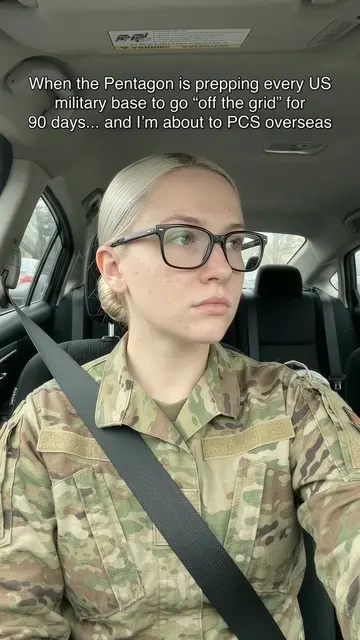
Governments around the world have been telling people to stockpile food, water and emergency supplies. And now some prominent voices are also issuing their own warnings. Biggest question you guys are putting in my comments is why? What is driving this global push for emergency preparedness? Let's start with what we're seeing happening overseas. The United Kingdom just launched a nationwide campaign called Be Ready, telling households to keep at least three days of emergency supplies. Japan is recommending at least three days of food and water, preferably a week at best. Sweden is recommending seven days. Germany is recommending 10 days and Taiwan wants households to have a week of essentials. Other countries, including Finland, France, Ireland and Poland, have also issued preparedness guidance. Here's what caught my attention. Britain's Defence Secretary, Wes Streeting, recently went on the BBC and other media outlets. He warned that hostile countries could have the military capability to attack by 2030. He is saying Britain and its allies have roughly one thousand days to prepare. Here in the United States, the Pentagon is developing an initiative called Fortress. Goal, though, is to keep major American military bases operating for 90 days without outside support. That includes power, water, fuel, communications. And now former FBI Deputy Director Dan Bongino is urging Americans to prepare as well. There's nothing wrong with being prepared. It's not panicking or anything like that. You know, the thing about Dan Bongino is he was the number two in charge at the FBI. He had access to powerful people, national security, intelligence. Conservative commentator Glenn Beck has issued an even more stark warning. I've been tagged in this a lot. I don't often give Glenn Back a lot of attention. And do I think you should? I'm not sure. I'm going to put all of the information in front of you and you do with it what you will. What exactly are governments preparing for? It's one of the main questions I keep seeing. The concerns include cyber attacks that could disrupt electricity and communications. A lot of it is AI driven some fear around that. They're worried about sabotage, which targets critical infrastructure. They're worried about military conflict that would interrupt supply chains. And of course, they're always worried about natural disasters that could leave communities without essential services. There is no verified evidence that all of these countries are responding to one specific, imminent threat. Again, the question I keep seeing is what do they know that we don't? There's no proof that that anything is happening. British officials say their campaign isn't necessarily about one particular emergency, but we are seeing a growing emphasis on preparing ordinary people like you and I for disruptions that really could affect our everyday life. So, that brings us back to the question that so many of you have been asking after my last video. Why now? We don't know the answer to that. So stay tuned. Let's continue to look into the research and the sources. I'll keep you posted on what I find. I'm Simone De Alba. I'm a journalist in Washington, D.C. Tell me what country you're watching from and whether your government is telling you to prepare for an emergency.