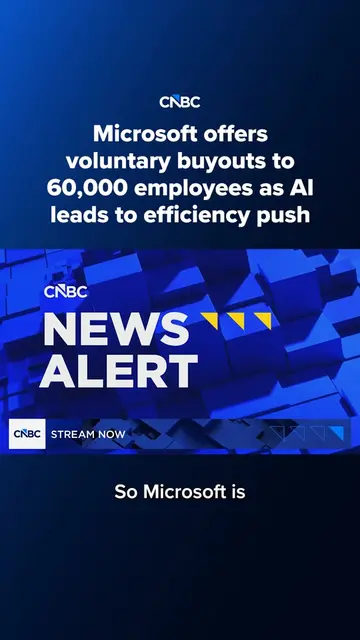
Viral ngayon ang Microsoft because 60,000 Microsoft employees ay BABAYARAN daw nila para kusang umalis sa kumpanya nila. Watch this video until the end dahil i-reveal ko sa iyo kung bakit ginawa ito ng Microsoft habang bilyon-bilyon ang ginagastos nila sa AI. First, let me give you a brief context. Microsoft is one of the world's biggest technology companies, founded by Bill Gates and Paul Allen, and known for products like Windows, Xbox, Microsoft 365, Azure, and Copilot. Now, on October 26, Microsoft announced a Voluntary Exit Offer or VEO. So basically, around 60,000 eligible employees can choose to leave the company in exchange for financial support and help transitioning to their next career. Pero just to be clear, hindi ibig sabihin na 60,000 employees ang tatanggalin. Voluntary siya, by the way. Employees still decide kung aalis sila or mag-stay. But here's the crazy part: Microsoft had around 223,000 employees worldwide, so roughly one out of every four employees could potentially receive this offer. And according to reports, kasama rito ang people for teams like Windows, Xbox, Finance, HR, Copilot, and even some AI-related groups. Pero the question is, why would Microsoft offer thousands of employees na umalis na lang sa kumpanya nila, especially when the company isn't really struggling? Because actually, here's the reason why: Microsoft reported a 331.8 billion in revenue for fiscal year of 2026. Pero hindi ito lahat ng start sa October offer. Matatandaan na earlier this year, Microsoft already offered a voluntary retirement program to thousands of employees. Then, this July, the company cut around 4,800 roles. And this is where the AI question comes in. Are these people being replaced by AI? According to Microsoft, hindi naman daw. The company said those eliminated roles were not being replaced by AI, but at the same time, Microsoft also admitted that AI is changing how work gets done, which skills are needed, and how teams are structured. And while all of this is happening, Microsoft is also spending heavily on data centers, chips, and infrastructure needed for its AI expansion. So, the story isn't simply that Microsoft is replacing 60,000 people with AI. That's not what the evidence shows. The bigger story is that Microsoft is reshaping its workforce while reshaping how work itself is being done. And that's why the 60,000 employee offer matters. So, what are the things that we may be able to learn from this kind of situation? Number one, growth doesn't guarantee your place. Microsoft is making more money than ever. That doesn't automatically mean every existing role is more valuable, because companies don't just protect jobs just because the company is growing. They protect the work they believe will matter next. And sometimes, the company can be winning while your role is slowly losing relevance. Lesson number two, efficiency changes what "Enough" means. Before, a team might need 10 people to produce a certain result. But when better tools allow five people to produce the same output, suddenly the question isn't about kung magaling nga ba talaga ang limang tao na 'yon. The question becomes, does the company still need 10? Technology doesn't always replace people because they're bad; sometimes, it simply changes the math. Lesson number three, the safest job can become risky. One of the most dangerous assumptions is believing you're safe because you've been valuable for a long time, because companies don't organize themselves around what work yesterday. They organize around what they think they'll need tomorrow. Your experience gives you an advantage, but only if you can carry it onto the next version of the game. Real talk, sometimes the biggest career warning isn't getting fired. It's realizing that the company is changing faster than you are. Because at the end of the day, palaging magbabago talaga 'yan. Babago 'yung tools nila, magbabago 'yung sistema, and even the people they need to win. And the dangerous part is this: your job might still exist today while slowly becoming less important tomorrow. So don't just build a career around being good at what you do now. Build yourself into someone who can still create value even when the game completely changes. Because the safest position is not having a permanent job. It's becoming too useful to be left behind.