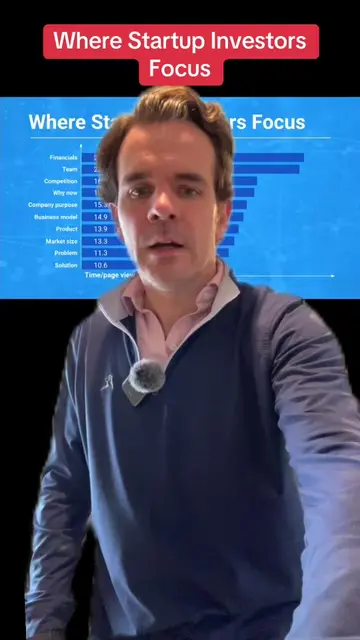
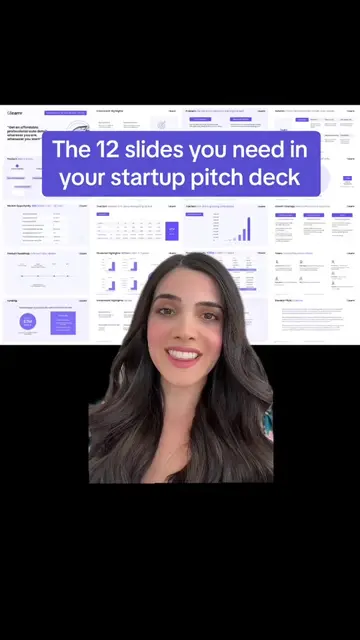
Hey guys, so Sequoia Capital, the VC that is behind such successful stories like WhatsApp, Stripe, Airbnb and many more, they just came out with a pitch deck template that I'm gonna be walking you through today. So the pitch deck template ultimately is what you're gonna be using with investors when you're looking to raise money. In this case, we're gonna be starting out with a cover of the pitch deck. But before anything, make sure that you comment pitch on the comment section so that way you can always reference back to this video. Now for the cover, always you wanna start with a big logo of who you are with maybe like a tagline and then on the background with one picture, a visual that is going to showcase people essentially what you guys do. You guys are girls. Now in this case, the best way to ask yourself what is the visual that I could put in there, here's the way that you would go about it. If you would go into a room full of investors and they were to ask you, what do you do with your company, what would be that visual that you would hand across the table and why if you couldn't talk because your lips were sealed? And that's ultimately the visual that you would be using for your cover slide. Then you will be going into the company purpose. On the company purpose is more like an executive summary slide, the way that you wanna really portray it and ultimately the way of doing this is you wanna put a really nice purpose statement in there with perhaps like some key stats that will show where you can showcase progress and traction and with a nice visual with what the company is as a whole. Next you wanna go into the problem. It's not multiple problems, it needs to be one single and a really big exciting problem that perhaps has different ramifications of different other areas where that problem is sympathetic. And the way that you wanna go about this one is go ahead with putting maybe one or two very key important metrics that showcase the size of that problem. It could be a percentage amount, it could be a billion dollar amount, but you wanna make it in big so that the investor can see right away how big of a problem are you actually. Then you wanna go into the solution. On the solution is like more like as a introducing whatever the name of your company is and whatever the solution that you're bringing to market, how you're covering that gap, but putting it in a way that is not overwhelming, something that is straight to the point where they see it and they can either relate to it directly or relate to it indirectly. Then the why now, why do you wanna go with this? Because in the end is all about being at the right time in history with whatever company that you're executing or whatever solution that you're bringing to market. So again, talk about timing, talk about, you know, how, you know, things have been progressing in your space and perhaps, you know, like how is not just the timing of the market but also the timing of you, of why you are the right people seated on the right seat of the bus to execute. Then the market size. Don't go too crazy on the TAM, the SAM, the SOM. That's ultimately my perspective. I think that the way that you can showcase the market size so that people can see it right away is, again, put the total market size, it needs to be in the billions, so a billion dollar plus, because if it's under a billion, it's not going to justify the risk that the investor is taking. And then you wanna talk about the KGAR. The KGAR is the compounding annual growth rate, meaning how fast is your company growing, or sorry, not your company, your market on a yearly basis. So year by year you wanna make sure that that is 5% and up, at least. Then you wanna talk about the competition. Now the best way to go about this is you wanna put a Y and an X axis and you wanna put yourself right at the top on the top right because that's always where the I tends to go. But always remember, if you could label that Y axis and that X axis, how you would do it, very simple. What are the two biggest competitive advantages that you have that play to everyone else's weakness? And right away you will be able to set yourself apart from everybody else. Then on product, you wanna really break it down. You wanna showcase more like, not like telling someone about the car, you know, sort of speak, but really getting someone to experience that car, getting inside of it, getting to feel, touch, you know, see the technology. That's what you wanna do when you're showcasing the product. Then on the business model is how are you monetizing? How are you thinking about creating something that has a repeatable and scalable business model and do it in a way that people can get right away because remember, on pitch decks people only have 2 minutes and 41 seconds when reviewing a presentation. Again, don't forget, throw in pitch in the comment section so that you don't forget this video. Then you gotta talk about the team. On the team you wanna talk about why you have the right people seated on the right seats of the bus to execute and to take this to the promised land. You wanna talk about what have been universities that that you all attended, you know, perhaps throw some logos in there, companies that you perhaps founded before that had a nice exit or maybe other larger corporations that you were an employee. But here you wanna always showcase what are the biggest wows on each one of you. And I wouldn't put like every single one in the team. I think that you wanna put either the founders or you wanna put the management, the leadership team. Then you could do that on one slide and on the follow up slide you could put either the board of directors or the board of advisors that maybe they're like they have like great names that you can leverage. Then you're gonna go into the financials. Remember the financials is the most important piece of information. Typically here they spend investors on average 23 seconds and it's the number one piece of information where they spend the most amount of time on reviewing. Most people, they make the mistake of taking a screenshot of their financial model and throwing it on the presentation. Just make it easier and less overwhelming for the investor to review. So break it down into different slides. Maybe you can create anywhere between two to three slides in order to showcase the financial information. And the last one is the thank you slide. On the thank you slide you just put your contact information and off to the races. If you need any help with fundraising or with putting together your deck, book a meeting with me, alejandrocremades.com/consulting, we'll be very happy to help you out.