Loading video…
All breakouts
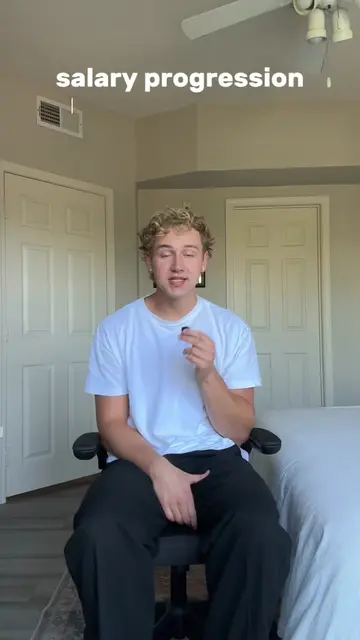
95.3Talking HeadContrarian hookEducation
Hook
If you can't pass a coding interview in 2026, just cheat.
@thad.codes
8.8K followers · usually 1.8K views a post
Views
173.2K
Likes
15.1K
Comments
57
Shares
879
Why it worked
The video uses a provocative hook ('just cheat') to frame technical educational content as a 'secret' hack, which increases viewer retention and engagement.
Summary
The creator explains how to use the constraint section of LeetCode problems to determine the optimal algorithm complexity for a given input size. He demonstrates how to map input constraints to specific algorithm categories like brute force, dynamic programming, or binary search.
Structure
- 1Hook: The controversial claim about cheating
- 2Explaining the Time Limit Exceeded error
- 3Introducing the constraint section as a guide
- 4Mapping input size N to algorithm complexity
- 5Closing advice and call to follow
Call to action
If you want to land a software engineering role in 2026, drop me a follow, give this tip a try, and I'll see you tomorrow.
On-screen text
pass a coding
interview in 2026,
cheat.
completely unpatched
TLE error at 10-20 million or about 10^7 operations
53. Maximum Subarray
n < 20
time complexity: 2^n or n!
algos: backtracking/brute force
n < 3000
time complexity: n^2
algos: dynamic programming, LIS-style
3000 < n < 10^6
time complexity: n or n log n
algos: greedy, 2 pointer, sliding window, prefix/suffix
n > 10^6
time complexity: log n or constant
algos: binary search, math
Original caption
sharing the secret method to find the algo to any leetcode problem #codinglife #computerscience #softwareengineer #codinginterview #leetcode
More from @thad.codes
More breakout videos from this creator.