Loading video…
All breakouts

17.4Talking HeadResult / Flex hookAI Tools
Hook
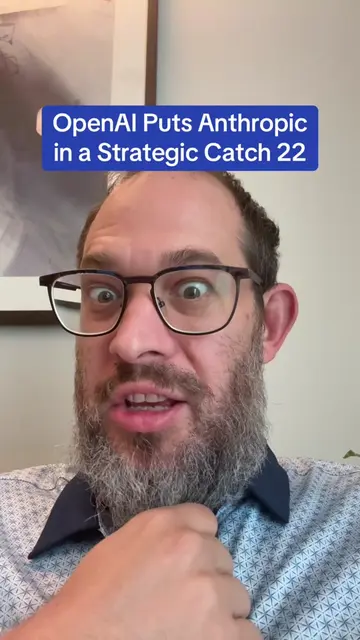
One 200 line prompt just destroyed $285 billion in market cap.
@nate.b.jones
485.2K followers · usually 29.8K views a post
Views
553.4K
Likes
26.4K
Comments
829
Shares
4.1K
Why it worked
The video uses a high-stakes, contrarian hook about a massive financial loss to capture attention, then provides a clear, logical breakdown of a complex industry shift that resonates with business-focused viewers.
Summary
The creator discusses how AI agents are disrupting the traditional SaaS business model by challenging the 'per-seat' pricing structure. He argues that while SaaS companies aren't dead, they face significant pressure to adapt their pricing and development strategies to an agent-driven future.
Structure
- 1The impact of AI on market cap
- 2The threat to traditional SaaS pricing models
- 3Why SaaS companies are in crisis
- 4The future of software economics
On-screen text
One Prompt. $285B GONE
A 200 LINE PROMPT JUST DESTROYED $285 BILLION IN MARKET CAP.
THAT IS WHAT HAPPENED WHEN A PRODUCT MANAGER AT ANTHROPIC RELEASED A 200 LINE SKILL FOR CLAUDE COWORK PLUG IN. IT ALLOWS CLAUDE COWORK TO ACT AS ESSENTIALLY A PARALEGAL. IT CAN MARK UP NDAS. IT CAN DO A LITTLE BIT OF LOOKING AT CASE LAW IF YOU'VE HOOKED IN THE DATA.
AND WHAT GOT WALL STREET NERVOUS IS THAT IF YOU CAN WRITE A 200 LINE PROMPT AND DO THAT MUCH WORK WITH AN AI, WHAT IS THE VALUE OF FANCY LEGAL TOOLS LIKE LEXISNEXIS? WHY WOULD YOU PAY FOR THEM?
AND REALLY, THE DEBATE IS NOT ABOUT DATA. SO MANY OF THESE TOOLS THAT PEOPLE PAY FOR, THEY HAVE ACCESS TO LIKE, YEARS AND YEARS OF CASE LAW, FOR EXAMPLE. YOU CAN'T VIBE CODE THAT.
BUT THE IDEA THAT YOU CAN CHARGE PER HUMAN SEAT, THAT IS IN DANGER. BECAUSE AT THE END OF THE DAY, THE VALUE WE'RE GETTING FROM SOFTWARE ISN'T DRIVEN PER HUMAN SEAT ANYMORE. IT IS DRIVEN PER AGENT. IT IS DRIVEN BY AGENTS WHO CAN DO WORK FASTER AND FASTER AND FASTER, FASTER THAN HUMANS CAN.
AND SO WALL STREET IS REALLY WORRIED BECAUSE TRADITIONAL SOFTWARE AS A SERVICE OR SAAS ECONOMICS ARE ALL DRIVEN ON THE IDEA THAT HUMANS ARE THE BOTTLENECK. HUMANS NEED TO PAY PER SEAT, AND THEY GET NICE REVENUE PER SEAT.
THIS IS WHY SALESFORCE STOCK IS DOWN ABOUT 40% THIS YEAR. IT'S JUST NOT LOOKING GOOD IF YOU'RE A SAAS COMPANY AND YOUR WHOLE BUSINESS MODEL DEPENDS ON PER SEAT ECONOMICS.
AND IT GETS MORE INTERESTING THAN THAT, BECAUSE RIGHT NOW, IF YOU'RE A SAAS COMPANY, YOU KNOW THIS, RIGHT? EVERY SAAS COMPANY HAS AI ON THEIR ROADMAP SOMEWHERE.
BUT YOU, WITH THE SAME POOL OF DEVELOPERS, HAVE TO BOTH SUSTAIN THE CURRENT SOFTWARE AND ALSO BUILD THE FUTURE, WHICH HAS TO BE AI AGENT NATIVE, AND YOU HAVE TO CHANGE YOUR PRICING STRUCTURE.
IT IS NOT EASY. THIS IS ONE OF THE REASONS WHY SAAS COMPANIES ARE IN CRISIS RIGHT NOW.
I AM NOT ONE OF THOSE PEOPLE WHO THINKS THAT SAAS COMPANIES ARE ALL DEAD. IT IS HARD TO BUILD ENTERPRISE SOFTWARE. I DO NOT THINK YOU CAN JUST VIBE CODE YOUR WAY TO THE KIND OF DATA ADVANTAGE THAT YOU GET IF YOU'VE BEEN A SALESFORCE CUSTOMER AND ALL OF YOUR CLIENT DATA LIVES THERE. IT IS DIFFICULT TO REPLACE THAT.
BUT I THINK THE IDEA THAT YOU CAN JUST CHARGE FAT MARGINS PER SEAT, THAT IS GONNA GO AWAY. AND THAT PRICING MODEL UNDERLIES A LOT OF WHAT WE TRADITIONALLY THINK OF AS SOFTWARE ECONOMICS.
SO AI IS COMING, AI IS DISRUPTING, AND WE'RE GONNA HAVE TO SEE WHAT THE FUTURE HOLDS FOR SOFTWARE.
Original caption
One 200 Line Prompt Destroyed SaaS Stocks. What's your take? Is SaaS DOA or not?! #ai #chatgpt #learn #LearnOnTikTok #stocks
More from @nate.b.jones
Their other posts in the index, biggest breakout first.