Loading video…
All breakouts
3.0Talking HeadContrarian hookAI Tools
Hook
Most devs using Claude Code are wasting it
@codenameposhan
14.7K followers · usually 7.7K views a post
Views
20.7K
Likes
561
Comments
12
Shares
128
Why it worked
The video effectively demonstrates a sophisticated workflow for using AI coding tools, moving beyond simple prompts to a system-based approach. It highlights a practical solution (DevSwarm) for a common developer pain point (managing multiple AI sessions), making it highly valuable and shareable content.
Summary
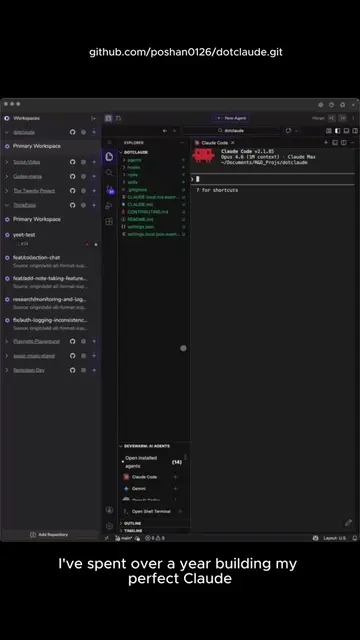
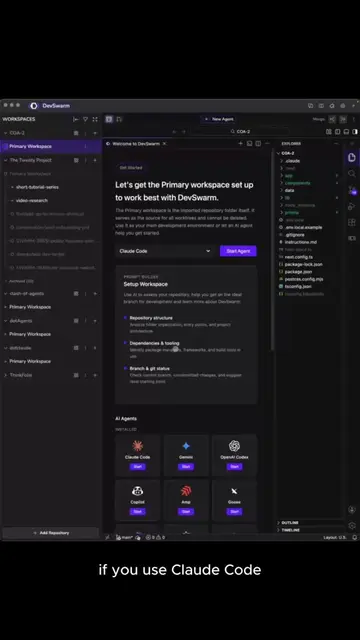
This video explains how to leverage Claude Code beyond basic chatbot functionality by building a system of hooks, rules, agents, and skills. It introduces DevSwarm as a platform that enables running multiple isolated Claude Code sessions simultaneously, showcasing how this approach scales output effectively.
Structure
- 1Introduction to Claude Code's potential beyond basic use
- 2Explaining hooks, rules, agents, and skills for system building
- 3
Original caption
Most devs use Claude Code wrong, the real power is turning it into a system of memory, rules, hooks, agents, and workflows. Claude Code is not a chatbot, it’s infrastructure for building in parallel at scale. #AIEngineering #ClaudeCode #DeveloperTools #SoftwareEngineering #devswarm
More from @codenameposhan
More breakout videos from this creator.