Loading video…
All breakouts
 10 videos
5.4Talking HeadWarning hookEducation
Hook
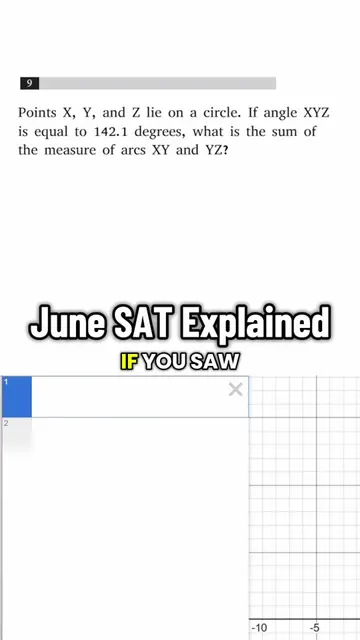
If you get this question wrong on the June SST, you are genuinely cooked because it is so simple as long as you know how to use a basic desmos regression.
@tutoredbydesign
25.6K followers · usually 13.3K views a post
Views
68.2K
Likes
5.3K
Comments
38
Shares
315
Promoted product
PolyPreppolyprep.co
Adaptive SAT and AP preparation with AI-powered study plans and targeted practice.
Why it worked
The video addresses a common pain point for students preparing for the SAT (difficulty with math problems) and offers a seemingly simple, tech-based solution (Desmos regression). The urgency created by mentioning the upcoming June SAT and the promise of "200 June predictions" also likely drove engagement.
Summary
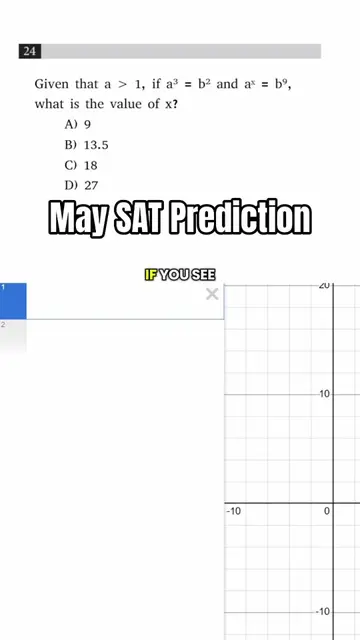
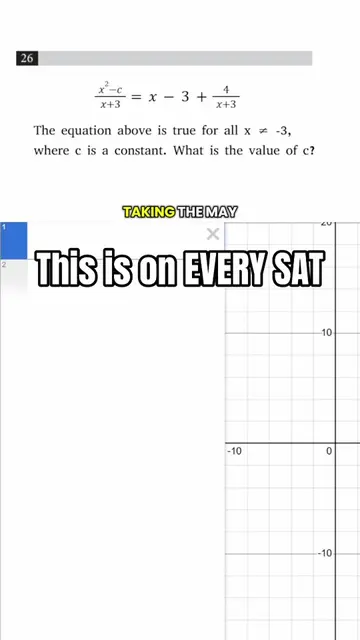
The video explains how to solve a complex SAT math problem using Desmos regression. It demonstrates rewriting the equation with variables X1 and Y1, then using a list of values for X1 to find the constants A, B, and C, and finally calculating A+B+C.
Structure
- 1Introduce the problem and the Desmos regression method.
- 2Rewrite the equation using X1 and Y1.
- 3Create a list of values for X1, excluding values that make the denominator zero.
Original caption
Follow & comment “June” to access our full June SAT predictions! This question type was on the May SAT, so you need to know it for the June SAT! SAT tutor. SAT guide. #satprep #sattestprep #digitalsat #satmath #sattest
More from @tutoredbydesign
More breakout videos from this creator.