Loading video…
All breakouts
7.2Talking HeadStory Open hookSaaS
Hook
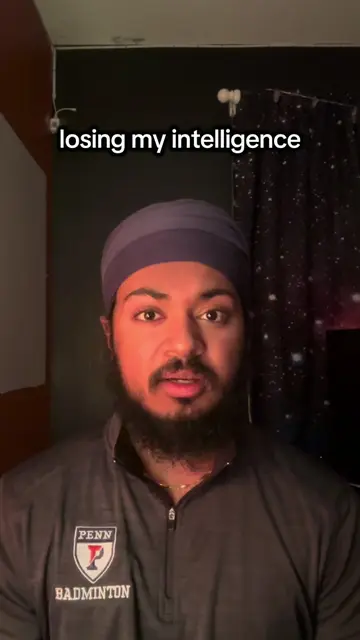
A man suffers a stroke and falls to the ground
@jasjeevreflects
23.3K followers · usually 753 views a post
Views
5.8K
Likes
539
Comments
4
Shares
21
Why it worked
The video uses relatable examples and clear explanations of a complex concept (the Volunteer's Dilemma) to engage the audience. The use of visuals and a narrative structure makes the information digestible and shareable.
Summary
The video explains the Volunteer's Dilemma using examples of the bystander effect and bacteria colony behavior. It highlights how the diffusion of responsibility in larger groups leads to inaction, even when a public good is at stake.
Structure
- 1Introduction to the bystander effect and a bacterial example
- 2Explanation of the Volunteer's Dilemma
- 3Mathematical breakdown of the dilemma
- 4Application to real-world scenarios
- 5The solution: act first
Call to action
Follow for more.
On-screen text
A man suffers a stroke and falls to the ground
in the middle of a crowd.
As people around him rush to help,
someone shouts that 911
needs to be contacted.
Everyone there knows the urgency of the situation,
yet no one calls for help.
At first you might recognize this
as the bystander effect,
and you'd be partially correct, except
in 2019, researchers at
Oxford and Exeter
studied a particularly virulent strain of bacteria.
Authors
Matishalin Patel 1, Ben Raymond 2,
Michael B Bonsall 1, Stuart A West 1
1 Department of Zoology, University of
Oxford, Oxford, UK.
2 College of Life and Environmental Science,
University of Exeter, Penryn, Cornwall, UK.
Bacillus thuringiensis (Bt)
Endospore
Ribosomes
DNA
Cell Membrane
Bt Toxin
Crystal
Cell Wall
studied a particularly virulent strain of bacteria.
These bacteria create a
toxin known as
which kills their host
insect so the rest
of the bacteria colony can
feed and survive.
However, the production
of this toxin
is very metabolically costly
and often kills the single
bacterium that does so.
You'd expect that as the
number of bacteria grew
in the colony,
so did the production of
the Cry toxin.
However, researchers
found that
as the number grew,
Cry toxin went to zero
and the colony ultimately died.
What do both of these examples
have in common?
They're both examples of
the game theoretic principle
Volunteer's dilemma
Article Talk
A
The volunteer's dilemma is a game that
models a situation in which each player can
either make a small sacrifice that benefits
everybody, or instead wait in hope of benefiting
from someone else's sacrifice.
the Volunteer's Dilemma.
In which a Player must
incur a high cost
or a sacrifice
in order to produce a
public good
for everyone else's benefit.
And if no one acts, then
everyone suffers.
It's the reason why when
your professor calls
on your class to answer a
question,
no one wants to answer.
It's the reason why when
all the lights go out
in your neighborhood,
no one wants to call the company.
Intuitively, if you're 1 out
of 2 people,
you feel like you share half the burden
and half the cost.
So you feel incentivized to act.
But if you're 1 out of 1000,
then you only feel 1/1000
of the burden.
And so you believe the
game is already solved
and that someone else will
do it.
Mathematically,
as the number of players grows,
the probability that
at least one person in the
group will act
diminishes.
It's the reason why a man
suffering from a stroke
and ultimately dying
can be surrounded by a
group of people that
will not act
as they wait for a hero to
emerge.
The solution
is to always act first.
Follow for more.
Original caption
The Volunteer’s Dilemma is honestly a chilling concept from game theory, and the sad reality is that it makes sense when you think about it. It’s prevalent amongst people and even evolutionarily coded into bacteria. The idea that everyone suffers just because one person won’t make the sacrifice seems irrational, and yet this dilemma is found everywhere. As always I’d love to hear your thoughts in the comments, and follow for more game theory content! #gametheory #biology #bystandereffect #psychology #unedited (only OGs will know this is a repost)
More from @jasjeevreflects
More breakout videos from this creator.