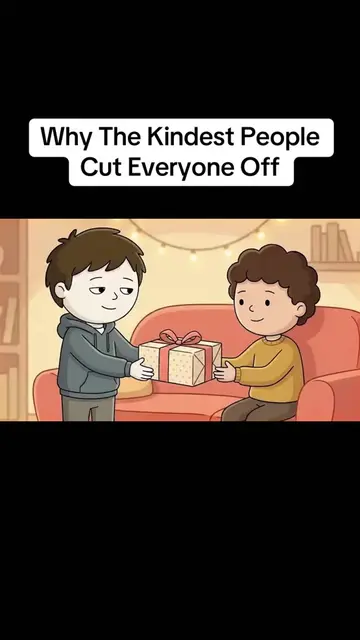
Favor = Witness. Helping = Love? Logical, right? You hand a drowning man a rope, he becomes your loyal friend for life. Except that's not how human brains work. Sometimes you hand a drowning man a rope, and the second he's back on dry land, he starts wondering why you got to be standing on the shore in the first place. This isn't bitterness talking. It's a documented psychological pattern. Back in 1982, three researchers, Fisher, Nadler, and Valenti, published a paper called "The Effect of Threat to Self-Esteem on Helping Behavior." Their finding was brutal: receiving help can quietly humiliate the receiver. And humiliated people don't send thank you cards. They plot. So here are 7 signs they will turn on you. Sign 7: Weird Thank You. A normal thank you is warm and over in two seconds. But a person whose pride got bruised gives you the performance thank you: too loud, too long, slightly theatrical. Or the opposite: a mumbled, "Yeah, thanks," while avoiding eye contact. Gratitude researcher Robert Emmons found genuine gratitude actually improves well-being. So when someone seems worse after thanking you, that's your signal. The thank you isn't gratitude, it's a receipt. They resent having to sign. Sign 6: Correcting the Record. "I basically had it handled anyway." "It wasn't a big deal." "I would've figured it out." This is cognitive dissonance doing damage control. Leon Festinger's 1957 theory explains it perfectly: holding two clashing beliefs, "I am capable" and "I needed rescuing," creates mental pain. The cheapest way to kill that pain isn't to feel grateful, it's to shrink your contribution until it disappears. If they're rewriting history while the ink is still wet, the betrayal has already begun. Sign 5: Unequal Relationship. Human beings are obsessed with balance in relationships. We keep an invisible ledger. The instant someone feels they owe more than they can repay, the relationship stops feeling like friendship and starts feeling like debt. And nobody enjoys their creditor. Watch for the person who gets cold when they should feel closest. They're not pulling away from you, they're pulling away from the balance sheet. "Guilt > Gratitude." Equity research shows over-benefited people feel guilt, not gratitude. And guilt is corrosive. You didn't overwhelm them with kindness, you handed them a debt they can't see a way out of. So they choose the only exit they can: the door. Sign 4: Helping Back Too Fast. Marcel Mauss, in his classic work "The Gift," showed that gifts create bonds. Frantic, immediate repayment severs that bond on purpose. They're not being generous, they're closing the relationship like a bank account. "Guilt > Gratitude." Sign 3: Comparing out loud. "Must be nice." "Some of us weren't that lucky." "You've really got it all figured out." This is upward social comparison. Decades of research show that when we measure ourselves against others, it can trigger envy, resentment, and what psychologists call "malicious envy." The kind that wants to pull the other person down rather than climb up. You became the standard they can't meet, and every time they fall short, they resent you for it. They're not hunting for an exit from gratitude, they're hunting for an exit from the fact that they failed. That's why the fight always feels insane. It's not random. That's the mind hunting for an exit from gratitude. Sign 2: Resentment out of nowhere. Fritz Heider's Attribution Theory gave us the answer. "Recast as villain." They don't remember you as the rescuer, they remember you as the one who made them feel weak. They resent having to be helped. They resent you for seeing their vulnerability. They resent you for being the one who could help. So they'll find any excuse to resent you. They'll pick fights, they'll twist your words, they'll act like you wronged them. They're not trying to hurt you, they're trying to justify their own behavior. They're trying to make themselves feel better about not being able to reciprocate. Sign 1: Weakness they confess to you becomes the thing they hate you for knowing. When their pride is on the line, they'll destroy the evidence. They'll cut off the hand that fed them. They'll use a planer to shave down their contribution until it disappears. This is the deepest one. You helped someone through their lowest moment, you saw their weakness, and now they can't stand you for it. They remember you as the witness, not the savior. La Rochefoucauld: "Hard to forgive those who helped us." Not because help is bad, but because help requires being seen in a state we'd rather forget. You became living proof of their past failures. And when they've recovered, they'll want to erase that proof. They'll want to erase you. So help cleanly, without expecting anything back. Because the researchers in this field point to one clear predictor of whether help builds a bond or breaks it: whether the giver expects anything back. If you help cleanly, without expecting anything back, you protect their dignity. You protect their dignity by not keeping score, not reminding them, not expecting a statue in your honor. Give like you've already forgotten you gave. Because the people who truly love you will remember. And the ones who are always going to betray you, you'll spot them coming. Spot them coming.