Loading video…
All breakouts
11.0Text-HeavyOther hookEntertainment
Hook
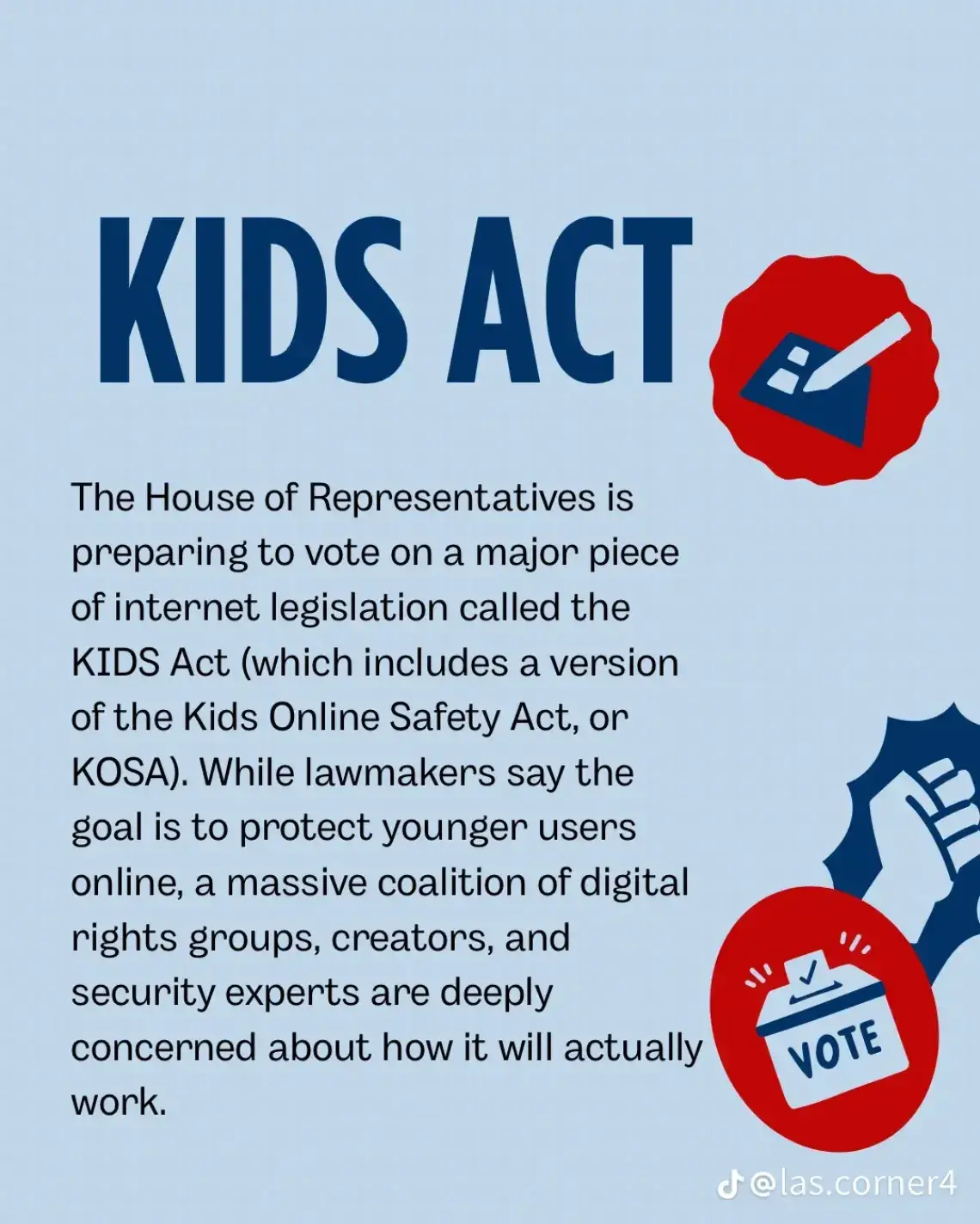
KIDS ACT
@allhailpurplecharacters
1.1K followers · usually 786 views a post
Views
8.5K
Likes
366
Comments
14
Shares
50
Why it worked
The post effectively leverages a current, relevant political issue (KIDS Act/KOSA) to engage viewers by explaining its potential impact on their privacy and online experience. It then provides clear, actionable steps for viewers to take, empowering them to participate in the political process.
Summary
This slideshow explains the proposed KIDS Act, a piece of internet legislation aimed at protecting younger users online. It details potential impacts on privacy and content censorship, and provides actionable steps for viewers to contact their representatives.
Structure
- 1Introduction to the KIDS Act
- 2Explanation of why it matters to users
- 3Call to action for viewers
Call to action
Find Your Representative and make a quick call or send a message.
On-screen text
KIDS ACT
The House of Representatives is preparing to vote on a major piece of internet legislation called the KIDS Act (which includes a version of the Kids Online Safety Act, or KOSA). While lawmakers say the goal is to protect younger users online, a massive coalition of digital rights groups, creators, and security experts are deeply concerned about how it will actually work.
WHY THIS MATTERS TO YOU
• Privacy and Age Checks: To enforce the rules, many websites might be pressured to implement strict age-verification systems. This could mean having to upload ID or use facial scanning just to access regular social media, search engines, or gaming platforms.
• Content Censorship: The bill gives government officials a lot of power to decide what content is considered "harmful." Critics worry this will be used to block access to vital information, including mental health resources, LGBTQ+ support groups, and political discussions.
• Algorithmic Changes: Some advocates argue the current version of the bill has been watered down so much that it doesn't actually hold big tech companies accountable for their algorithms, while still putting your privacy at risk.
HOW YOU CAN TAKE ACTION RIGHT NOW
• I. Find Your Representative
Go to house.gov and enter your zip code to find out who represents your area. You will see a link to their website and their office phone number.
• 2. Make a Quick Call or Send a Message
Calling is the fastest way to get a lawmaker's attention before a big vote. You will likely speak to a staff member whose job is to write down what constituents care about.
Original caption
I heard that it also uses your ID and because of it I'm GENUINELY fucking scared || Copy link for website here : https://stopkosa.com #kosa #spreadingawareness #fyp #fypviral #fypシ゚viral
More from @allhailpurplecharacters
More breakout videos from this creator.