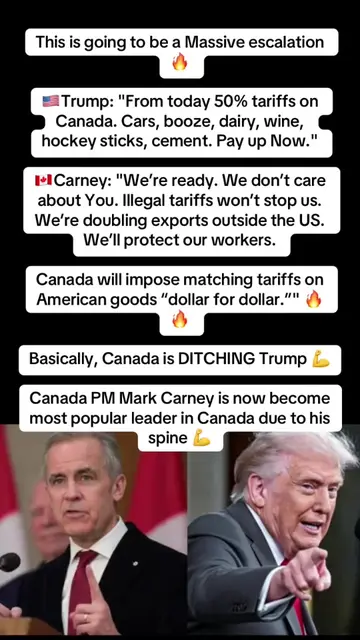
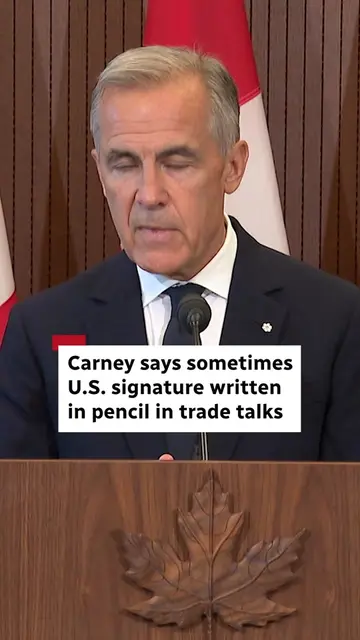
So Mark Carney didn't win this week. He won it 18 months ago. Donald Trump just found out. According to official internal review now underway inside the West Wing, what looked from the outside like a sudden shift in negotiating leverage was actually the final stage of a plan that had been quietly assembled, funded, and activated in phases over a year and a half, long before the current standoff ever became public. Within the last week alone, $63 billion in trade flexibility that nobody in Washington believed Canada actually possessed was suddenly, undeniably exercised within days. Energy contracts that had supposedly taken years to negotiate were finalized in a matter of hours, because, as it turns out, they'd already been negotiated quietly over the preceding 18 months, waiting for a signature. Within the same week, Pentagon planners were reportedly asked to brief on Arctic supply dependencies that had never before required urgent review, a request that, according to one defense official, landed on desks that genuinely did not expect to be dealing with on a Tuesday. And by the time Washington fully understood what had happened, the leverage Carney was using had already been in place for so long that reversing it wasn't a negotiation, it was an admission. Warren Buffett, who has spent six decades studying the difference between people who react and people who plan, responded within hours of the pattern becoming clear. Most people think leverage is something you build in the moment you need it. Buffett said, "The people who actually win are the ones who built it 18 months before they needed it and simply waited to give them a reason to use it." That single sentence reframed everything Washington thought it understood about this standoff, because this was never a negotiation. Carney entered reactively. A trap that had already been fully set, and Trump walked into it the moment it had been sprung. When you hear what was actually assembled over those 18 months, the specific mechanism Carney activated in a single week, and the exact conversation where Washington finally realized how long this had been coming, you'll understand why trade officials on both sides of the border are calling this the most patient piece of statecraft either government has produced in a generation. Hit subscribe, because the plan Carney just activated wasn't the final phase. Sources say it's only the third of six. Let me walk you through how we got here, because a plan doesn't get built without an unusually specific starting point. And this one has one. Eighteen months ago, according to two officials familiar with the internal record, Mark Carney's economic team commissioned a single classified assessment with a deceptively simple question at the first page: What would happen to Canada's leverage if the United States ever treated the relationship as fully expendable? Most Americans don't realize that assessment wasn't triggered by any specific American provocation. It was triggered by a pattern analysts had identified across 18 months of rhetoric, each incident individually dismissible, but together forming a trajectory that Canadian planners concluded was heading toward exactly the kind of confrontation that eventually arrived. According to officials familiar with the planning, the assessment's core finding was blunt: $63 billion in trade categories where Canada held genuine underused flexibility, energy redirection, alternative buyers, expanded rail and port capacity, defense adjacent supply agreements. None of it even particularly unusual. Simply flexibility that had never been exercised because exercising it had never been necessary. What followed, according to two people with direct knowledge of the planning process, wasn't a single dramatic decision, but 18 months of quiet, boring procedural work. Port capacity contracts extended a few percentage points at a time. Energy diversification agreements drafted and left unsigned in case they were needed. Diplomatic relationships in Berlin and Canberra deepened gradually enough that no single meeting ever generated a headline. The White House, by contrast, according to officials familiar with internal planning during that same period, was focused almost entirely on short-term negotiating posture, month to month tariff adjustments, rhetorical escalation calibrated to news cycles without the final phase. Sources say it's only the third of six.