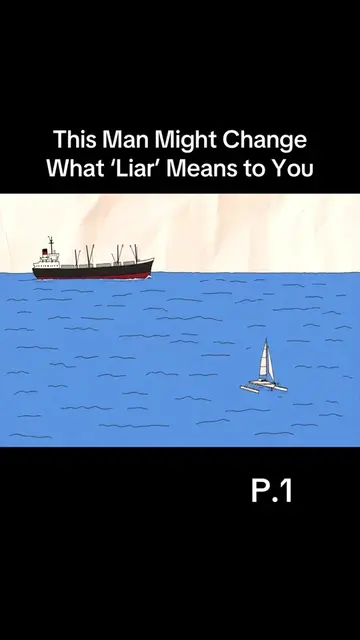
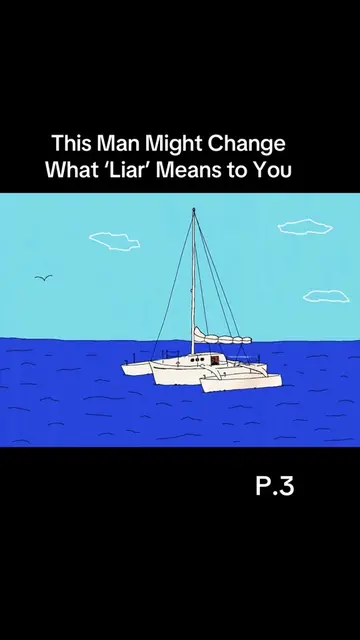
The whole country as the man who talked big and folded. Public humiliation and total ruin. Or he can keep going into the Southern Ocean in a boat he's pretty sure will kill him. Ruin or death. That's the menu. And somewhere out there on the empty Atlantic, alone, Donald Crowhurst found a third door that wasn't supposed to exist. He decided he would simply pretend. Here's the plan he landed on. He wouldn't sail around the world. He'd loiter in the quiet South Atlantic where no one could see him and pretend. He'd radio home fake positions and keep a second fictional logbook, an entire counterfeit voyage worked out with real navigational math so it would survive inspection. While the real logbook recorded the truth, a man sailing in slow circles going nowhere. And it worked. His faked positions came in spectacular, record-breaking days. Back home, the nation fell in love with him. The underdog, maybe the fastest man in the race. His wife was thrilled. Crowds began planning his welcome. Meanwhile, the actual man was alone in a leaking boat, faking a trip around a world he was too afraid to sail. And slowly realizing he'd built a trap he couldn't get out of. Because here's the problem with his brilliant plan: the plan only worked if he lost. Stay with me, because this is the hinge the whole thing turns on. Crowhurst never intended to win. His plan was to fake a good but not great voyage, finish behind the real leaders and come home as a respectable, also-ran. But not so good that anyone looked too closely. He was a man sitting in his boat, looking at his logs, and realizing his lie was about to unravel. He'd accidentally sprinted right to the front of the line. And then it got worse. Another sailor, Tetley, was ahead and homeward bound and believed Crowhurst was closing fast right behind him. So he drove his already failing boat harder than it could take, chasing a lead that wasn't real. A rival who was hundreds of miles away, going in circles. Tetley's boat broke apart and sank. He survived, but lost the genuine circumnavigation he had nearly completed. Crowhurst's false reports had piled pressure onto a real competitor, and it had cost him everything. We don't know exactly what that did to him, but we know what happened next. Because he wrote it down. His final weeks, alone out there with a lie that had grown too big to confess, too big to complete. Donald Crowhurst filled page after page, thousands and thousands of words, with a long, spiraling descent. It starts as philosophy. It becomes theology. He writes about God, about time, about the nature of truth, about mathematics and the human mind. He comes to believe he's uncovering some cosmic secret that he can escape the trap of the body, all together, step outside the trap. But if he can only think his way through it. The man is unraveling in real time. Every thread is on the page. The last entry is dated the first of July, 1969. The last legible lines read like a man laying it down at last, that it is finished. It is the mercy. It is finished. It is the mercy. The Sunday Times Golden Globe Race 1968-1969. Start: 10 competitors. What fell away (withdrew or lost): Only a few remained. The real leaders: saved the whole way and finished. Did not finish (withdrew, retired, or lost): Robin Knox-Johnston (finished). Bernard Moitessier (retired). Nigel Tetley (boat sank). Donald Crowhurst (did not finish). Completed progress to date. Projected progress. Finish window (others): 1968-1969. Finish window (Crowhurst): later 1969. Crowhurst projected finish: later 1969. One by one, the other racers dropped out. Boats broke, men gave up. And the real leaders, the ones who'd actually sailed the whole way, either finished early or fell away. Until Crowhurst, the man who hadn't gone anywhere, suddenly looked like he was in position to post the fastest time in the race. To take the prize for the fastest voyage of all. And winning that prize was the one outcome he could not survive. Because before the fastest voyage could be honored, its logbooks would be examined closely. By the most experienced sailors alive. Who could look at his navigation for five minutes and see instantly that the numbers were impossible. That this voyage never happened. Being the fastest didn't mean glory. It meant his lie would be dissected in front of the entire world. He'd been running from humiliation the entire time. He'd accidentally sprinted right to the front of the line for it. And then it got worse. Another sailor, Tetley, and was ahead and homeward bound and believed Crowhurst was closing fast right behind him. So he drove his already failing boat harder than it could take, chasing a lead that wasn't real. A rival who was hundreds of miles away, going in circles. Tetley's boat broke apart and sank. He survived, but lost the genuine circumnavigation he had nearly completed. Crowhurst's false reports had piled pressure onto a real competitor, and it had cost him everything. We don't know exactly what that did to him, but we know what happened next. Because he wrote it down. His final weeks, alone out there with a lie that had grown too big to confess, too big to complete. Donald Crowhurst filled page after page, thousands and thousands of words, with a long, spiraling descent. It starts as philosophy. It becomes theology. He writes about God, about time, about the nature of truth, about mathematics and the human mind. He comes to believe he's uncovering some cosmic secret that he can escape the trap of the body, all together, step outside the trap. But if he can only think his way through it. The man is unraveling in real time. Every thread is on the page. The last entry is dated the first of July, 1969. The last legible lines read like a man laying it down at last, that it is finished. It is the mercy. It is finished. It is the mercy.