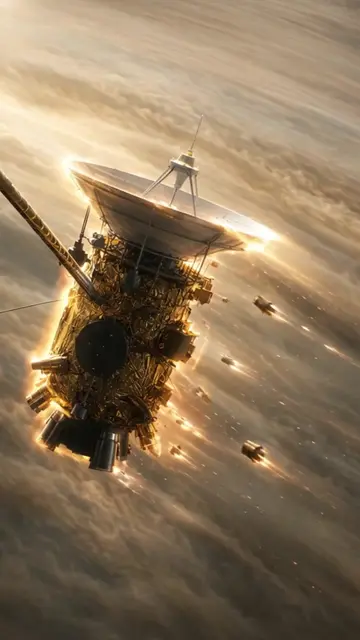
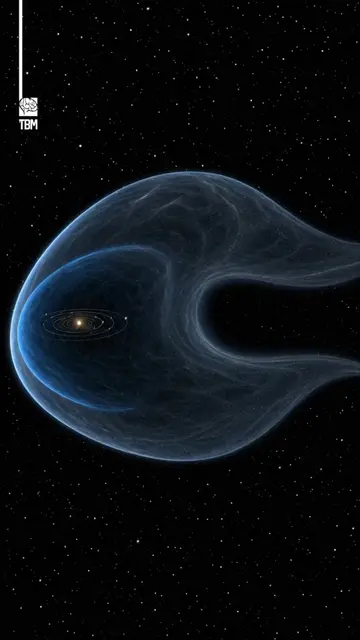
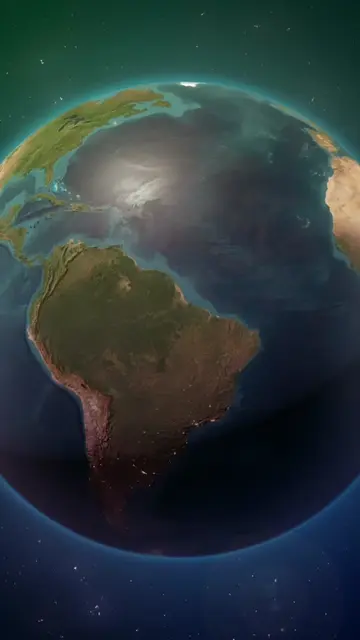
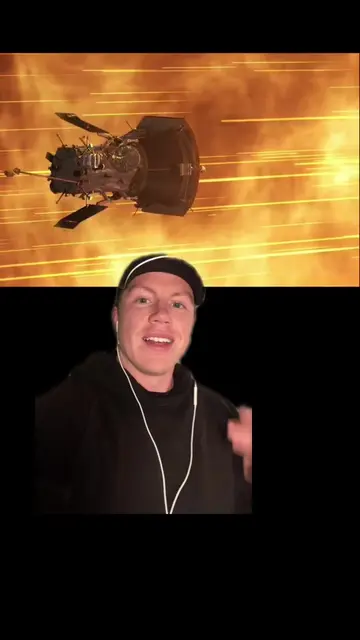
Right now while you're reading these words, something is happening that almost nobody on earth knows about. A machine the size of a small car is moving through a part of the universe where no human being has ever looked. No probe has ever gone before, and no scientific model has ever been able to correctly predict what exists there. It is not a new spacecraft, not a product of modern engineering. It was built before the internet existed, before home computers existed, before most of the scientists currently studying its data were even born. It runs on roughly four watts of power. To put that in perspective, the small light inside your refrigerator uses more electricity than that. And this machine, this ancient, tiny, underpowered machine that was only ever supposed to last five years, is right now sending us information about the universe that is shaking the foundations of modern physics. The researchers who study its data are not using words like "interesting" or "unexpected." They are using words like "astonishing," "baffling," and "we were wrong." This is the story of Voyager 1. And here, the headlines are not telling you it is not what Voyager 1 found out there that directly affects the survival of life right here on Earth. It is what is happening to it right now in 2026 that nobody is talking about. It is what is going to happen in a few months, locked into the calendar. A moment no human civilization has ever reached before. Stay with me. Because by the time this is over, you will never think about the night sky the same way again. I'm your name, and this is your channel. Subscribe now if you want more stories like this, because we are just getting started. Let's go back to the beginning. September 5th, 1977. A rocket lifts off from Kennedy Space Center in Florida carrying a spacecraft called Voyager 1. The mission brief is simple and modest: swing past Jupiter, swing past Saturn, take some photographs, collect some measurements, and then drift away into space and go quiet. The expected lifespan is four years, maybe five. NASA plans to celebrate the mission's end sometime around 1981 or 1982. Would be a successful little trip, a nice postcard from the outer solar system, and then silence. What actually happened is one of the most extraordinary things in the history of science. And most people have no idea how extraordinary it actually is. Voyager 1 did not go quiet. It passed Jupiter in March of 1979 and sent back the first close-up images of that planet's surface that human eyes had ever seen. It passed Saturn in November of 1980 and kept going, accelerating as it went, using the gravitational pull of each planet like a slingshot to add more speed, more distance, more territory covered. By the time the 1980s ended, Voyager 1 had traveled farther from Earth than any object had ever sent into space. And it was still transmitting. Still sending its thin signal across the growing void. Still collecting data on hardware that modern engineers look at and shake their heads in disbelief. Then in 2012, thirty-five years after it launched, something happened that made the entire story suddenly much bigger. Voyager 1 crossed the heliopause. If you have never heard that word before, it is the single most important boundary in our cosmic neighborhood. It is the equivalent of stepping out of everything our civilization has ever called home. Here is how to picture it. The sun does not just provide heat and light. It constantly releases a stream of charged particles called the solar wind. This wind blows outward in every direction, pushing against the surrounding space and forming a giant protective bubble around our entire solar system. That bubble contains every planet, every moon, every comet, every spacecraft we have ever launched, and every living thing that has ever existed. The outer edge, the point where the solar wind runs out of energy and gets stopped by the pressure of interstellar space pressing inward from the other side, that edge is called the heliopause. It is the actual physical boundary of our solar system. Everything inside it is ours. Everything outside it is something else entirely. And in 2012, Voyager 1 crossed through that boundary and came out the other side. It became the first object in human history to leave the solar system. Not a metaphor, not a technicality, the first physical thing our civilization has ever sent into the actual space between stars. And then it kept transmitting. Think about what that means. We have, right now, a live instrument in interstellar space, not orbiting a planet, not floating in the outer solar system, not near the heliopause, actually inside the dark, cold, ancient space that lies between star systems. A space that no scientist, no telescope, no model built from the ground has ever been able to directly observe from the inside. And it is about what that space is actually like, is telling us what anyone expected. Here is where the first twist in this story arrives. For decades before Voyager 1 got there, scientists had built mathematical models describing what interstellar space should look like. Not guesses, serious, peer-reviewed, rigorously tested models built by some of the smartest physicists alive. And those models all told roughly the same story: interstellar space, the plasma between the stars, should be relatively smooth, a thin, cold, sparse environment where particles drift.