Loading video…
Sound

original sound - officialpiggypower
PiggyPower · Original audio
0:00–:––
Playing this video’s own audio, so you’ll hear the creator over the sound.
The video demonstrates a unique and resourceful DIY project, transforming common waste materials into a functional product. The creator's personal narrative of overcoming challenges like rain and incomplete results adds authenticity and relatability, making the process engaging.
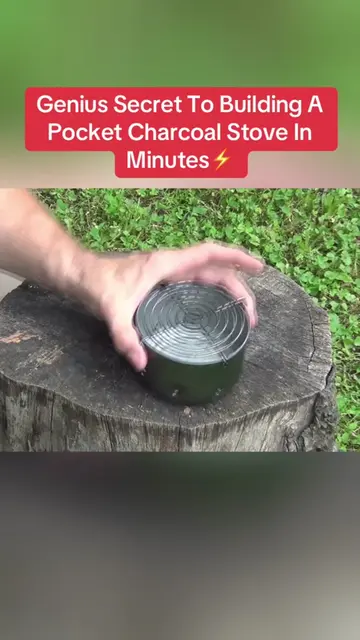
The creator demonstrates how to turn Amazon boxes into charcoal by heating them in a sealed paint can. Despite being interrupted by rain and not achieving full carbonization, the resulting charcoal is firm enough to handle and is intended for use in a future piggy power system.
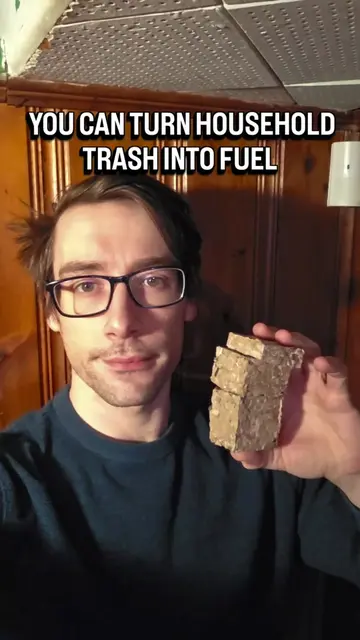
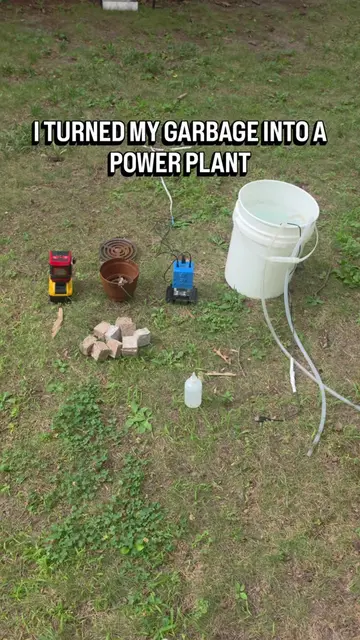
A lot of people do not know this, but you can make charcoal right in your own backyard. In this test, I took old Amazon boxes, turned them into compressed fuel pucks, loaded them into a simple metal paint can with a small vent hole, and heated the can from the outside until the material began to carbonize. Now, why would anybody bother making charcoal in the first place? Charcoal can be used as clean fuel for a gasifier, where it is converted into combustible gas that can run an engine and generator. It can be processed further into activated carbon for water and air filtration. It can be used in blacksmithing and metalworking because it produces concentrated heat with fewer volatiles than raw wood. It can be crushed into a black pigment for paint, ink, and artwork. It can also be used as biochar to improve soil structure and hold nutrients and moisture. My personal goal is the gasifier. In the future, I plan to take waste paper, cardboard, wood, and other available biomass, turn it into charcoal, feed that charcoal into a gasifier, and use the gas to run a generator. That generator will be able to power a home or charge a large battery bank, while the engine heat and exhaust can also be recovered for space heating and hot water. That is the long term PiggyPower vision. Electricity, hot water, and useful heat from materials most people would throw away. Was this the greatest charcoal batch ever made? Absolutely not. This was my first attempt, the rain cut the test short, and the can did not get hot enough all the way through. Out of the full batch, only about three pucks completely carbonized. But those pieces held their shape, stayed firm enough to handle, and proved that the process works. The partially carbonized pieces can simply go back through another batch, so nothing is wasted. We got the point across, showed the full process, and walked away with real charcoal made from Amazon boxes. I am pretty pleased with that for attempt number one. Give me some time. We are going to build the entire system. Drop a comment and tell me what experiment you want to see next. Follow along for the future gasifier build, and check out OfficialPiggyPower.com.
I TURNED AMAZON BOXES INTO CHARCOAL
Introduction: turning Amazon boxes into charcoal
Preparation: loading compressed trash pucks into a paint can
Carbonization process: heating the can outdoors
Observation: wood gas production and tar formation
Final reveal: examining the resulting charcoal
Conclusion: success despite challenges, hinting at future use
Amazon boxes: ACTS - used as material to make charcoal. Removing it would change the video. Paint can: ACTS - used to contain and carbonize the Amazon boxes. Removing it would change the video. Alcohol: ACTS - used as a fire starter. Removing it would change the video. Officialpiggypower.com: APPEARS - a website URL displayed at the end of the video. Removing it would not change what happens in the video. It is a call to action to visit the website.
Follow along for the journey and remember, Officialpiggypower.com
Playing this video’s own audio, so you’ll hear the creator over the sound.
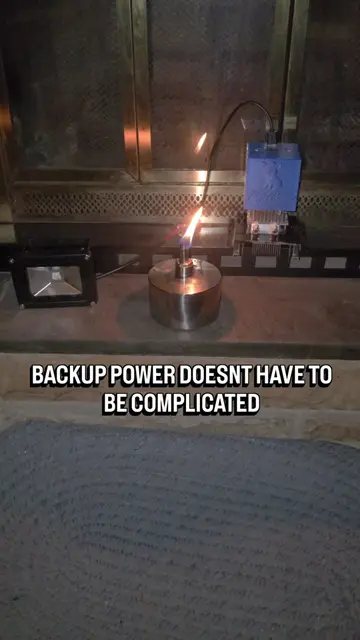
Thermoelectric generator that turns heat into electricity for off-grid power users
All time.
Outliers and viral hits: their videos on Overshot, all time.