Loading video…
Sound

original sound - officialpiggypower
PiggyPower · Original audio
0:00–:––
The video demonstrates a unique and visually interesting DIY project that taps into themes of self-sufficiency and resourcefulness. The "blackout" context adds a layer of practical relevance, while the clear demonstration of the system's function and the creator's own product makes it compelling.
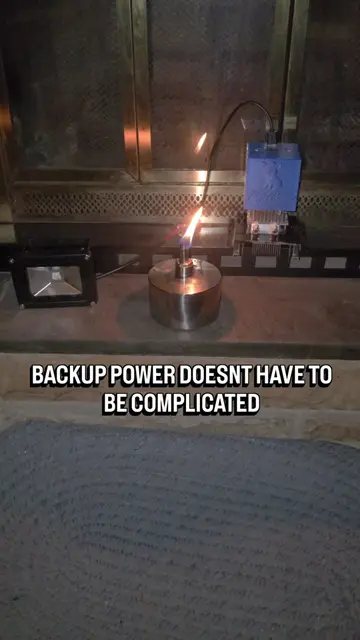
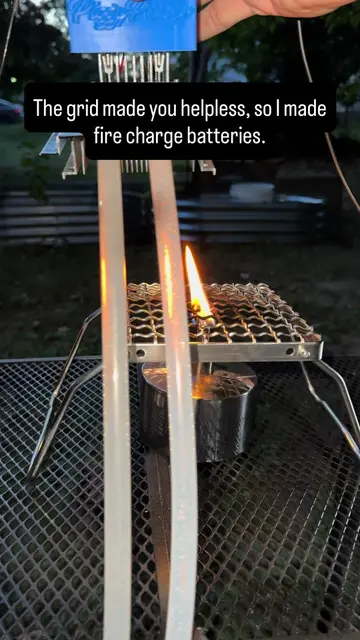
The creator demonstrates a self-sustaining electrical grid built in their kitchen using a thermo-electric generator powered by a heat source. The system generates electricity to power LED lights and charge a battery, which in turn powers a water pump, creating a closed-loop system.
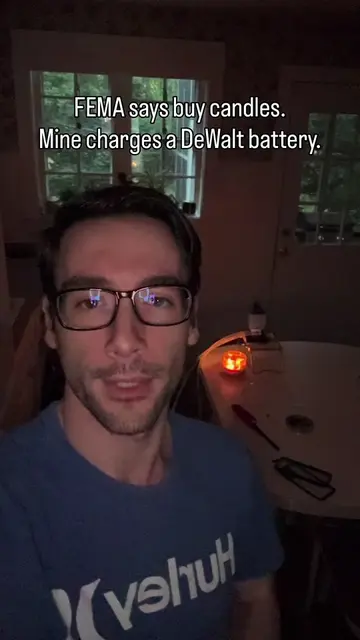
I recorded this video in the dark because that is when something like this actually matters. Anybody can make something look useful with the room lit up and everything working normally. I wanted to see what this little setup could actually do during a blackout, and honestly, the electrical side is only half of why this is so useful. The coolest part is that the water does not stay cold forever. As the system runs, it slowly warms up. That hot water can be paired with one of my Piggy Power Heat Banks and circulated through it to warm the room. So now the same setup is giving you electricity, hot water, and space heating from one heat source. That is a combined heat and power system sitting right in your own kitchen. The unit in this video is the smallest one I make. My 125 watt cell is where this gets really interesting for a gas stove. In a lot of outages, the electricity can be gone while the natural gas line is still working, so your stove may still be usable. Instead of only cooking on it, you could be making up to 125 watts of power, heating water, and using that heat to warm the room at the same time. That is enough to keep phones charged, power radios, top off batteries, and keep basic electronics going while the rest of the neighborhood is dark. Then you still have the hot water and the heat you collected instead of letting all of it disappear into the air. That is the whole reason I started building these things. I wanted a simple way to turn heat people already have into something useful during an emergency. No perfect weather. No giant solar array. No massive generator screaming outside and burning through fuel. Just a heat source, water, and a system that keeps making useful power as long as you keep feeding it heat. The Ember is the little one. I also make 20 watt, 40 watt, 125 watt, and 250 watt systems depending on how serious you want to get. Some people only need enough to cover the basics. Other people want hot water, room heat, battery charging, and enough power to keep several things running at once. Every one is built by hand right here in the USA by me. OfficialPiggyPower.com
I MADE MY OWN ELECTRICAL GRID IN MY KITCHEN
Introduction of self-made electrical grid
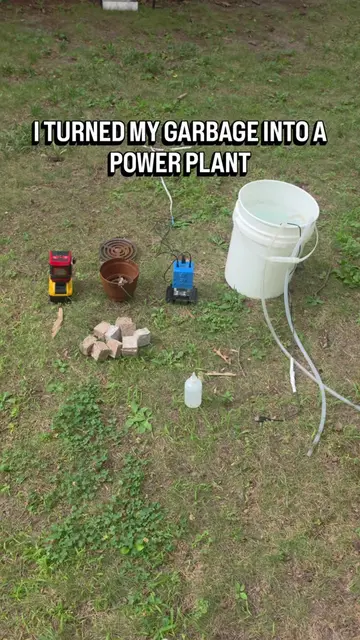
Explanation of components: water source, pump, battery
Demonstration of the thermo-electric generator (Piggy Power Amber)
Showing the system powering lights and charging a battery
Highlighting the closed-loop nature of the system
Call to action to visit the website
Piggy Power Amber: acts - it is a thermo-electric generator that converts a heat differential into electricity. Removing it would change what happens in the video. Dewalt battery: acts - it is being charged by the system and also powering the system. Removing it would change what happens in the video. 120 LED lights: acts - they are being powered by the system. Removing them would change what happens in the video.
Visit Officialpiggypower.com
Thermoelectric generator that turns heat differences into electricity
All time.
Outliers and viral hits: their videos on Overshot, all time.