Loading video…
Sound

original sound - lerabyte
Lera Andronova · Original audio
0:00–:––
Playing this video’s own audio, so you’ll hear the creator over the sound.
This video promotes it, but we haven’t matched it to a product page yet, so there are no product figures.
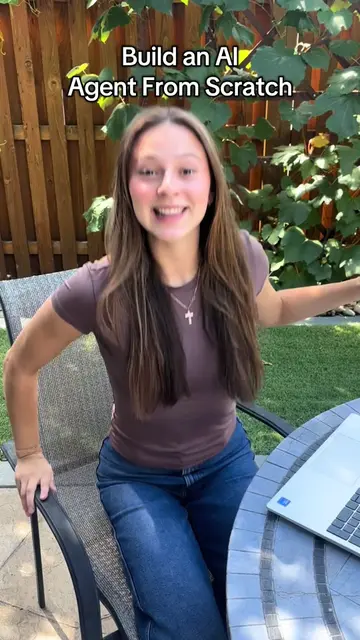
The video provides a clear, step-by-step tutorial on a relevant and trending topic (AI image detection) using practical code examples. The creator's clear explanations and demonstration of the entire process, from data acquisition to model evaluation, make it highly informative and engaging for viewers interested in machine learning.
The creator demonstrates how to build a convolutional neural network (CNN) to distinguish between real and AI-generated images using Python and TensorFlow. They download a dataset from Kaggle, preprocess the images, define the CNN architecture with convolutional and pooling layers, train the model, and evaluate its performance using metrics like accuracy, precision, recall, and AUC. The results show a high accuracy of nearly 88% and a recall of 97.83% for identifying AI-generated images.
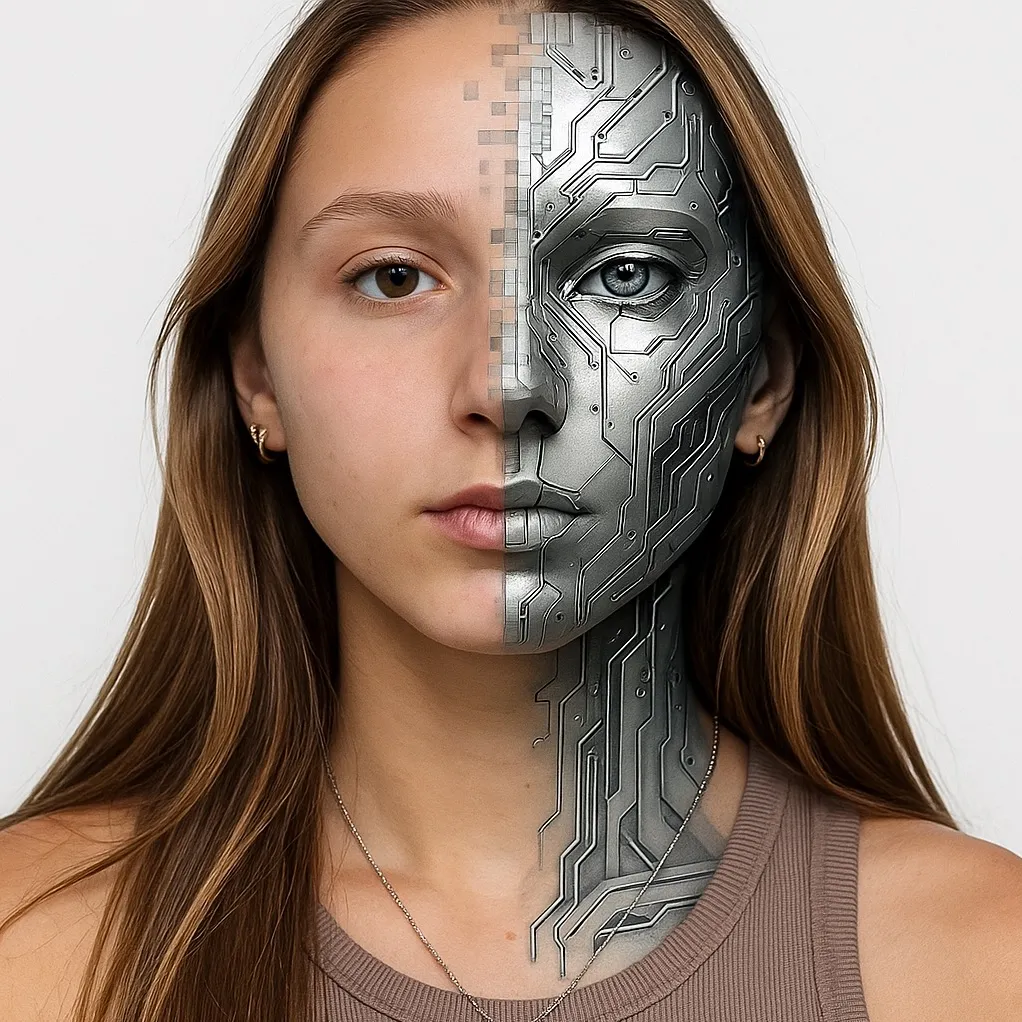
The Thought Process of a Data Scientist 👩💻 I didn’t start by building the deepest neural network possible - I started by understanding the 120,000 images and how the model would learn the difference between real and AI-generated content. Because the dataset contained an equal number of real and fake images, accuracy gave me a meaningful overall measurement, but I also tracked precision, recall, and ROC-AUC to understand the mistakes hidden behind that number. The network gradually learns more complicated visual patterns through three convolutional layers, while pooling, normalization, and dropout help it train efficiently and generalize to unseen images. In the end, the model reached 87.95% test accuracy and a 0.975 ROC-AUC—but it still made mistakes, which is an important reminder that an AI detector produces a probability, not absolute proof. Full code: github.com/lerabyte/ai-image-detector. Please star the repo if you found it helpful! #datascientist#machinelearning #ai#python #datascience
BUILD A MACHINE LEARNING PROJECT WITH ME
Introduction to building a CNN for image classification.
Finding and preparing the CIFAR-10 dataset.
Building the CNN architecture with convolutional, pooling, and dropout layers.
Data preprocessing and augmentation techniques.
Training the model and using early stopping.
Evaluating the model's performance with metrics and a confusion matrix.
Kaggle: a platform for data science competitions and datasets. It ACTS as a source for the dataset used in the video. Removing it would change the video's content as the dataset would not be found. CIFAR-10: a dataset of images used for machine learning. It ACTS as the training data for the model. Removing it would prevent the model from learning. Stable Diffusion: an AI model used to generate images. It ACTS as the tool used to create the 'fake' images in the dataset. Removing it would mean the fake images could not be generated. TensorFlow: an open-source machine learning framework. It ACTS as the primary tool for building and training the neural network. Removing it would make the project impossible. Keras: an API that runs on top of TensorFlow, simplifying the process of building neural networks. It ACTS as a tool for building the neural network. Removing it would make the project more complex. NumPy: a library for numerical operations in Python. It ACTS as a tool for handling image data. Removing it would make data manipulation more difficult. Matplotlib: a plotting library for Python. It ACTS as a tool for visualizing data. Removing it would make it harder to understand the results. Seaborn: a data visualization library based on Matplotlib. It ACTS as a tool for visualizing data. Removing it would make it harder to understand the results. Scikit-learn: a machine learning library for Python. It ACTS as a tool for evaluating the model's performance. Removing it would make it harder to assess the model's accuracy. GitHub: a platform for hosting and collaborating on software development projects. It ACTS as a repository for the code used in the video. Removing it would mean the code could not be accessed. Udemy: an online learning platform. It APPEARS as a link in the creator's bio, offering a course. Removing it would not change the video's content, but would remove a potential avenue for viewers to learn more about the creator's offerings.
Check out the GitHub repository at lerabyte/ai-image-detector
Playing this video’s own audio, so you’ll hear the creator over the sound.
Promotes 1 product. Create free account to see more.
Outliers and viral hits: their videos on Overshot, all time.