Loading video…
All breakouts 12 videos6 creators
6.9Talking HeadDirect Question hookAI Tools
Hook
Is math cooked?
@evisdrenova
48.5K followers · usually 6.3K views a post
Views
41.6K
Likes
1.8K
Comments
159
Shares
87
View velocity
+4.8K views over 24.8d · ~193/day · 5 observations
Promoted product
Astra
Personalized astrology guidance powered by AI. Birth chart insights and practical life advice.
Why it worked
The video leverages a significant and surprising development in AI (solving major math problems) to generate interest and discussion, tapping into the current hype around AI advancements.
Summary
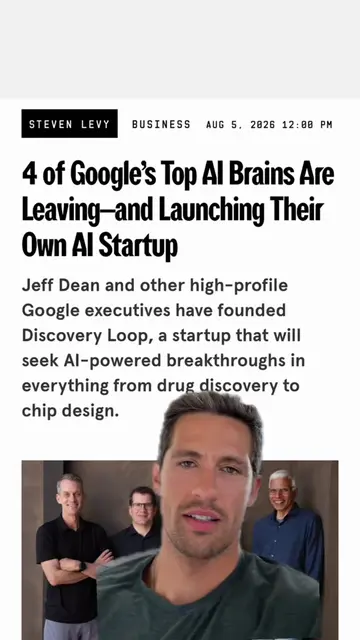
This video discusses OpenAI's new AI model, Astra, which has reportedly solved 10 major open problems in mathematics and related fields. The creator highlights the significance of these solutions, quoting a mathematician who compared them to Fields Medal-worthy work, and ponders the implications for mathematicians and society.
Structure
- 1Introduction of OpenAI's new AI model, Astra, and its achievement in solving 10 major math problems.
- 2Discussion of the difficulty of these problems and their comparison to Fields Medal-level work.
- 3Exploration of the implications for mathematicians and the broader scientific community.
Original caption
#greenscreen #math #openai #ai #Tech
More from @evisdrenova
More breakout videos from this creator.