Loading video…
Sound

original sound - samuelszuchan
Sam Szuchan · Original audio
0:00–:––
Playing this video’s own audio, so you’ll hear the creator over the sound.
We didn’t find a product being promoted in this video. Its hook, format and structure below still show why it took off.
Browse products winning on TikTokThe video leverages a surprising and counter-intuitive narrative: a company widely predicted to fail due to a foreign acquisition actually thrived, demonstrating the power of globalized manufacturing and market expansion. The detailed financial comparisons and the dramatic turnaround story create a compelling and shareable narrative.
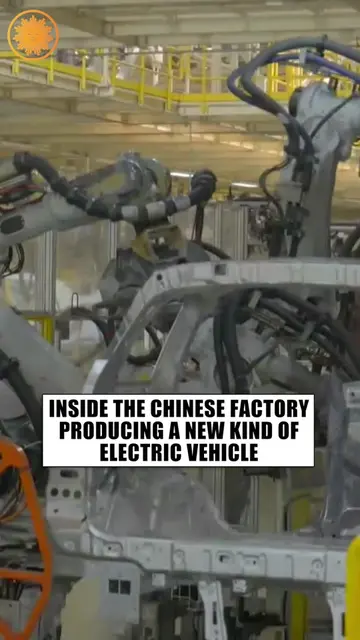
This video chronicles the acquisition of Volvo by Chinese company Geely in 2010, defying predictions of ruin. It highlights how Geely's ownership transformed Volvo, with key models like the S90 now manufactured in China and exported globally, leading to significant market value growth and a successful IPO.
In 2010, the entire car industry agreed that a Chinese buyer was going to ruin Volvo. Everyone was wrong, and the wrongness is now worth about $20 billion. The buyer was Li Shufu, a man who started with 120 yuan and a bicycle, taking portrait photos around Taizhou. He made his first money in refrigerator parts, lost a fortune in Hainan real estate, and got into cars by buying a failing Sichuan minibus maker to inherit its permit, because the government would not license a private company. That company became Geely, and Geely built cheap cars. He once asked a regulator, in a line the industry still repeats, to please "give me a chance to fail." When Geely bought Volvo in 2010, pretty much everyone read the purchase the same way. In China, existing Volvo owners groaned online that their cars would now be built domestically and sold at cabbage prices, meaning dirt cheap. In Sweden, the Volvo union had already flown to Beijing to ask China's national labor federation to help stop the deal. The thinking went like this: Geely made cheap cars, so a Geely-owned Volvo could only get cheaper. Nobody ever checked whether it was true. They just believed it. What actually happened is almost the opposite. Volvo kept its Swedish engineers and its identity, and its flagship sedan, the S90, is now built in exactly one place on earth: Daqing, an oil town in China's far northeast. So every S90 sold in America or Europe is Chinese-made, and Volvo is confident enough in that to ship them overland by train, 10,087 kilometers across Russia to Belgium, in about 18 days. The brand everyone said China would cheapen is exporting Chinese-built cars to Europe at full standard. In October 2021 Volvo listed on the Nasdaq exchange in Stockholm, the largest Swedish public offering since 2000, valued near $22 billion by the close of its first day. Geely kept about 82% and remained the largest shareholder. It had paid $1.8 billion for Volvo in 2010. Ford had bought the same company in 1999 for $6.45 billion, so Volvo changed hands for roughly $4.6 billion less than Ford originally paid. The Chinese buyer everyone said would destroy Volvo turned a $1.8 billion purchase into a company worth more than $20 billion.
2010
Introduction of Volvo's acquisition by Geely in 2010 and initial skepticism.
Background of Geely's founder, Li Shufu, and his early ventures.
The acquisition process and the fears of quality decline and cheapening.
The reality of Volvo's continued Swedish identity and production shift to China.
The successful IPO of Volvo in 2021, demonstrating its increased market value.
Comparison of Geely's purchase price to Ford's earlier acquisition price.
Volvo (car manufacturer) - ACTS: The video discusses its acquisition by Geely, its production, and its market value. Removing it would fundamentally change the video's content. Geely (car manufacturer) - ACTS: The video discusses its acquisition of Volvo, its ownership stake, and its role in Volvo's production and market value. Removing it would fundamentally change the video's content. Ford (car manufacturer) - ACTS: The video discusses its prior ownership of Volvo and the financial details of that sale. Removing it would change the context of the Volvo acquisition by Geely. Sichuan (region in China) - APPEARS: Mentioned as the location of a failing minibus maker. Removing it would slightly change the narrative but not the core subject. China (country) - ACTS: The video discusses the acquisition of Volvo by a Chinese buyer and the subsequent production of Volvos in China. Removing it would change the context of the acquisition and production. Sweden (country) - APPEARS: Mentioned as the origin of Volvo's engineering and identity. Removing it would slightly change the narrative but not the core subject. Daqing (city in China) - APPEARS: Mentioned as the location of Volvo production. Removing it would slightly change the narrative but not the core subject. NASDAQ EXCHANGE - APPEARS: Mentioned as the exchange where Volvo was listed. Removing it would slightly change the narrative but not the core subject.
Playing this video’s own audio, so you’ll hear the creator over the sound.
Promotes 1 product. Create free account to see more.
Outliers and viral hits: their videos on Overshot, all time.