The video provides practical, step-by-step DIY advice for a common home improvement task, making it relatable and useful for a broad audience interested in home renovation.
Summary
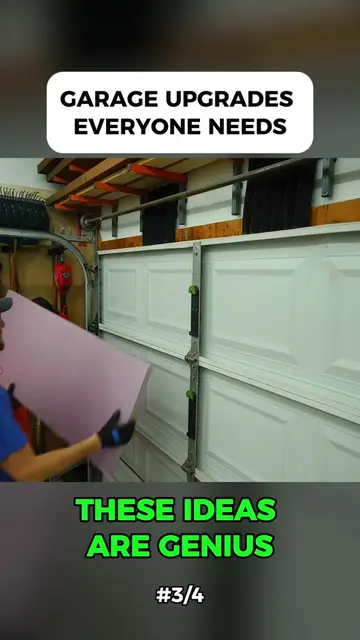
The video demonstrates how to insulate and drywall a garage. It shows techniques for cutting insulation cleanly, making precise drywall cuts around outlets using 3D printed jigs or measuring, and efficiently securing drywall with a Festool drywall screw gun.
Structure
1Cutting insulation with a straight edge.
2Insulating the garage walls.
3Covering the insulation with drywall.
4Cutting drywall for outlets using jigs or measurements.
Little Giant (ladder, appears, removing it would not change what happens in the video), JORGENSEN (clamp, appears, removing it would not change what happens in the video), Festool (drill/driver and screw gun, acts, removing it would change what happens in the video, as they are used to perform the task), Sheetrock (drywall, acts, removing it would change what happens in the video, as it is the material being installed)
On-screen text
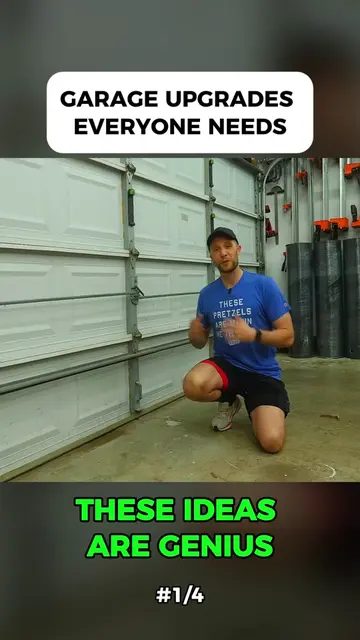
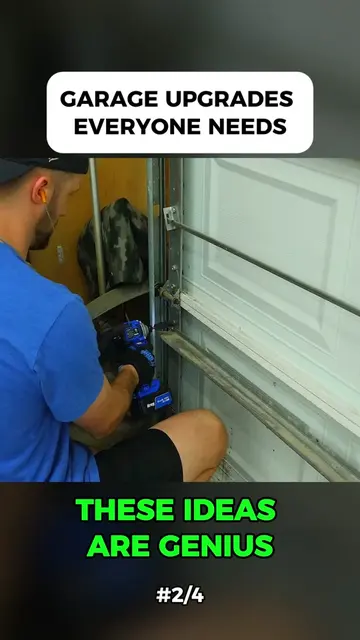
GARAGE UPGRADES
EVERYONE NEEDS
THESE IDEAS
ARE GENIUS
#4/4
Install Drywall
Transcript
As beginner, I want to share some tips that help me out a lot. I started by just kind of hacking away at the pieces that I need to cut with a razor blade. It worked, but it looked awful. I then found this method where you use sandwich the insulation between two boards and using one as a straight edge, slide a razor blade along the edge. This gave incredibly clean cuts. Next tip, cut the pieces slightly longer than you think you need. You'd rather have it be long and push the extra insulation in, then to have it be too short and have a gap. Third, when working by outlets, just make a small slit in the insulation to bridge both sides of the outlet. Lastly, wear long sleeves so you don't itch for days after working with this stuff. It wasn't incredibly difficult work, but when I got that last piece finally stapled in, boy, was I glad to be done. Is it perfect? No, but no one will ever see it because it's gonna all be covered up. With just the insulation up, it already has made a dramatic difference. It's 34 degrees out and it's very comfortable inside. But I want to do things to make it a little bit nicer. Once the insulation is in, the next step is covering it all up because exposed insulation doesn't really make the garage feel finished. And just like the lighting and wall insulation, this was something that I tackled almost immediately after moving into the space. To turn this unfinished garage into a space that actually looks like part of the house, I covered all the walls with some drywall. I'm going to start from the bottom because that makes the most sense to me. But I know a small gap up from the concrete, so if you're spacers were hold the sheet up, I can slide it into the corner. And that's where I hit my first problem. I have to cut around outlets. I 3D printed this doohickey that slides over the outlet and when I push the drywall, it makes a dimple where I need to cut out. Then with another 3D printed jig, I can mark out the exterior of the outlet box. Using a multi tool to cut it out. And boom, outlets accessible. No 3D printer? No worries. You can also do the old measure and mark trick to try to figure out what the outlet is. But that can be a little less accurate. All that's left to do is screw this into studs. Remember that huge gap I had around the first outlet? I can fix that. Clamp on a scrap piece of wood, attach it to the drywall, throw a drywall scrap in the void, screw that to the wood behind. Install. Then I'll throw some mud in there later too. When it comes to cutting drywall, you can absolutely measure it, but I find it easier to hold the piece up where I need it and just visually mark the cut line. With a large square, I can mark the line and then go to town with the multi tool to get the piece to the right size. When you do inevitably run out of screws in that strip, you pull the string out and insert another set of screws and you can breeze through hanging drywall. I've never used one of these before, but you've got to check this thing out. All that it has to do is push it into the wall and it does everything for me. It sets every single screw at the perfect depth and with screws on the collated strips, I don't have to fuss with each and every screw. Remember that huge gap I had around the first outlet? I can fix that. Clamp on a scrap piece of wood, attach it to the drywall, throw a drywall scrap in the void, screw that to the wood behind. Install. Then I'll throw some mud in there later too. When it comes to cutting drywall, you can absolutely measure it, but I find it easier to hold the piece up where I need it and just visually mark the cut line. With a large square, I can mark the line and then go to town with the multi tool to get the piece to the right size. When you do inevitably run out of screws in that strip, you pull the string out and insert another set of screws and you can breeze through hanging drywall. I've never used one of these before, but you've got to check this thing out. All that it has to do is push it into the wall and it does everything for me. It sets every single screw at the perfect depth and with screws on the collated strips, I don't have to fuss with each and every screw.