Loading video…
The creator

@marketsbynoor
16.7K followers · 132.3K likes
Promotes 1 product. Create free account to see more.
Usual views
23.2K
Outliers
10
Viral hits
7
Outliers and viral hits: their videos on Overshot, all time.
We didn’t find a product being promoted in this video. Its hook, format and structure below still show why it took off.
Browse products winning on TikTokThe video effectively uses simple animation and relatable analogies to explain a complex and often abstract topic like national debt. By personalizing the debt to an individual amount and illustrating its rapid growth and implications, it makes the information more accessible and impactful for a broad audience.
This animated video explains the US national debt, breaking down who owes it and how much each person owes. It illustrates the rapid growth of the debt and compares interest payments to military spending, concluding that the debt is a significant burden on future generations.
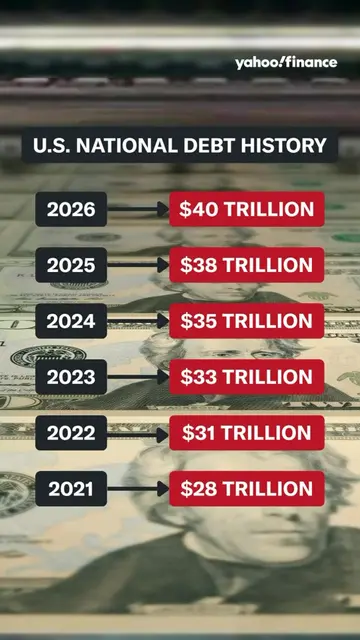
The us national debt just passed $40 trillion for the first time ever. But ever wondered who does the us owe its debt to? How much of the us debt do I owe? 🤔 We’ll split that number evenly and it works out to about $117,000. Your share went up $8,400 in the last 12 months. Breakdown of who owns the national debt: - About a fifth is owed to the government itself by the government… makes sense - Foreign investors hold just under a quarter of it. With Japan holding the most then second being the UK and third China who actually had been cutting its U.S. debt now since 2013 now holding only half - But the single largest owner of U.S. debt is the federal reserve - The rest that’s left over is owed to banks, pension funds and ordinary investors etc Where the money actually goes? Well for every dollar that’s spent $0.23 on social security, $0.28 on healthcare, $0.13 on the military 🪖 and $0.14 goes to just pay the interest on it alone. It’s also been growing at an insane pace approximately $92,065 every single second 💸 #nationaldebt #economy #stockmarket #moneytok #usdebt
Promotes 1 product. Create free account to see more.
Outliers and viral hits: their videos on Overshot, all time.
YOU NOW OWE $117,000
Introduction of individual debt share ($117,000)
Total national debt ($40 trillion) and its rapid growth
Breakdown of debt holders (government, foreign investors, domestic)
Historical context of debt and inflation (Germany 1923)
Explanation of government spending allocation (social security, healthcare, military, interest)
Comparison of interest payments to military budget
The mechanism of debt creation (printing money)
Conclusion: new babies are born into crippling debt
NYSE: The New York Stock Exchange is a stock exchange. It appears as a logo on the pigeon's jacket. Removing it would not change what happens in the video. US National Debt: This is the total amount of money owed by the US federal government. It is displayed on screen and discussed. Removing it would change what happens in the video. US Treasury: The US Treasury is the executive agency responsible for managing federal finances. It is mentioned as the source of data. Removing it would not change what happens in the video. Japan: A country that holds a significant portion of US debt. It appears as a map and is discussed. Removing it would not change what happens in the video. China: A country that holds a significant portion of US debt. It appears as a map and is discussed. Removing it would not change what happens in the video. The Federal Reserve: The central bank of the United States. It is depicted as a large bag of money and discussed. Removing it would change what happens in the video. Weimar Republic: A historical German republic known for hyperinflation. It is mentioned as a historical example. Removing it would not change what happens in the video.

Playing this video’s own audio, so you’ll hear the creator over the sound.