Loading video…
Sound

original sound - cosmiccartography
Cosmic Cartography · Original audio
0:00–:––
Playing this video’s own audio, so you’ll hear the creator over the sound.
We didn’t find a product being promoted in this video. Its hook, format and structure below still show why it took off.
Browse products winning on TikTokThe video effectively uses stunning visuals of space and advanced telescopes to explain complex astronomical concepts in an engaging and accessible way. By comparing the new Roman telescope to the well-known Hubble, it provides a relatable scale for its capabilities and potential discoveries, sparking curiosity about the universe's mysteries and the justification for such a significant investment.
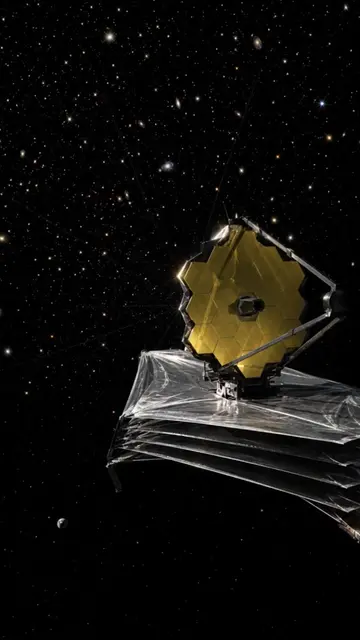
This video introduces the Nancy Grace Roman Space Telescope, a $4.3 billion NASA project designed to observe the universe more comprehensively and faster than the Hubble Space Telescope. It highlights Roman's advanced capabilities, including its large mirror, high-resolution camera, and ability to detect exoplanets and study dark energy, questioning if its potential discoveries justify the immense cost.
NASA is preparing to launch a $4.3 billion eye into space from Florida. It could survey the universe 1,000 times faster than Hubble—but would you call that worth the price? #SpaceTok #NASA #Astronomy #SpaceExploration #LearnOnTikTok
UNIVERSE
Introduction to Hubble's limitations
Introduction of the Nancy Grace Roman Space Telescope and its launch
Comparison of Roman's capabilities to Hubble's
Explanation of Roman's scientific goals (exoplanets, dark energy, galaxy evolution)
Discussion of Roman's cost and the value of its potential discoveries
Hubble (telescope): It photographs the universe. It has been operating for 35 years. Its mirror is 7.9 feet wide. It is a cosmic zoom lens. NASA (space agency): NASA is spending $4.3 billion on a telescope. NASA says its telescope could survey the sky 1,000 times faster than Hubble. Nancy Grace Roman Space Telescope (telescope): It is scheduled to rise from Kennedy Space Center aboard a SpaceX Falcon Heavy. Its destination is a region 1 million miles away called Earth-Sun L2 Lagrange point. It has a 288-megapixel infrared camera for an entirely different view. Its mirror is 7.9 feet wide, the same size as Hubble's. It will photograph an area at least 100 times larger with similar infrared sharpness. NASA says it could survey the sky 1,000 times faster than Hubble. It is an experimental coronagraph that will suppress starlight. It can expose around 2,500 exoplanets. It is estimated to have a life cycle cost of $4.3 billion. It is expected to return 11 terabytes of data per day. SpaceX (space launch provider): SpaceX's Falcon Heavy rocket will launch the Nancy Grace Roman Space Telescope. The Nancy Grace Roman Space Telescope is launching from Kennedy Space Center aboard a SpaceX Falcon Heavy.
Playing this video’s own audio, so you’ll hear the creator over the sound.
Promotes 1 product. Create free account to see more.
Outliers and viral hits: their videos on Overshot, all time.