Loading video…
All videos Locked — part of Pro; create a free account to start.Open on TikTokPro
No preview available yet
Views
42.3K
Likes
368
Comments
5
Shares
10
Engagement
0.9%
of views
5.6xthis account’s usual viewsOutlier
This video42.3KUsual views7.6K
The product
Not selling anything
No product promoted
We didn’t find a product being promoted in this video. Its hook, format and structure below still show why it took off.
Browse products winning on TikTokThe creator
We’re still analyzing this post.
Original caption
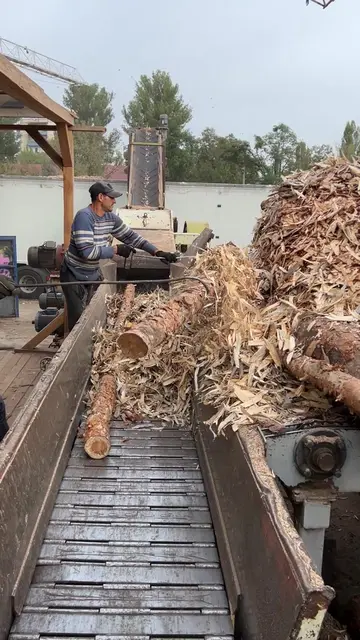
The size of the log is only the beginning of the story. Once heavy timber reaches the infeed of an industrial wood chipper, powerful hydraulic rollers take control and begin guiding it toward the cutting drum. The machine keeps the material moving while the cutting system works through the dense wood, turning large sections of timber into a continuous flow of chips. The contrast between the rough natural material and the precise movement of the equipment makes the entire process remarkably satisfying to watch. This type of commercial wood processing is closely connected to the everyday work of the forestry industry. Timber harvesting and commercial logging can produce large quantities of trunks, branches, and residual wood fiber, while land clearing and storm cleanup can create even larger volumes in a short period. High-capacity wood chippers provide a practical way to process that material efficiently. The resulting chips can move into biomass processing, biomass energy, pulp and paper production, mulch, fuel, and other wood products. The machine itself is a study in controlled mechanical power. Hydraulic feed rollers maintain pressure on incoming logs while regulating their movement toward the cutting drum. The drum must continue working through changing sizes, shapes, and densities without disrupting the flow. Feed rate, drum momentum, mechanical coordination, and material handling all contribute to consistent throughput. When large diameter logs enter the system, the amount of force involved becomes especially clear, yet the operation remains controlled from beginning to end. This process represents a much larger world of heavy equipment and industrial manufacturing. Logging equipment, forestry machinery, sawmill operations, wood recycling, and biomass facilities all rely on efficient ways to move valuable raw material. A log may begin as a rough and irregular object, but after processing it becomes a consistent form of wood fiber ready for its next use. Watching that transformation unfold continuously provides a fascinating glimpse into modern timber processing, where enormous physical power is combined with precision, reliability, and industrial efficiency.