Loading video…
All breakouts Locked — upgrade to Pro to open.Open on TikTokPro
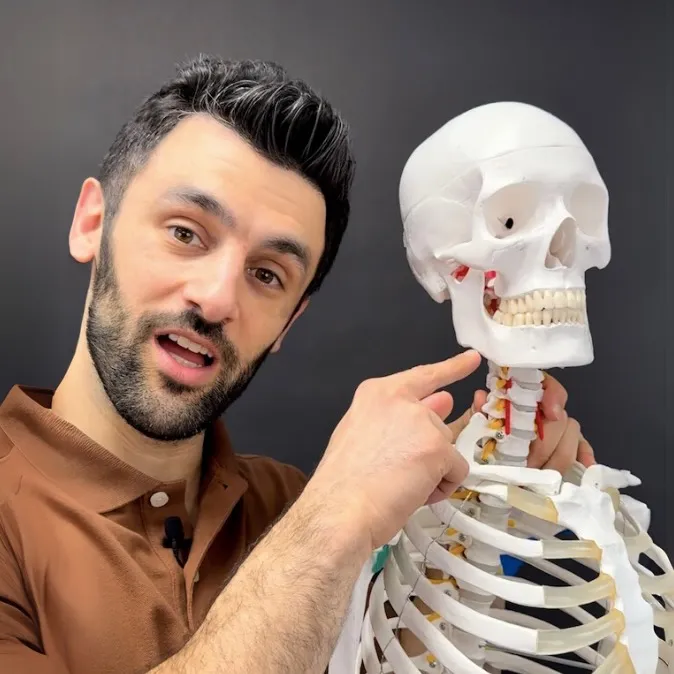
No preview available · watch on TikTok below
4.8Health
Post
Post by @drjoedamiani
@drjoedamiani
609.5K followers · usually 18.4K views a post
Views
86.4K
Likes
1.3K
Comments
37
Shares
291
We’re still analyzing this post.
Original caption
🔥 Ear fullness, aching, or ringing—but your ear tests keep coming back normal? Your JAW may be worth looking at! Your TMJ sits extremely close to the ear, and the joint and surrounding jaw muscles can sometimes contribute to symptoms that feel like they’re coming directly from the ear. 💡 Here are 3 potential connections: ⚡ 1. TMJ irritation → ear aching Your TMJ contains a disc that helps the joint move smoothly. If the joint or surrounding tissues become irritated, pain can be felt around the nearby ear—sometimes becoming more noticeable with chewing, talking, or jaw movement. ⚡ 2. Masseter → ringing The masseter is one of your primary chewing and clenching muscles. In some people, tinnitus can have a somatosensory component, meaning input from the jaw and neck can influence how the ringing is perceived. ⚡ 3. Medial pterygoid → pressure/fullness The medial pterygoid sits deep inside the jaw near muscles involved in the soft palate and Eustachian tube region. Dysfunction or tension throughout this area may be worth assessing when jaw symptoms occur alongside feelings of ear pressure or fullness. 🔥 Why this matters: If an ENT or audiologist has evaluated your ear and hasn’t found an ear-related explanation, the jaw is another region that may be worth assessing—especially if your symptoms change with clenching, chewing, talking, or jaw movement. Overall, the ear and jaw are closely related anatomically and neurologically, and sometimes both need to be considered. Persistent or new one-sided tinnitus, sudden hearing changes, significant dizziness, drainage, or worsening ear pain should be medically evaluated. #TMJ #Tinnitus #EarFullness #EarPain #JawPain
More from @drjoedamiani
More breakout videos from this creator.


