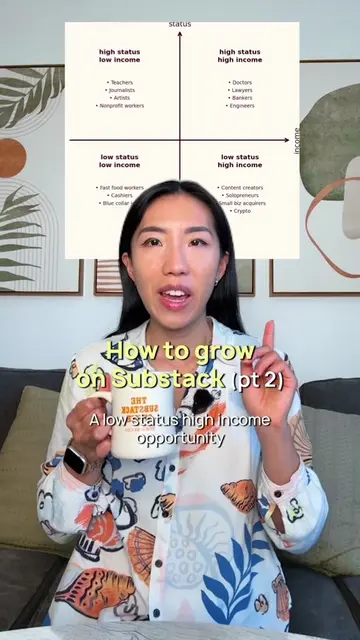
I'm not entirely sure what's going on because I started Substack about three weeks ago and I've already made £2000+ ARR. I'm not going to lie, I haven't really been like trying to grow it, so I just thought I'd share what I've found so far. I'm not going to lie, this is super early days for me, but I just think it's really interesting. I think it's a really underutilized platform and I think it has some real use cases for businesses too. So let's get into it. Okay, firstly, the reason I started it was because I have a lot of thoughts that I want to get out and Substack felt like a really natural place for me to do that. A lot of the things I'm really passionate about, I don't necessarily make on TikTok, which is more like mindset, psychology kind of things, and I just find writing a much more natural platform for that to go on. So that was kind of the first reason. The second reason is it's kind of like a trust-building marketing channel also for my business. So I post basically half business stuff and half like jewelry kind of stuff around my brand. Thirdly, because I honestly just wanted to see if it was possible to make it into another income stream, which it turns out it is. Because of that, basically this is what I did and the tips I would give anyone else to starting. My first tip would be to monetize it straight away. I think this is because as I said, my motivations were twofold. Firstly, because I wanted to write and I wanted to just like get stuff out of my brain. And the second reason was to monetize it. So because of that, having a lot of like free subscribers isn't a goal that I have. There's no reason that would benefit my life. I'm sure that's different if you're a writer or a creator person who wants to get their work out into the world. But for me, like having thousands of free subscribers is kind of irrelevant. So because of that, I basically like monetized it straight away. The second thing was how I monetized it and the strategy behind that. So I got some advice from my friend Alana who runs the Hotter Richer Fitter Substack. Go follow it. It's great. And she basically said to treat it like a magazine and I actually had this same thought when I was inspired to start it while I was on holiday. And basically while I was there, I was reading the Sunday Times magazine because there was no Wi-Fi and I was like, I was just there. So I was like, I'm going to read this. And I had such a nice experience because what I find so fun about magazines like that is they flip between so many different things. So one minute you're reading like a what to buy for autumn guide, the next minute you're reading an interview with a celebrity, and then you're reading like a quite deep philosophical editorial piece. And then maybe there's some recipes or some interiors thrown in there. There's just so much stuff and you're never really bored. And the reason I also like that is because obviously they're speaking to a specific niche type of person, but they also understand that that type of person is a multifaceted person with multiple interests and it kind of tailors it towards that. And I just find there's something so beautiful about reading a magazine and it feels like so stimulating. So I basically wanted to recreate that experience but in a Substack. I guess that was my approach. I don't know if I would necessarily say that's advice I would give. I think it's also incredibly possible and maybe even easier to grow a bigger audience if you just do one thing. For example, if your only thing is like replacing your 9-5 with side hustles and that was all you ever spoke about, I'm sure you could grow very quickly. But I think the reason that this approach worked for me is not only because it made it really easy for me to write because I was like, what content do I want to consume and then I just wrote that. But also it stopped me getting bored and stopped me feeling like trapped in this like obligation of stuff that I need to write and get out there. I can literally just basically be my full authentic self and just like basically take anything that's in my brain and put it out there. I guess that takes me onto my third thing, which is how often I post. Honestly, my plan going into it was to post one article a week and maybe like a few notes a week, but I've ended up posting on it every day, sometimes multiple times a day, just because I'm finding it so fun. And I don't necessarily know if that's a growth strategy. I do think maybe the more spaghetti you throw at the wall, the more something's likely to stick, so I guess that makes sense. I also do think the notes aspect is very much like the growth thing, so probably that helps. There is so many things I haven't done yet because as I said, I've only been doing it for three weeks, but there's so many things like engaging with other creators, recommending other Substacks, like linking up with other authors to recommend each other that are also growth strategies I have heard. So I'm going to do that and I'll report back. Then the final piece of advice is to promote your Substack on other platforms. AKA, I promote mine on here. So I was actually inspired to start it because I did a TikTok about how I made a second brain in Claude and it got quite a lot of views, lots of people commenting on it, and that was like the motivation I had to make it into a Substack because people had to be able to copy and paste the prompts. So that was kind of my motivation, but also doing things like having on my TikTok and actively saying to people, here's the TikTok, but I've written it in so much more detail on my Substack, go over there, obviously has driven people to go to it. So I guess if you do have any kind of public social media platform, utilize it. I've also seen people use Pinterest or things like that, so if you're not comfortable showing your face, you could do it that way. Actually, my final, final piece of advice is a strategy for what you're going to paywall versus what you're not going to paywall. So I was really intentional from day one about my strategy here. My belief is the current way I'm doing it is that anything that's kind of a business and basically what I would charge a coaching client for, I put behind a paywall. And the reason for that is firstly, because I don't feel comfortable giving that information out for free on the internet. And secondly, because it's the kind of stuff that I personally would be happy to pay for, and I think most people are in the same boat where if it's content that's actively making you more money, making you better at your job, it's like adding value to your life in a really meaningful sense, then I think that's something that people don't have much problem paying like £7 a month for. Whereas things that are a bit more like opinion-based pieces or maybe like fashion trends or style guides, things like that, I just put out for free because I think that's probably something people just want to read for fun and don't necessarily feel like they should pay for it. I would. And when I do put stuff behind a paywall, I always just do the first like bit for free so people can kind of read that and get kind of invested in the story and then put a paywall in so if they want to keep reading any further, they have to pay to do so. I just find that works so much better at like getting new subscribers rather than just putting the entire article behind a paywall because like how would they know if they even like your writing style? How would they know that they think this article might be useful to them? There's kind of no way of knowing that. So, yeah, that's Substack so far for me, week three update. I think I'll probably just do another update soon. If anyone has any tips, can you please let me know.