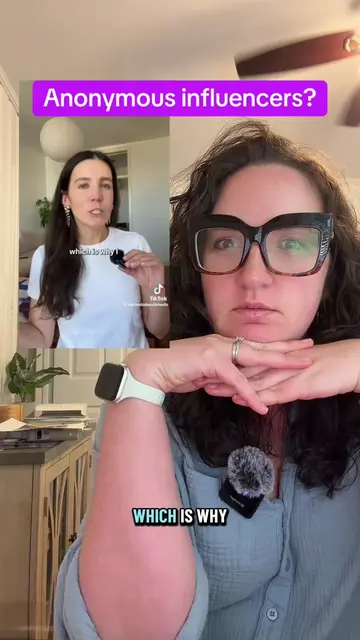
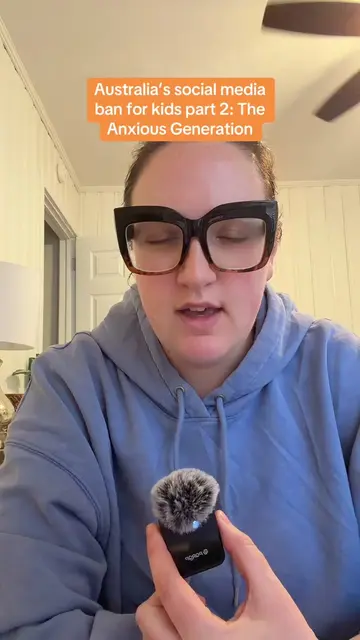
I'm a social media professor, researcher, and teacher at the University of Georgia, and this comment was left on my video about the Australian social media ban for kids under 16 that went into effect in December. The Australian social media ban also has no room for parental consent exceptions, meaning that Australia teens, kids, can't use social media. I've also been on the internet long enough to know that as soon as I say I don't support social media bans for minors, people are going to be like, why do you hate kids and their mental health? But I never said that. Neither did this commenter. This is a very fair question, especially considering how much social media analysis and hot button issues I talk about on this page. But social media bans for minors are like cutting the head off the snake, only for three new ones to grow back in its place. First, this drives users into less regulated and even less safe forms of using social media. Listen, we were all teenagers once. We all did exactly the things our parents and even the government told us exactly not to do. All kids drink underage, but because they are not supposed to be doing it, they do it in increasingly less safe ways. And then we also don't have open and honest conversations with parents, with other trusted adults, about this behavior, why it's unsafe, and maybe how to do it safely. The Australian social media ban is going to send a lot of kids to VPNs, it is going to send a lot of kids to AI, and it is going to send a lot of kids to try to circumvent other platforms. The Australian law specifically names 10 or 12 platforms, and it's just those 10 or 12 platforms that are currently banned under the law. This means kids are about to go to way less regulated and way less safe places on the internet. Subsequently, social media bans for minors means less privacy for adults and also more surveillance for everyone. Australian politicians and tech companies came out when this ban was being considered and before it passed into law and said, yeah, the only way we can actually enforce this is to regulate everyone. Meaning these platforms are going to use something called behavioral inference to try to track user behavior on social media, and if they deem it as belonging to a minor, you're going to have to upload a driver's license, social security card, or passport or some government document to prove you are of age to use social media. Let's continue with the alcohol analogy for a second. And sure, I do have to show my license to buy alcohol to prove I'm over 21, but my local liquor store hasn't had data breaches like Cambridge Analytica. My local liquor store knows I like certain Pinot Grigios and Pinot Noirs and Prosecco. It does not have a whole robust data profile about me that I would then add a driver's license to. But Jess, I'm willing to give up a little privacy and subject myself to more surveillance to make sure kids are safe and their mental health is safe. This brings me to my next point. The data and the research that shows social media and smartphones are directly responsible for kids' mental health crises is wrong. And I actually made a video about this to continue this series, but TikTok has shadow banned that video to hell. It's currently sitting on my page with zero views. I don't even know if y'all can see it. You can, let me know. But I will probably wind up doing something on my substack about it. The research that has informed all of these laws is based on correlation equals causation, and when any entry level graduate research methods class would tell you that is never the case. Correlation does not equal causation. So the data doesn't even support the claim. Three, by banning social media for minors, you are absolving social media companies of actually having to educate people and be more transparent in their platforms. Sure, they are responsible for enforcing this ban and can face hefty consequences and hefty fines if they don't take meaningful and reasonable action to do so, but this changes the game. So instead, their efforts are going to be to kick kids off their platforms instead of educating all of us and being more transparent about how these things work. Again, when TikTok got sold to the US appointed board, you know, a couple weeks ago, everyone was freaking out about what was in the terms of service, but that's been there forever, and it's by design. They don't want you to look at that stuff. That should absolutely not be the case, and this brings me to my final point. 16 is not a magical number, and in some states in the United States, 18 is not a magical number. A child is no better prepared the day they turn 16 for social media than the day they were the day before when they were, you know, 15 and 364 or whatever it is. I like in social media bans to handing the keys to a car when someone turns 16 without a learner's permit or driver's ed. Instead of teaching kids about social media and teaching them the dangers of it and teaching them the realities of it, you have now made them even more ill-prepared for whatever happens next when they finally are able to have accounts. By banning social media for minors, they don't know anything about filters and beauty standards and algorithms because we're also not teaching them about this. Social media bans for minors are a simple solution to a complex situation that I think actually meets the literal definition of a wicked problem, which is too complex to ever actually solve with one thing. Instead, wicked problems require holistic and really engaged efforts to try to fix the problem. And with social media bans for minors, politicians are throwing up their hands and then patting themselves on the back and saying, good for us, we solved the problem. When what's that meme where it's like, but you didn't even do anything? Oh yeah, Sailor Moon and Tuxedo Mask, that's the one. So yeah, I don't care for bans, I'm staunchly against them, but I'm happy to answer any questions about them, why I feel this way, how I got to feel this way, and what I think they happen going forward.