Loading video…
All breakouts
51.4OtherListicle hookB2B
Hook
10 industrial communication protocols every PLC beginner should know.
@sparksystemes
14.1K followers · usually 1.7K views a post
Views
95.9K
Likes
4.6K
Comments
39
Shares
900
Why it worked
The video provides high-value, educational technical content in a clear, structured list format that is easy for professionals and students to digest.
Summary
This video provides a concise list of 10 common industrial communication protocols used in PLC programming. Each protocol is briefly defined with its key features and typical industrial applications.
Structure
- 1Introduction to 10 PLC protocols
- 2Detailed breakdown of protocols 1 through 5
- 3Detailed breakdown of protocols 6 through 10
- 4Call to action for viewer engagement
Call to action
Let us know in the comments below!
On-screen text
Top 10 PLC Protocols
10 industrial communication protocols every PLC beginner should know.
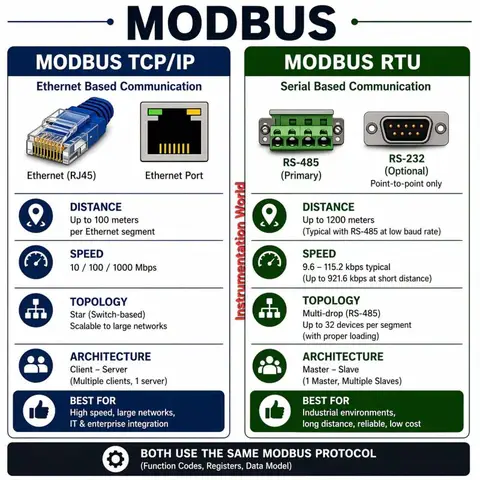
1. Modbus
Key Features:
- Open standard, vendor-neutral
- Works over RS232, RS485 or TCP/IP.
- Simple and easy to implement.
No.1 Modbus.
2. Profibus
Key Features:
- Cyclic.
- Layered.
- Diagnostics and network configuration.
No.2 Profibus.
3. Ethernet/IP
Key Features:
- Uses Ethernet to transmit data.
- Multiple data rates.
- Supports various topologies & adapters.
No.3 EtherNet/IP.
4. EtherCAT
Key Features:
- Standard Ethernet.
- Ultra-fast, Real-time.
- Supports complex network topologies
No.4 EtherCAT.
5. Profinet
Key Features:
- Ethernet-based
- RT + non-RT communication
- Seamless integration with Profibus.
No.5 Profinet.
6. CAN, or Controller Area Network.
Key Features:
- Embedded
- Real-time
- Node diagnostics
No.6 CAN, or Controller Area Network.
7. DeviceNet
Key Features:
- CAN-based
- Multi-master
- Power + Comm
No.7 DeviceNet.
8. CC-Link
Key Features:
- RS485/Ethernet.
- Fast, scalable, reliable.
- Easy programming with higher cost.
No.8 CC-Link.
9. CC-Link IE
Key Features
- Ethernet-based.
- Up to 1Gbps.
- 121 nodes on a single network.
No.9 CC-Link IE.
10. OPC
Key Features:
- Rich data
- Higher resource + cost
- Secure
No.10 OPC.
Which protocol do you use most?
Let us know in the comments below!
Original caption
#Engineering #ControlSystems #IndustrialAutomation #PLC #Automation
More from @sparksystemes
More breakout videos from this creator.