Loading video…
All breakouts
12.7Text-HeavyOther hookAI Tools
Hook
follow @sambit.ai.tech
@sambit.ai.tech
5.4K followers · usually 687 views a post
Views
8.7K
Likes
197
Comments
0
Shares
84
Promoted product
AI Engineering coursehttps://www.instagram.com/sambit.ai.tech ↗
Why it worked
The post breaks down complex AI concepts into easily digestible comparisons, using clear visuals and concise text. This format is highly shareable and valuable for individuals interested in AI development and engineering.
Summary
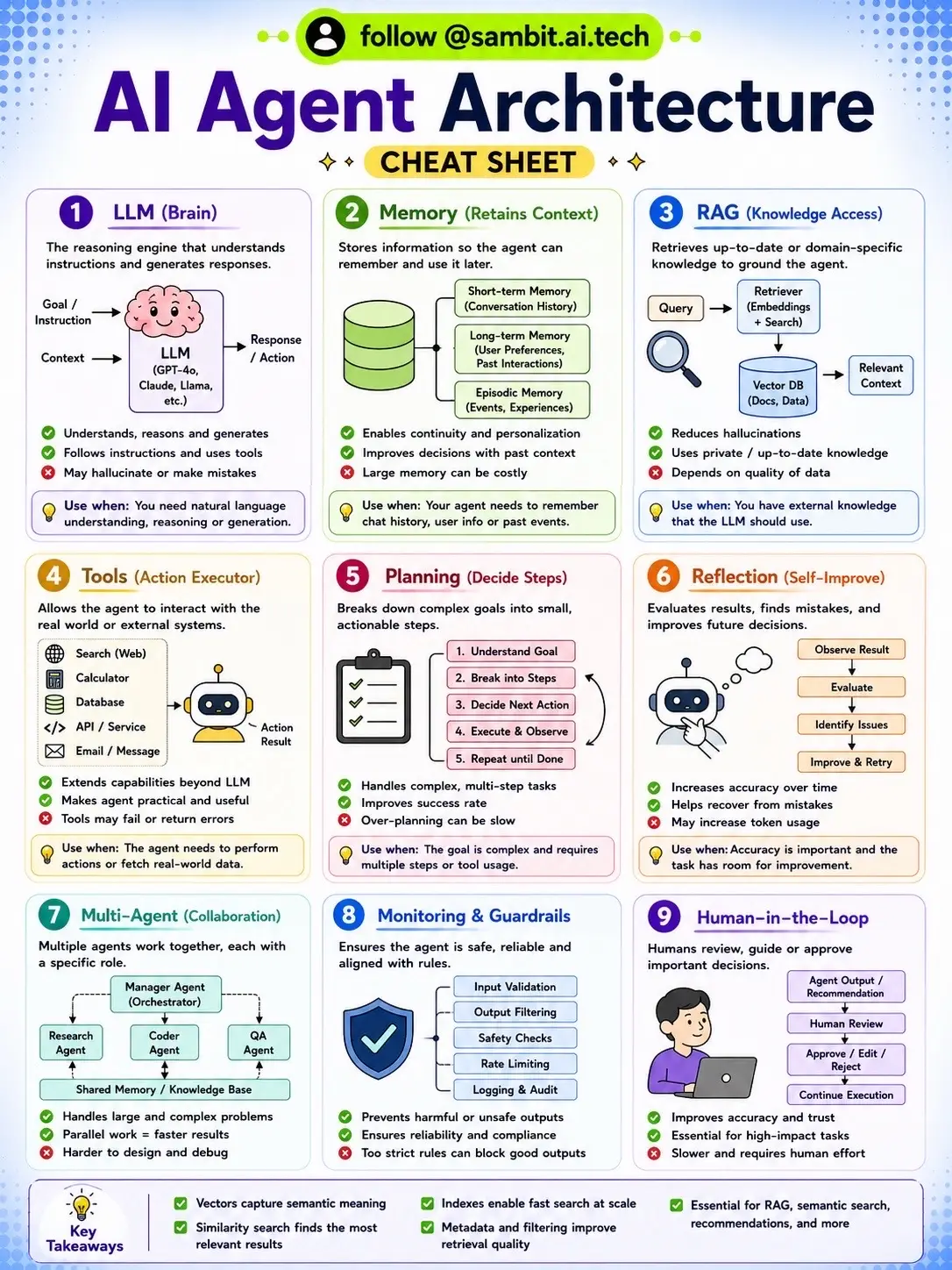
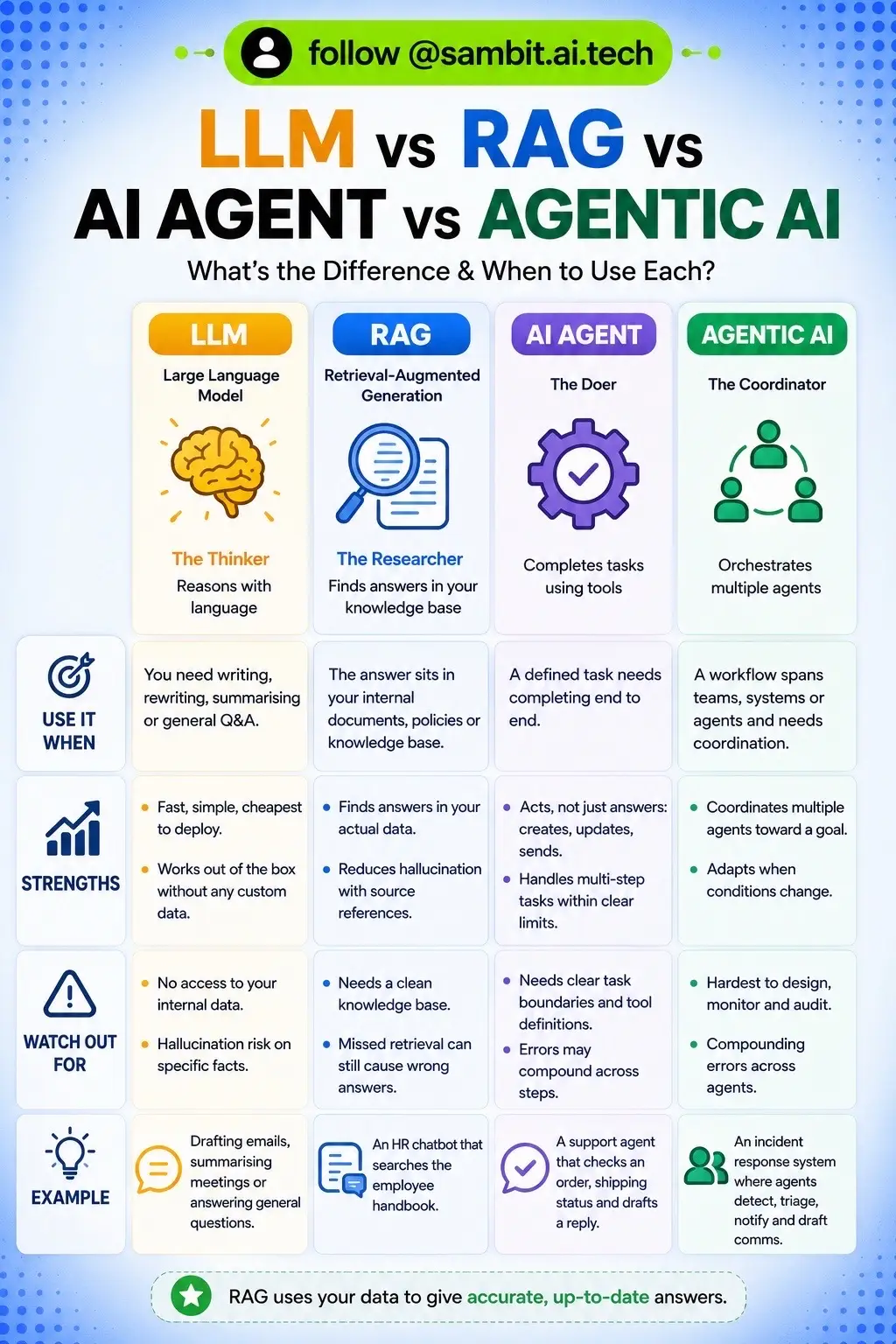
This post compares and contrasts four AI concepts: LLM, RAG, AI Agent, and Agentic AI, explaining their core functions and use cases. It aims to help viewers understand these concepts for AI engineering and development.
Structure
- 1Introduction of LLM vs RAG vs AI Agent vs Agentic AI
- 2Explanation of LLM (The Thinker)
- 3Explanation of RAG (The Researcher)
- 4Explanation of AI Agent (The Doer)
- 5Explanation of Agentic AI (The Coordinator)
- 6When to use each concept
- 7
Original caption
Here’s the simplest way to remember it: LLM = Thinks RAG = Researches AI Agent = Does Agentic AI = Coordinates If you’re learning AI Engineering, AI Agents, RAG, LangChain, or building AI applications in 2026, understanding this stack is essential. 💾 Save this cheat sheet. 📩 Share it with someone learning AI. AI Engineer • RAG • AI Agents • Agentic AI • LLM • LangChain • Generative AI • AI Automation • AI Development • Machine Learning • Prompt Engineering #AIEngineer #AIAgents #RAG #GenerativeAI #machinelearning
More from @sambit.ai.tech
More breakout videos from this creator.