Loading video…
All breakouts
10.3Talking HeadCuriosity Gap hookAI Tools
Hook
Not alive, but not dead: disembodied human brains used for drug testing
@bearbaitofficial
499.1K followers · usually 21.5K views a post
Views
130.3K
Likes
19.8K
Comments
1.1K
Shares
3.2K
Why it worked
The video leverages a shocking and ethically complex topic (disembodied human brains) to capture attention. It then provides scientific explanations and visual aids, making the complex subject matter more accessible and engaging, which likely drove curiosity and shares.
Summary
This video discusses the scientific advancement of reviving disembodied human brains for drug testing and research. It highlights the work of Bexorg and contrasts their method with brain organoids, emphasizing the potential for studying neurodegenerative diseases and testing medications.
Structure
- 1Introduction to disembodied human brains for drug testing
- 2Comparison to previous research (pig brains)
- 3The ethical and philosophical implications of revived human brains
- 4The technology used to keep brains alive and functional
- 5Advantages of this method over brain organoids
- 6Potential applications in treating diseases and testing medications
Product placement
The video discusses the company Bexorg and their work with disembodied human brains for drug testing. It also shows a diagram of the 'BrainEx' system which includes components like an operating system, heart, sensors, brain, lungs, and other organs, all connected via a synthetic circulatory system.
On-screen text
Not alive, but not dead:
disembodied human brains
used for drug testing
By restoring some functions to intact brains
from deceased donors, the startup Bexorg
hopes to create a better
drug development test bed for
neurodegenerative diseases
20 MAY 2026 11:40 AM
DISEMBODIED HUMAN BRAINS
KEPT ALIVE POSTMORTEM
Not alive, but not dead:
disembodied human brains
used for drug testing
By restoring some functions to intact brains
from deceased donors, the startup Bexorg
hopes to create a better
drug development test bed for
neurodegenerative diseases
20 MAY 2026 11:40 AM
THAT I LOOK
AND JUST IMMEDIATELY
SHOULD NOT BE
DOING THIS BUT
OF THEM AND
IT IS FASCINATING
TO STARE AT
A WALL FOR
DECIDE HOW I
WANTED TO TALK
ABOUT THIS ONE
Restoration of brain circulation
and cellular functions hours
post-mortem
Zvonimir Vrsalja et al. Nature, 2019 Apr.
Show details
Full text links
Cite
Abstract
The brains of human mammals are
highly vulnerable to blood flow
and decreases in oxygen.
We describe the restoration
of microcirculation and cellular
functions of the intact brain ex vivo
normothermic conditions 4 hours post-
mortem. We have restored
pulsatile
based on and cy
recovery
prevent
the
sys
IN 2019
WORLD WHEN THEY
REVIVED PIG BRAINS
FOUR HOURS POST-
MORTEM THEY RESTORED
CIRCULATION AND SOME
CELL ACTIVITY GLOBAL
CELL ACTIVITY WAS
BUT CONSCIOUSNESS
WAS NOT
AND THEY'VE TAKEN
THEIR VISION ONE
STEP FURTHER AND
REVIVED HUMAN BRAINS
NOW BRAIN IN
WAS SUPPOSED TO
BE A PHILOSOPHICAL CONVERSATION
BECAUSE HOW CAN
THAT WE ARE TRULY
EXPERIENCING THE WORLD
WHEN WE ARE
INSIDE OF A
RELY ON EXTERNAL
INPUT TO TELL
US WHAT'S THERE
WELL THAT HAS
BEEN TURNED INTO
A REAL VAT
BRAIN IN IT
24 HOURS AGO
PERSON NOW THE RESEARCHERS
THE BRAINS ARE
UNDER HEAVY SEDATION
SO EVEN IF
ANY CONSCIOUSNESS WHICH
WE HAVE ESSENTIALLY
REACHED THE POINT
OF BRAIN DEATH
WELL THEY WOULDN'T
REALLY BE EXPERIENCING ANYTHING
ALTHOUGH THEIR VISION
HAS REMOVING
THE ANESTHESIA SO
THAT THEY CAN
WORK WITH THEM
THIS SHOULD HELP
THE DEVELOPMENT OF MEDICATION
IT GIVES US
WE CAN WORK
ACTUALLY A HUMAN BRAIN
KEPT ALIVE CURRENTLY
THEY'RE ONLY ALIVE
TERM ALTHOUGH THEY
ARE LOOKING TO
EXTEND IT TWO WEEKS
POSSIBLY LONGER
NOW THIS HAS
SOME GREAT ADVANTAGES
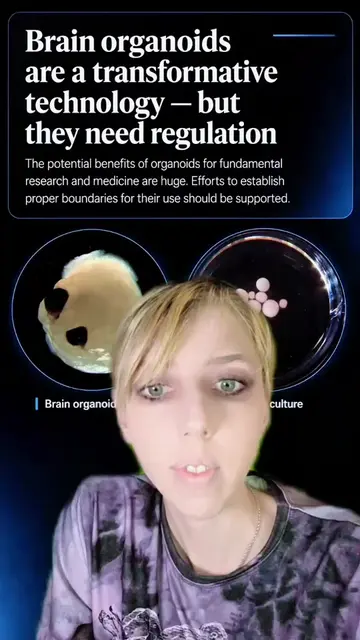
OVER ORGANOIDS WHICH
MY FAVOURITE
SCIENCE ODDITIES YES
YOU CAN GROW
A TINY VERSION
BRAIN USING
STEM CELLS HOWEVER
THE ORGANOIDS WELL
BE KEPT ALIVE
FOR YEARS
THEY HAVE THE
ARE ESSENTIALLY INFANTS
YES THEIR GENE
ACTIVITY MATCHES THEIR
CHRONOLOGICAL AGE
YOU KEEP THEM
YEARS OR MORE
THEY ESSENTIALLY HAVE
THE GENE EXPRESSION
YEAR OLD BRAIN
HUMAN BRAINS
THAT HAS BEEN
ALIVE FOR FEASIBLY
YEARS YOU THEN
HAVE AGE
AGE CELLS WILL
INTERACT WHEN YOU
DO STUFF TO THEM
In house
Circulation
Brain connected
artificial blood
and support system
via vascular
system
Operating system
"Heart"
Sensors
Brain
"Lungs"
Fluid samples
"Immune system"
"Kidney"
"Blood"
Figure 1. The BrainEx
human disease brains
intact, molecularly and ce
system. An acellular
nutrients, homeostasis,
pharmacological
be assessed.
lished a platform
postmortem human
its endo
THAT SYSTEM IS
SYNTHETIC BODY
THIS IS SOMETHING
HAVE NOT INVENTED
OR BRAIN ORGANOID
YET IT ALREADY
HAS ALL THE
BRAIN THAT SHOULD COOPERATE
WITH THE BODY
IT HAS SYNTHETIC
LUNGS THAT EXCHANGE
OXYGEN WITH THE AIR
THAT IS DELIVERED
HEART AND A
SYNTHETIC CIRCULATORY SYSTEM
BRAIN WAS GROWN
INSIDE A HUMAN FEASIBLY
IT HAS ALL
OF THE STRUCTURES
TO RECEIVE THOSE NUTRIENTS
LIKE BRAIN ORGANOIDS
IT ALSO IS
COVERED IN SENSORS
IS GOING ON
INSIDE OF THE
BRAIN PEOPLE WHO
DONATED THESE BRAINS
WERE USUALLY ELDERLY
AND USUALLY
HAD SOME DETERIORATING
CONDITION LIKE PARKINSON'S
OR ALZHEIMER'S
THIS MEANS THAT
WE CAN TREAT
FOR THESE CONDITIONS
AND FIGURE OUT
HOW WELL MEDICATIONS
A PERSON
THIS IS THE
HUGE ADVANTAGE
OVER MOUSE MODELS
ORGANOID MODELS WHICH AGAIN
MODEL ESSENTIALLY A
BABY BRAIN
I HOPE YOU'VE
ENJOYED THIS INFORMATION
TO GO STARE AT
A WALL FOR
WHILE LONGER I
DO NOT KNOW
ABOUT THIS YET
OF THE CUTTING
EDGE YOU KNOW
I'LL BRING IT
Original caption
#research #explained #brains #organoid #tiktokgrowthchallenge
More from @bearbaitofficial
More breakout videos from this creator.