Loading video…
All breakouts
5.8Talking HeadBefore / After hookAI Tools
Hook
Brain organoids are a transformative technology – but they need regulation
@bearbaitofficial
499.1K followers · usually 21.5K views a post
Views
97.1K
Likes
12.4K
Comments
551
Shares
1.4K
Why it worked
The video likely performed well due to its provocative topic (brain organoids, sentience, and consciousness) combined with a clear and engaging explanation of complex scientific concepts. The use of striking visuals and a relatable narrative structure, along with the creator's direct address to the audience, would have contributed to its reach.
Summary
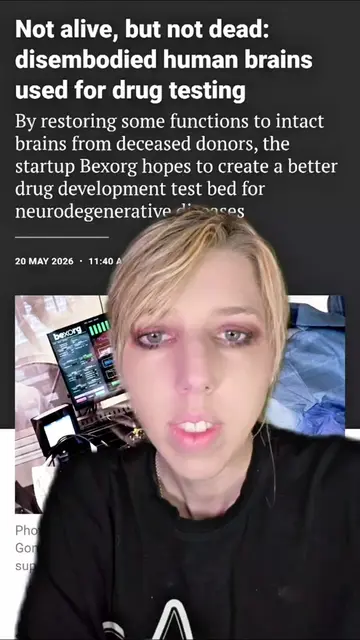
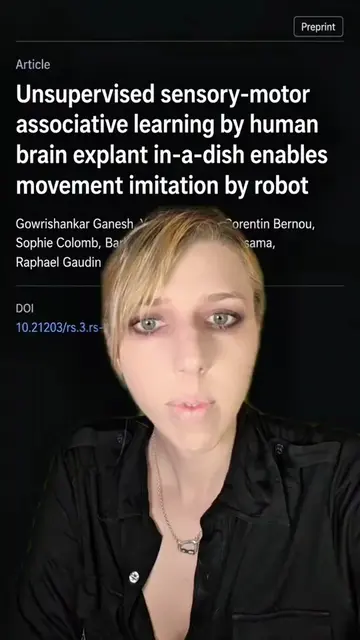
The video discusses the ethical implications of brain organoids and postmortem brains being kept alive and integrated with technology. It highlights a study where a human brain slice was taught to play piano and another where a postmortem brain was kept alive in a robotic body. The speaker notes the lack of ethical regulations for brain research and the potential for both good and harm.
Structure
- 1Introduction to brain organoids and their potential
- 2Ethical concerns and the concept of sentience
- 3Case study: Postmortem brain kept alive in a robotic body
- 4Case study: Human brain slice taught to play piano
- 5Discussion on the lack of ethical regulations and potential for good
Call to action
Follow for more.
On-screen text
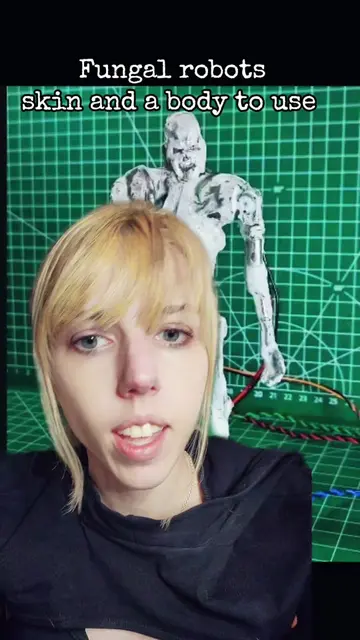
Brain organoids are a transformative technology – but they need regulation
The potential benefits of organoids for fundamental research and medicine are huge. Efforts to establish proper boundaries for their use should be supported.
Brain organoid
Brain organoids in culture
In vitro neurons learn and exhibit sentience when embodied in a simulated game-world
Brett J. Kagan 1,11
Andy C. Kitchen 5
Nhi T. Tran 2
Ben Rollo 5
Adeel Razi 4,6,7,8
Karl J. Friston 4
Show more
Affiliations & Notes
Article Info
Linked Articles
Unsupervised sensory-motor associative learning by human brain explant in-a-dish enables movement imitation by robot
Gowrishankar Ganesh, Yukiko Iwasaki, Corentin Bernou, Sophie Colomb, Barbara Gorda, Robin Passama, Raphael Gaudin
DOI
10.21203/rs.3.rs-9638
Fig 2. OFA training
Brain Organoids – Sentience, Consciousness, Personhood, Agency, and Moral Status in Neuronal Cell Cultures
Benjamin Cohen *
Submitted
January 30, 2026
Published
2026-06-01
Abs
Recen
pluri
mim
extr
Original caption
#explained #brain #biotech #organoids #Science
More from @bearbaitofficial
More breakout videos from this creator.