Hook

Their other posts in the index, biggest breakout first.
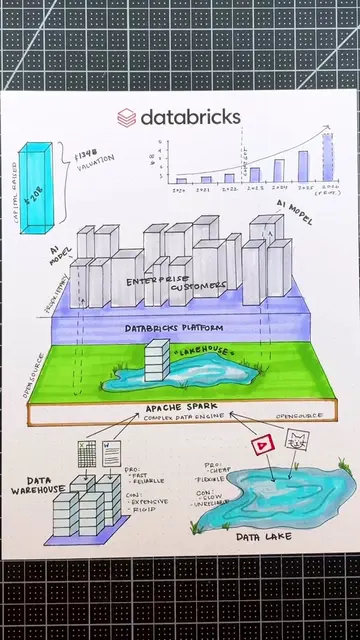
I'm gonna try to explain the entire AI stack in just two minutes. Lock in with me because an entirely new layer just got added this week. It helps me to think about AI like a new city being built. At the very base, we have the models, the big ones you know. OpenAI's ChatGPT, Anthropic's Claude, Google's Gemini, and more. These are the raw plots of land, the technical soil everything else grows from. If you're a developer, you can build on top of this land directly, but for most people, something has to be built on top of it before it becomes useful. On top of those models are harnesses. Think of these like storefronts, often made by a model company as a way to make their model actually do stuff. While models can only talk, harnesses take actions. They read files, write code, run commands, search the web, remember prior history. Most people interact with AI through these harness storefronts. As a user, you can visit any harness to get your work done, but ultimately they're disconnected. None of your workflows, context, or special configurations travel between the different plots of land. If you use Claude Code today and have a better tool that launches tomorrow, you have to start all over on that new land. For enterprise teams, it's even worse. Two people on completely separate plots of land with no way to reach each other, no idea what the other person's agent is doing, no idea what it's costing. But Databricks just released something big called Omnigent to fix that. The way I think about it is they finally built a highway system to connect everything in AI. They're calling Omnigent a meta harness. Your work, your history, your settings can now travel with you regardless of which harness you're using. Previously isolated plot of land now becomes a full city grid. For enterprise teams, this means you can share your AI session with a teammate just by sending a link, kind of like you would share a Google Doc. You can also track your spend together and set security policies across your whole team. Now that we have this new city grid, people are gonna start building more on top of it. Databricks itself built two examples: Polly, which breaks a task into pieces and sends them to different agents to work in parallel, then has each piece checked by a different model than the one that wrote it. And Debby, which sends every question to both Claude and GPT at the same time so you can compare the answers. But anyone else can build on it too, even Databricks' competitors. That part is key. Four million of you watched our last Databricks video where we learned that the critical business decision they made was giving away Spark for free. Well, they're doing it again. Omnigent is fully open source, and the bet is by doing so, everyone everywhere will use it. As this whole AI city grows, they're positioning Omnigent as critical infrastructure. And history tells us in any new city, it's pretty smart play to be the road builders.