Loading video…
All breakouts

5.5Talking HeadWarning hook
Hook
WE DON'T ALLOW NAZIS.
@decoderpod
56.8K followers · usually 4.2K views a post
Views
22.7K
Likes
1.4K
Comments
31
Shares
11
Why it worked
The video likely performed well due to its direct engagement with a controversial topic (content moderation and free speech) and its comparison of two major platforms (Patreon and Substack). The clear stance taken by the speaker, coupled with the mention of specific policies and historical context, would resonate with audiences interested in creator economy platforms and online censorship debates.
Summary
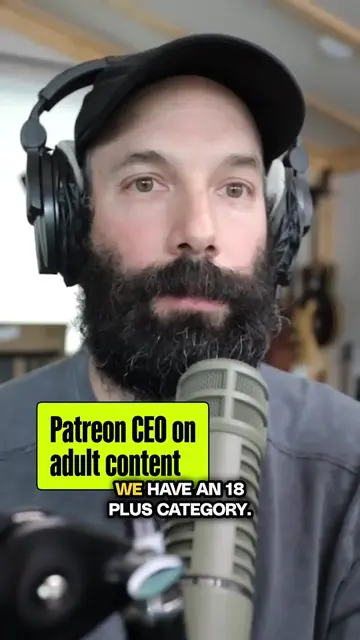
The video discusses Patreon's content moderation policy, contrasting it with the First Amendment and highlighting how it differs from Substack. The speaker expresses pride in Patreon's policy, noting its evolution since 2013 and its role in attracting creators.
Structure
- 1Patreon's stance on Nazis and content moderation.
- 2Comparison to the First Amendment and Substack.
- 3Pride in Patreon's content policy and its history.
- 4The policy as a key feature attracting creators.
Product placement
Patreon is discussed as the primary subject, with its content policy being the focus. The video contrasts Patreon with Substack, implying Patreon is a superior platform due to its moderation policies.
On-screen text
WE DON'T ALLOW NAZIS.
Patreon's moderation
policy
WE DON'T ALLOW THAT.
WE HAVE MUCH MORE THOUGHTFUL
MODERATION.
THAT YOUR CONTENT
POLICY SHOULD BE THE
FIRST AMENDMENT.
THAT'S NOT HOW
WE THINK ABOUT IT.
THERE ARE THINGS ON PATREON THAT
WE THINK ARE GOOD FOR THE MISSION.
THERE ARE THINGS ON PATREON THAT ARE NOT
I'M, LIKE, VERY PROUD OF
OUR CONTENT POLICY.
I WROTE THE FIRST
VERSION OF IT IN 2013.
IT WAS 40 PAGES, WITH THE HELP OF AN
OUTSIDE CONSULTANT, AND WE'VE ITERATED
ON THAT POLICY OVER THE YEARS, AND I THINK
DONE A REALLY GOOD JOB OF ENFORCING IT.
I'D SAY ONE OF THE
BIGGEST DIFFERENCES
BETWEEN SUBSTACK AND PATREON IS OUR CONTENT
POLICY, WHICH IS NOT "A
BY THE WAY." THAT'S A
MAIN FEATURE FOR US.
AND A LOT OF CREATORS HAVE LEFT SUBSTACK
AND COME TO PATREON
BECAUSE OF OUR
CONTENT POLICY.
Original caption
Patreon CEO Jack Conte on content moderation, free speech, and competing with Substack: "We don't allow Nazis." #substack #pateron #Tech #socialmedia
More from @decoderpod
Their other posts in the index, biggest breakout first.