Loading video…
All breakouts
22.4OtherStory Open hookEducation
Hook
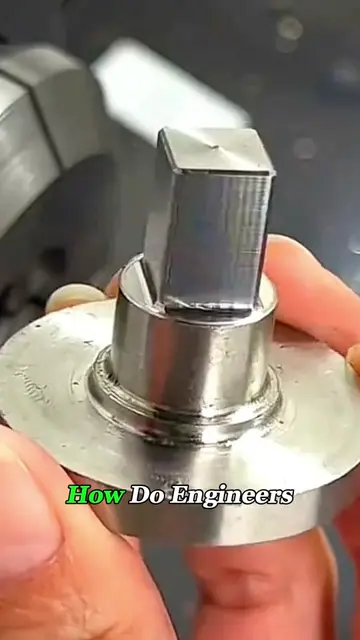
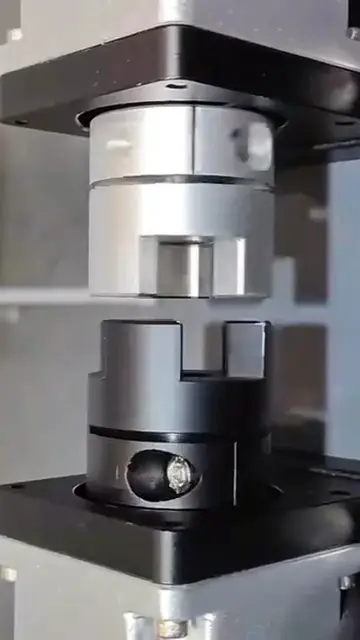
When Engineers Realized That Two Opposite Cone Shaped Pulleys Could Change Speed Like Gears Without The Jerky Feeling Of Gear Teeth Meshing, This Became The Early Idea Of The Cvt Transmission.
@lumiobro
96.3K followers · usually 76.5K views a post
Views
1.6M
Likes
19.7K
Comments
697
Shares
1.9K
Why it worked
The video uses high-quality, satisfying macro footage of mechanical models to explain a complex engineering concept in a highly visual and accessible way.
Summary
This video explains the mechanical engineering principles behind how a Continuously Variable Transmission (CVT) works using cone-shaped pulleys and a steel belt. It details the challenges engineers faced with belt slippage and how the V-shaped groove design allows for smooth gear ratio changes.
Structure
- 1Introduction to the concept of CVT transmissions using cone pulleys
- 2Explanation of the early engineering challenges with belt slippage
- 3Introduction of the steel belt solution
- 4Detailed breakdown of how the V-shaped groove and clamping plates change gear ratios
- 5Conclusion on the counterintuitive nature of CVT smoothness
On-screen text
When Engineers Realized That Two Opposite Cone Shaped Pulleys Could Change Speed Like Gears Without The Jerky Feeling Of Gear Teeth Meshing, This Became The Early Idea Of The Cvt Transmission.
Transcript
When Engineers Realized That Two Opposite Cone Shaped Pulleys Could Change Speed Like Gears Without The Jerky Feeling Of Gear Teeth Meshing, This Became The Early Idea Of The Cvt Transmission. These two cones are like countless gears arranged from small to large. They can smoothly switch from low speed to high speed. But here is the problem, which position is first gear? In fact, engineers did not even fully understand how to hold a belt on a smooth cone. If the belt is a little too loose, it slips. If it is clamped too hard, heat and wear immediately follow. This almost became a self-contradictory dead end until later, engineers finally put the answer into the steel belt. It is made of multiple layers of steel rings and many small metal blocks. Its job is not simply to run around the pulleys under huge clamping force, it has to transfer the engine's power little by little. Now look at each pair of cone shaped pulleys again. They are actually like two curved clamping plates. Together, they form a V-shaped groove in the middle. The steel belt sits inside this groove. When the two plates move closer, the steel belt is squeezed toward the outer edge. That is like making the pulley diameter larger. When the two plates move apart, the steel belt falls back toward the inner edge. That is like making the pulley diameter smaller. This is the most counterintuitive part of a CVT. Its smoothness comes from sliding, and its danger also comes from sliding.
Original caption
How Two Cones Can Change Speed?#transmission #mechanicsoftiktok #automotive #engineering #foryou
More from @lumiobro
More breakout videos from this creator.