Loading video…
All breakouts
25.6Talking HeadDirect Question hookEducation
Hook
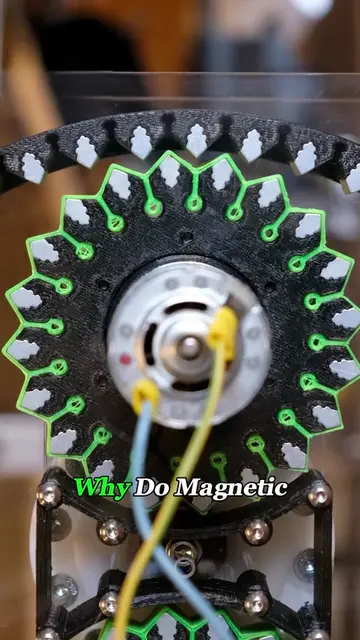
Why would engineers spend more money to design herringbone gears?
@lumiobro
96.3K followers · usually 76.5K views a post
Views
2.2M
Likes
113.1K
Comments
460
Shares
3.9K
Why it worked
The video uses high-quality, satisfying mechanical animations and clear, concise narration to explain a complex engineering concept, making it highly educational and engaging.
Summary
This video explains the engineering purpose and mechanics of herringbone gears compared to standard and helical gears. It details how they solve issues related to noise, vibration, and axial force in machinery.
Structure
- 1Introduction to herringbone gears
- 2Explaining the limitations of ordinary gears
- 3The introduction of helical gears and their benefits
- 4The problem of axial force in helical gears
- 5How herringbone gears solve the axial force issue
- 6Conclusion on why they are not used in every machine
On-screen text
Why Would Engineers
Spend More Money
To Design Herringbone
Gears
A Gear Only
Needs To Mesh
To Work Right
That Is One
Of The Biggest
MISUNDERSTANDINGS About Gears
Around The
1900s
Engineers Found That
Herringbone Gears Could
Run Much More
Smoothly
Because Ordinary
Gears
Could Transmit Power
But Once The
Speed Got Higher
And The
Torque Got Larger
The Teeth Started
Acting Like They
Were Constantly
Hitting Each Other
Every Time They
Meshed A Whole Row
Of Tooth Surfaces
Contacted Almost At
Once
The Bigger The
Machine The Stronger
The Impact
Vibration And Noise
Became
Then Engineers Had
An Idea
Why Not Make
The Teeth Angled
That Way
When The Gears
Mesh The Whole
Tooth Does Not
Hit At Once
Contact Starts From
One End And
Slowly Moves To
The Other
The Force Is
Not Slammed In
Instantly
It Is Transferred
Little By Little
So Helical Gears
Are Quieter And
Smoother
But A New
Problem Appeared
When A Helical
Gear Transmits Power
It Does Not
Only Make The Other
Gear Rotate
It Also Creates
A Sideways Force
That Pushes The
Shaft In One
Direction
The Bigger The
Machine The Stronger
That Force Becomes
And The More
Pressure The Bearings
Have To Take
That Is When
The Herringbone Gear
Appeared
Engineers Placed Two
Opposite Helical Gears
On The Same
Gear
The Left Side
Pushes The Shaft
One Way
The Right Side
Pushes It Back
The Other Way
The Two Forces
Cancel Each Other
Out
So It Keeps
The Smooth Meshing
Of A Helical
Gear
While Solving The
Sideways Shaft Force
But Because It
Is Harder And
More Expensive To
Make
Not Every Machine
Uses Herringbone
Gears
Original caption
Why Pay More for Herringbone Gears?#gear #mechanicsoftiktok #howthingswork #foryou #fyp
More from @lumiobro
More breakout videos from this creator.