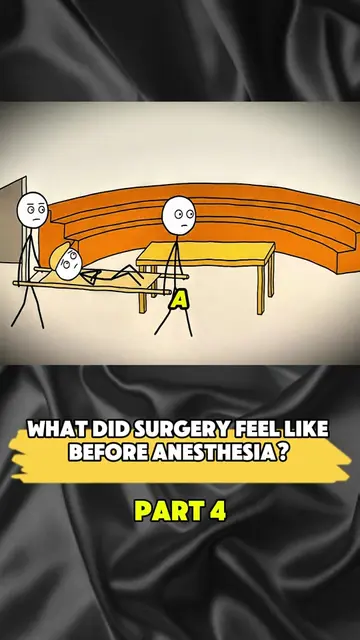
At some point in your life, there's a good chance surgery will cut you open. You'll count backwards from 10, make it to about seven, and then wake up with the whole thing already over. For almost all of history, that mercy did not exist. If you needed surgery in 1842, you walked into the room awake. You watched them lay out the knives. And you stayed awake for every second of what came next. So what did that actually feel like? We know the answer because survivors wrote it down. And what they described is worse than anything you're imagining. Let's put you there. London, 1842. Three decades ago, a cartwheel crushed your lower leg and the broken bone tore through the skin. Now, the wound has turned dark and it smells sweet and rotten at the same time. The surgeon examines you for less than a minute. Then he gives you the only two options that exist. The leg comes off in the morning, or the infection reaches your blood and kills you within the week. That was the math of surgery before anesthesia. Nobody went under the knife for a bad knee or a lump they could live with. You climbed onto the table for one reason. Death was the alternative. And plenty of people still chose death. Surgeons of the time wrote about patients who refused the operation and chose to wait with the rot. About others who said yes, then had to be carried in when their legs gave out. So you say yes. That night, you don't sleep. In the morning, two assistants walk you up the stairs to the operating theatre of the skylight. Surgeons needed daylight to cut by. And the word theatre is literal. Wooden galleries around in a horseshoe, packed shoulder to shoulder with medical students who came to watch you. The table is plain wood, stained by everyone who came before you. Underneath it sits a box of sawdust. You understand immediately what the sawdust is for. What offer of a glass of brandy, a dose of opium if you're lucky, and a strip of leather to bite down on. Everyone in the room knows none of it will touch the pain. The brandy is mostly to keep your legs working long enough to reach the table. And plenty of people chose death. Surgeons of the time wrote about patients who refused the operation and chose to wait with the rot. About others who said yes, then had to be carried in when their legs gave out. So you say yes. That night, you don't sleep. In the morning, two assistants walk you up the stairs to the operating theatre of the skylight. Surgeons needed daylight to cut by. And the word theatre is literal. Wooden galleries around in a horseshoe, packed shoulder to shoulder with medical students who came to watch you. The table is plain wood, stained by everyone who came before you. Underneath it sits a box of sawdust. You understand immediately what the sawdust is for. What offer of a glass of brandy, a dose of opium if you're lucky, and a strip of leather to bite down on. Everyone in the room knows none of it will touch the pain.